
Porcelain vs Quartz Countertops at a Glance
A quick comparison before diving into the detailed guide.
Porcelain Countertops
Quartz Countertops
Which Countertop Is Right For You?
Choose Porcelain if you want maximum heat resistance, realistic natural stone looks, outdoor durability and the lowest maintenance.
Choose Quartz if you prefer a wider range of colours and edge profiles, excellent impact resistance and a proven choice for busy family kitchens.
When selecting the perfect countertop for your home, two of the most popular are porcelain and quartz. Both are functional, stylish, and long-lasting, but they have significant differences that will determine your decision.
Choosing the right countertop is important—not only for aesthetics, but also for long-term maintenance, cost, and use based on your lifestyle. Whether you are redesigning your kitchen or bathroom, being aware of these differences will allow you to make an informed choice.
In this article, we're going to contrast porcelain vs. quartz countertops based on durability, maintenance, cost, appearance, eco-friendliness, and longevity—allowing you to determine which material is best suited to your needs and budget.
If you are looking for help selecting the perfect countertops for your home, contact us. Our countertop specialists will help you choose the right countertops for your project.
Porcelain Countertops vs Quartz
1. Durability


Porcelain Countertops vs Quartz: Both extremely durable, but they handle daily wear and tear differently.
When investing in a countertop, durability is something to consider. Porcelain and quartz are both extremely durable, but they handle daily wear and tear differently.
Scratch and Heat Resistance
Porcelain's scratch and heat resistance are very high, making it an excellent choice for busy kitchens. Because it is made through the process of compressed and heated clay, it is extremely durable and non-permeable, preventing surface scratching by knives, hot skillets, and other cooking devices. Quartz, although scratch-resistant and hard, is not as heat-resistant as porcelain. Application of direct intense heat can yellow or char quartz countertops, so using trivets or hot pads is recommended.
Impact Resistance and Day-to-Day Wear
Both are hard, but quartz is ever so slightly more resistant to impact. Since quartz uses resins, it has a slight give that makes it less prone to chipping or cracking when subjected to pressure, such as dropping a heavy pot. Porcelain, being very hard, will chip or crack if struck hard enough, especially on the edges. Its surface remains resistant to wear and tear of everyday life, including stains and water damage.
Compatibility for Heavy-Traffic Kitchens
If you do a lot of activity in a busy kitchen, both porcelain and quartz can handle it. If you are a chef or you like to cook every day, then porcelain is a great choice because of it stain and heat resistance. If you are a family with children and your countertops get a lot of heavy use, then quartz would be a great option. The one you choose will depend on whether you are looking for heat resistance and minimal maintenance, which you get with porcelain or impact resistance and ease of use, which quartz gives you.
2. Maintenance


Porcelain Countertops vs Quartz: Both materials are easy to care for.
When you are choosing a countertop material, consider how easy they are to clean. Both porcelain and quartz are known for their low-maintenance qualities, but there are some differences in how you’ll need to care for each.
Porcelain vs. Quartz: Cleaning
Porcelain countertops are relatively easy to clean. Since they're non-porous, a wipe-down with mild soap and warm water will erase food particles, spills, and grease. They're also resistant to harsh chemicals, so you don't have to worry about damaging the surface if you use more aggressive cleaners.
Quartz is also easy to maintain, but since it contains resins, the best option would be to use gentle, non-abrasive cleaners for fear of dulling the surface over time. Warm water mixed with mild dish soap is the ideal choice for daily cleaning. Avoid using strong chemicals or acidic cleaners, as they will weaken the resin and cause discoloration.
Stain and Moisture Resistance
Both quartz and porcelain are great at resisting stains, but porcelain is superior. Because it is completely non-porous, it won't soak up liquids, oils, or bacteria, which makes it ideal for kitchens and bathrooms where there are frequent spills.
Quartz is stain-resistant too, but since it contains resins, contact with something such as wine, coffee, or acidic liquids for extended periods can sometimes cause discoloration if it is not quickly wiped up. Quartz never has to be sealed, as does natural stone, so it is easier to take care of than granite or marble.
Special Care Considerations for Each Material
Porcelain is heat and chemical-resistant, meaning it requires little special care beyond regular cleaning. However, since it can chip along the edges, you’ll want to be careful with heavy impacts, especially near corners.
Quartz is sensitive to heat. Always use trivets or heat pads when placing hot cookware on quartz surfaces to prevent scorching. In addition, while quartz is highly durable, direct sunlight exposure for a long duration will eventually make it fade, so it's most suitable for use indoors.
Overall, both materials are easy to care for, but if you’re looking for the most worry-free option, porcelain requires even less maintenance than quartz.
3. Cost

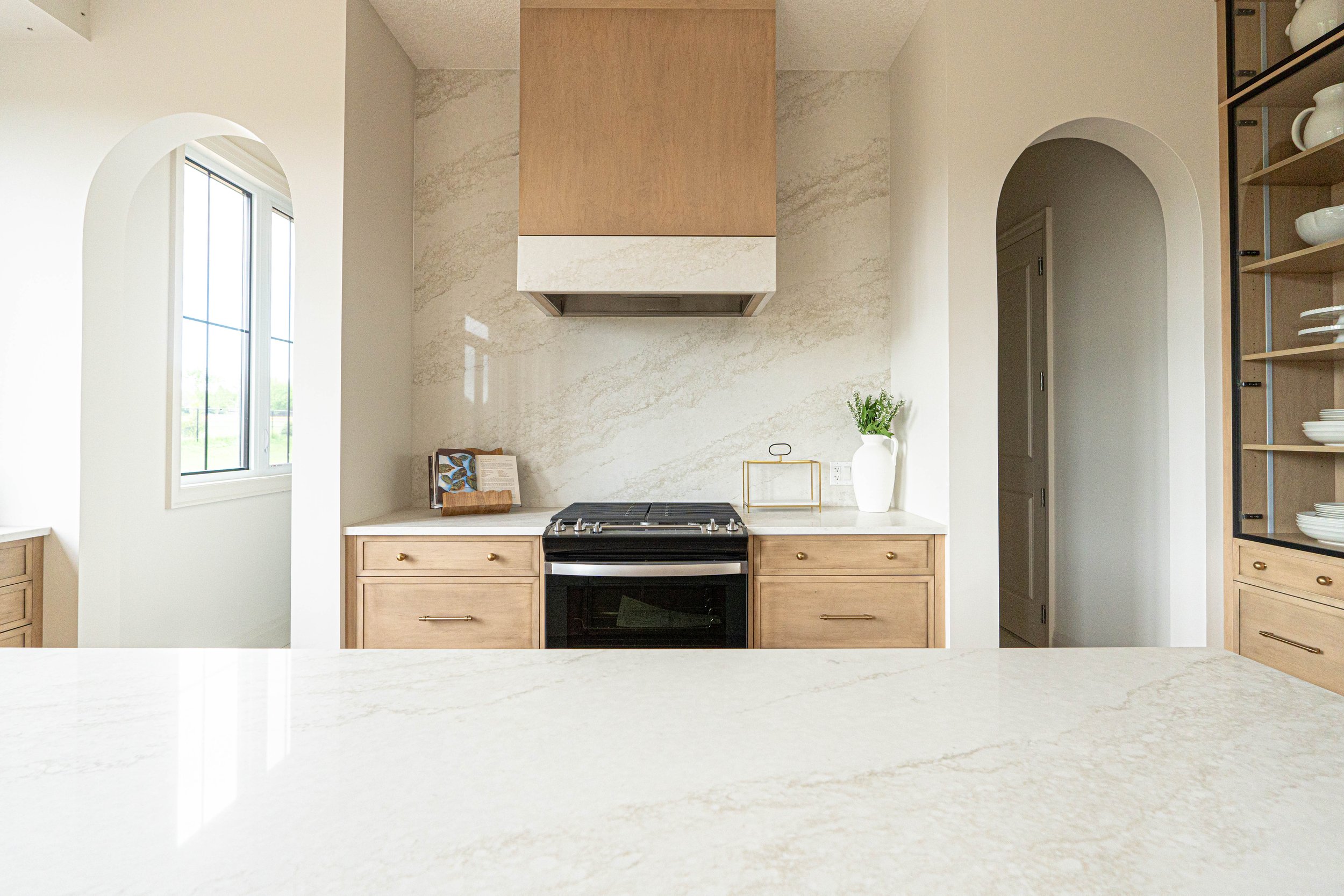
Porcelain Countertops vs Quartz: Understanding the price determinants will help you make a well-informed choice within your budget.
Cost is also a major determinant in choosing between porcelain and quartz countertops because the two have different price ranges and value in the long run. Understanding the price determinants will help you make a well-informed choice within your budget.
Porcelain vs. Quartz Countertop Prices
Price is an important part of deciding between porcelain and quartz, but comparing the two isn't always straightforward. Material, thickness, colour and pattern, fabrication requirements, edge profiles and installation can all affect the final cost.
As a general industry guide, porcelain countertops typically range from about $60–$120 per square foot, including material and installation. Quartz countertops generally range from about $50–$150 per square foot, including material and installation.
This means there is considerable overlap between the two materials. Entry-level quartz can be less expensive than porcelain, while premium quartz and high-end porcelain can reach similar price points. The specific product and complexity of your project ultimately have a bigger impact on price than the material category alone.
For the sources and methodology behind these price ranges, expand the reference box below.
Pricing Sources & Methodology
```The price ranges in this article are general industry estimates intended to help homeowners compare porcelain and quartz countertops. Actual project costs can vary depending on the material selected, slab thickness, colour and pattern, edge profile, fabrication requirements, installation complexity and other project-specific factors.
Sources
Porcelain Countertops: HomeGuide — Porcelain Countertop Cost
Quartz Countertops: The Spruce — Quartz Countertops
Installation Fees and Factors that Affect Pricing
Your installation costs for both a porcelain and quartz countertop will vary depending on several factors. These include the following:
The complexity of the project
Your local labour costs
If you want any custom features
You need to remember that porcelain slabs are thinner and lighter than quartz. This makes them easier to handle and install. However, since porcelain is thinner, it is more susceptible to cracking. Therefore, cutting and edging will require specialized tools and expertise. This can increase your labour costs.
Quartz, on the other hand, is denser and heavier than porcelain. Because of this, it will likely require sturdier cabinetry to support its additional weight. Although quartz is easier to cut and shape compared to porcelain, if you want to have custom edge profiles, then your overall cost of installation may go up.
Long-Term Value and Return on Investment
Both items offer excellent long-term value, but porcelain has a slight edge in durability and longevity. Since it is completely non-porous, heat-resistant, and UV-resistant, it remains looking great for decades with minimal upkeep and is a great investment for kitchens and bathrooms.
Quartz is also a very good return on investment, particularly if you are using a premium quality brand. However, you need to make sure that you keep it properly maintained because it tends to lose its brightness with too much sun exposure. It is also heat-sensitive.
4. Appearance


Porcelain Countertops vs Quartz: Both are available in numerous colours, patterns, and finishes
When choosing between quartz and porcelain countertops, looks is a big factor. Both are available in numerous colours, patterns, and finishes, allowing you to find an appearance that complements your home. However, there are also differences in looks as well as being able to design them to your own specifications.
Variety of Colours, Patterns, and Finishes
Porcelain countertops are available in a wide variety of colours and designs that imitate natural stone, concrete, or even wood. The latest printing technology allows for the creation of excellent veining and textures that can replicate high-end marble or granite. Porcelain is also available in matte, glossy, or textured finishes, giving you the freedom to have the look you want.
Quartz, too, comes in a vast array of colours and patterns, but it is generally more even in appearance. While the patterns on some types of quartz are meant to resemble natural stone, they may not be as varied as with porcelain. Quartz countertops usually have matte or polished finishes that will give you a clean, modern look.
How Each Material Imitates Natural Stone
If you’re looking for a countertop that looks like natural stone, both porcelain and quartz are great options. Porcelain, however, usually looks more like natural stone. This is because its design is printed directly on the surface and it can continue over the edges and seams, creating a seamless look. Porcelain slabs can also be made in large sizes. This cuts down on the need for visible seams.
Quartz countertops, while beautiful, possess more uniform patterns that are less rich in depth and movement than real marble or granite. Nevertheless, high-end quartz producers have created stunning appearances that nearly match the appearance of natural stone.
Customization and Edge Profile Options
Porcelain countertops tend to be thinner than quartz, and this may limit edge profile options. Contemporary fabrication, however, allows for mitered edges that create the appearance of a thicker slab.
Quartz, on the other hand, is available in various thicknesses, which makes it easier to design with a different edge profile. Some of the more popular edge profiles include beveled, ogee, or bullnose. If you want a decorative or traditional countertop edge, quartz is often your better choice.
5. Environmental Friendliness


Overall, porcelain has a lower carbon footprint than quartz.
Both quartz and porcelain are environmentally friendly materials, but they do have different production processes, recyclability, and total carbon footprint.
Sustainability of Production Processes
Porcelain is made from natural clay, minerals, and water that are heated to very high temperatures to create a durable surface. Since it is made up mostly of raw, abundant resources, porcelain is occasionally considered more green. Recycled content is also utilized in certain production, reducing waste and new material usage.
Quartz countertops, nonetheless, are a mixture of resin binders and natural quartz crystals. While quartz is an accessible mineral, synthetic resins, which are products derived from petroleum, are involved in the process. This might make quartz less environmentally friendly compared to porcelain.
Eco-Friendly Certifications and Recyclability
Both of these products are available with environmental certifications, such as GREENGUARD for minimal chemical emissions and LEED credits for green building products. Porcelain is 100% recyclable, which means that worn-out countertops can be repurposed for new building projects. Quartz, however, is less recyclable. This is because of the resins used in it production.
Which Material Has a Lower Carbon Footprint
Overall, porcelain has a lower carbon footprint than quartz. This is because it is naturally composed and recyclable. Additionally, you can also purchase renewable resource-based porcelain countertops. Even though quartz is very durable and resistant, it does have a more energy-intensive production process which means its carbon footprint is larger. This is especially true if you include the mining, resin production, and fabrication.
If sustainability matters to you, then porcelain is the eco-friendlier choice because of its natural ingredients, recyclability, and minimized carbon footprint.
6. Porcelain vs. Quartz: Limitations to Consider
Both porcelain and quartz offer excellent performance, but neither material is perfect for every situation. Understanding the limitations of each can help you choose the countertop that best fits your home, lifestyle and expectations.
Porcelain: Things to Consider
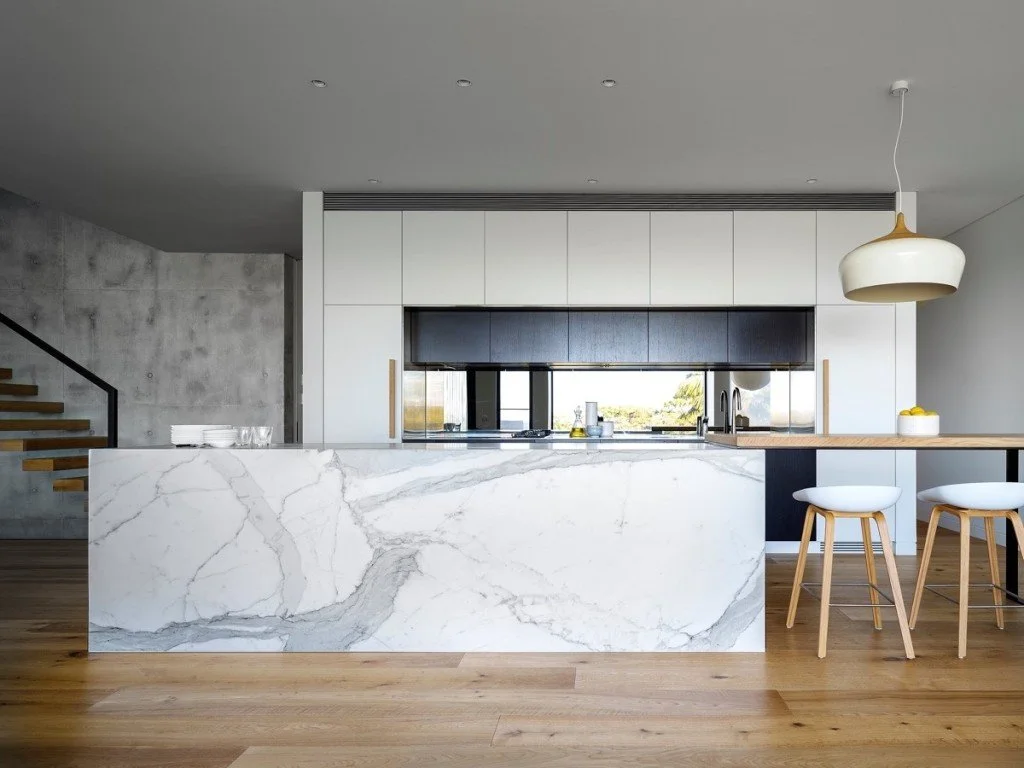
*Image by Sinterstone
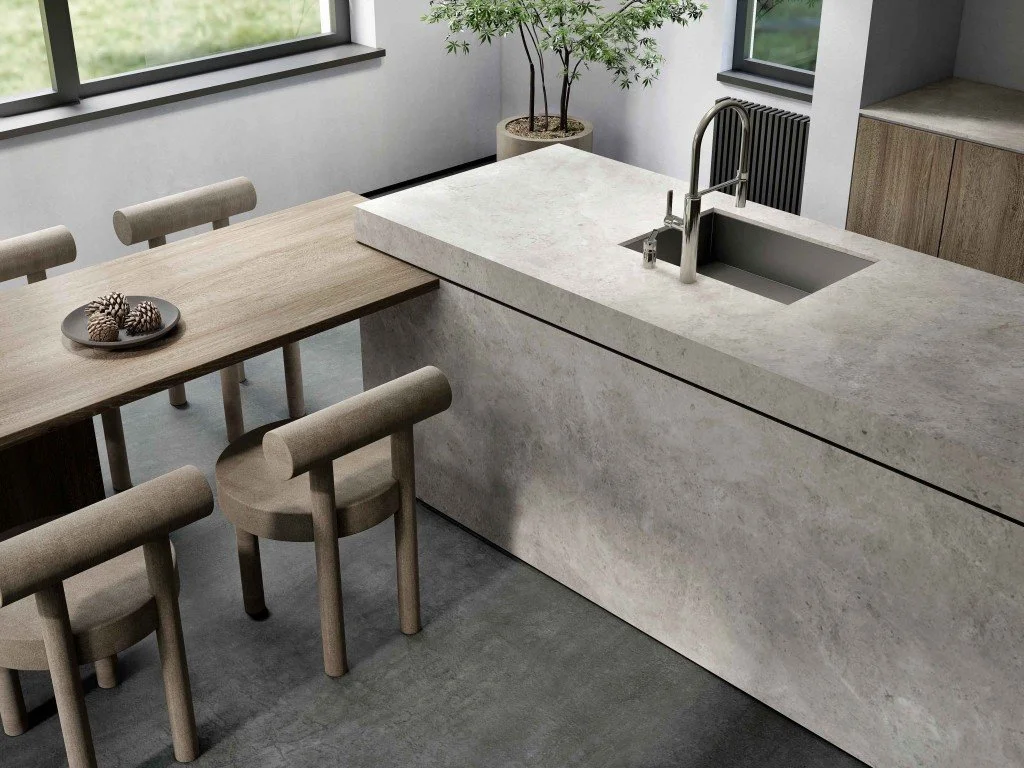
*Image by Sinterstone
Edges can be more prone to chipping during fabrication.
Porcelain is extremely hard but relatively brittle, particularly along cut edges. Fabricating sink cutouts, corners and detailed edge profiles requires specialized equipment and experienced fabricators. Chipping during fabrication can increase labour time and may require additional finishing or careful handling.
Fabrication requires specialized expertise.
Porcelain's hardness and thin slab formats can make it more demanding to cut, drill and finish than quartz. Choosing an experienced fabricator is especially important for complex layouts or large cutouts.
Thin slabs can require different installation techniques.
Some porcelain products are available in thinner formats than traditional quartz. While this can reduce weight, thinner material may require appropriate substrate support and installation methods.
Edge profiles are more limited.
Because porcelain is thinner and more brittle than many quartz products, achieving certain thick or elaborate edge profiles can be more challenging. A laminated or built-up edge may be needed to achieve a particular look.
Large slabs require careful handling.
Porcelain's combination of strength and brittleness means it can be vulnerable to damage from improper handling, transportation or installation.
Not Every Fabricator Is Equipped for Porcelain
Porcelain and ceramic slabs can be significantly more challenging to fabricate than many traditional countertop materials. Their hardness and brittleness demand specialized equipment, experience and precision.
Natural Stone City uses a Breton Trinity — our most advanced cutting system — to precisely fabricate demanding porcelain and ceramic slabs.
Investing in advanced fabrication technology allows our team to take on these challenging materials with greater precision and helps minimize the risk of breakage during fabrication.
Quartz: Things to Consider
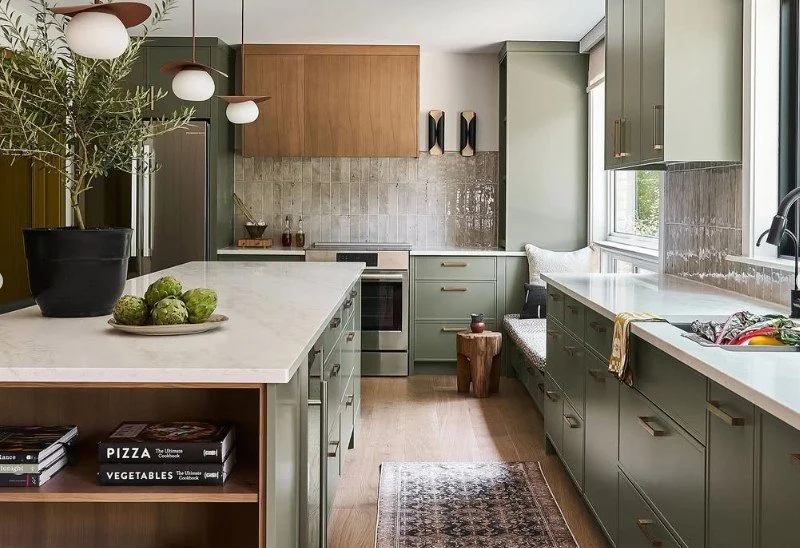
*Image by Natural Stone City
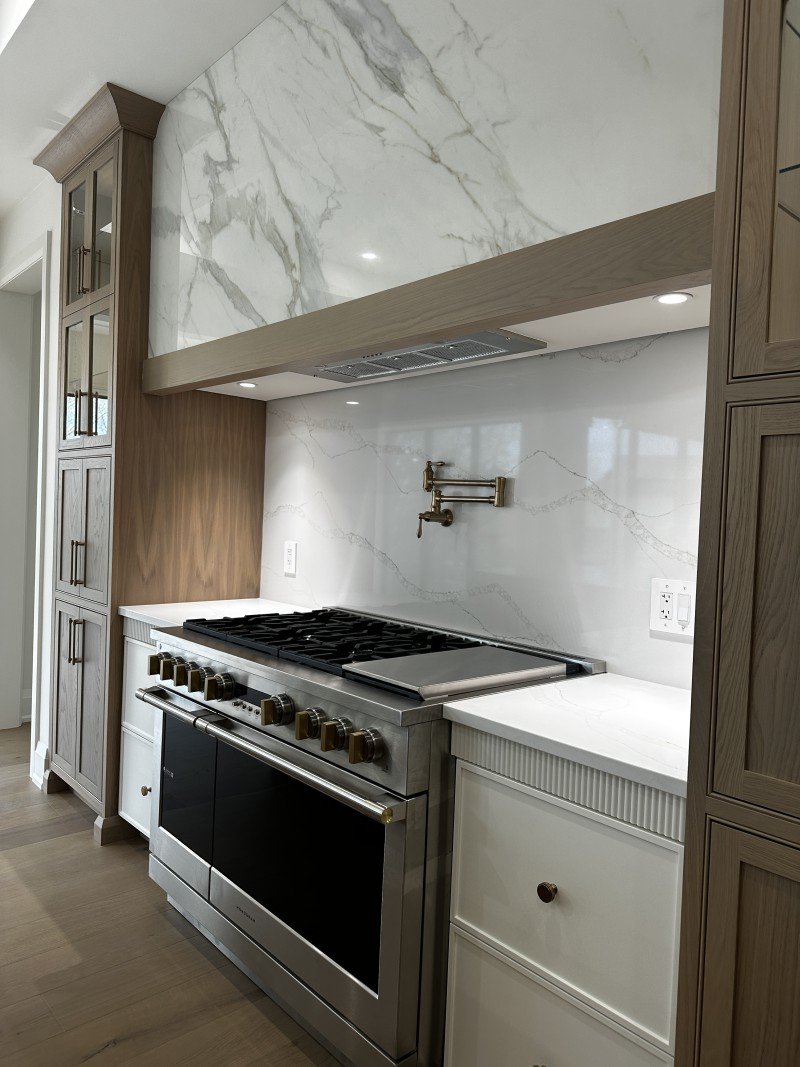
*Image by Natural Stone City
Less suitable for prolonged direct sunlight.
Traditional quartz can be affected by prolonged UV exposure, which may cause some colours to fade or change over time. For areas with significant direct sunlight or outdoor applications, it's important to select a quartz product specifically designed for UV exposure.
More sensitive to high heat.
Quartz contains polymer resins that can be affected by extreme or prolonged heat. Hot cookware should be placed on a trivet or heat-resistant surface rather than directly on the countertop.
Heavier than many porcelain options.
Quartz is generally denser and heavier than porcelain, which can make transportation and installation more demanding and may be a consideration for certain applications.
Fabrication still requires skilled professionals.
Although quartz is generally easier to fabricate than porcelain, sink cutouts, corners and other high-stress areas can still be vulnerable to cracking or damage if fabricated or handled improperly.
Resin content affects some performance characteristics.
Because quartz countertops contain resin, their performance differs from that of a fully mineral-based surface such as porcelain. This is particularly relevant when comparing heat resistance, UV stability and outdoor suitability.
The Bottom Line
Porcelain's biggest considerations are fabrication, edge durability and installation technique, while quartz's limitations are more closely related to heat, UV exposure and its resin content. Neither limitation necessarily makes a material a poor choice, it simply means the right product and installation approach matter.
The best choice depends on how and where you plan to use your countertop, the look you want to achieve and the performance characteristics that matter most to you.
7. GREENGUARD Certification: Another Factor to Consider
When comparing porcelain and quartz countertops, most homeowners focus on durability, appearance, maintenance and cost. Indoor air quality can be another consideration, particularly when evaluating specific engineered quartz products.
GREENGUARD certification verifies that a product has been tested for chemical emissions and meets established standards for low emissions into indoor environments. While porcelain is an inorganic material with very low emissions after firing, individual porcelain and quartz products may also carry GREENGUARD certification.
Natural Stone City offers GREENGUARD-certified countertop products from leading manufacturers, including:
If indoor air quality is important to you, our team can help you identify certified options and compare them alongside other performance factors.
The takeaway:
GREENGUARD certification isn't a requirement for porcelain or quartz. Instead, it's an additional certification you can look for when comparing specific products, particularly if low chemical emissions are an important consideration for your home.
Want to check a product yourself?
You can search the UL SPOT database to verify whether a specific product has GREENGUARD certification: UL SPOT Product Database
8. Porcelain or Quartz: Which Is the Best for You?


Porcelain is often less expensive than premium quartz, especially when taking installation costs into account.
If you are trying to decide between quartz and porcelain countertops, consider your budget, kitchen design, and everyday needs. Both products have advantages, which is why you need to decide which one will work best in your home.
Best for Homeowners Concerned About Cost
If cost is an issue, porcelain could be your better choice. It is often less expensive than premium quartz, especially when taking installation costs into account. However, if you would like a wider selection of styles and finishes to pick from, quartz may give you better value for money even though it is a bit more expensive.
Which Material Is Suitable for Your Kitchen Design?
Both materials are applicable to most kitchen designs:
Contemporary Kitchens – Porcelain's ultra-thin, large-format slabs and patterns give a modern, clean appearance.
Classic Kitchens – Quartz offers warmer color and classic patterns that mimic natural stone and is perfect for traditional or farmhouse-type kitchens.
Luxury Kitchens – Both quartz and porcelain are considered to be high-end materials, but quartz may give you a richer, more sophisticated look than porcelain will.
Things to Consider Depending on Lifestyle and Use
If you use your kitchen a lot on a daily basis, porcelain's scratch and heat resistance make it a great choice. If low maintenance and little cleaning are crucial, quartz can be the better option because it contains a non-porous surface. Consider your cooking habits, cleaning requirements, and overall design goals to get the perfect countertop for your home.
9. Countertop Terms, Explained
Countertop materials come with plenty of technical terminology. Here’s a simple guide to some of the terms you may encounter when comparing porcelain, quartz and other engineered surfaces. without the industry jargon.
Engineered Stone
What it means: A manufactured countertop material made by combining natural minerals or stone particles with other ingredients to create a consistent, durable surface. Quartz countertops are a common example of engineered stone, while porcelain is manufactured differently and is generally classified as a sintered surface.
Sintered Surfaces
What it means: A surface made by combining natural minerals under extremely high heat and pressure. The process creates a very dense, durable material that is resistant to heat, scratches, stains and UV exposure.
Mohs Hardness
What it means: A scale used to measure how resistant a mineral is to scratching. The scale runs from 1 (very soft) to 10 (diamond). A higher Mohs rating generally means a countertop is more resistant to everyday scratches.
Resin Polymerization
What it means: The chemical process that turns liquid resin ingredients into a solid material. In quartz countertops, resins help bind the natural quartz particles together and give the finished surface its strength and shape.
UV Stability
What it means: How well a countertop maintains its colour and appearance when exposed to ultraviolet (UV) light from the sun. Materials with high UV stability are better suited to areas with strong or prolonged sunlight, including outdoor applications.
Porosity
What it means: How easily a material can absorb liquids. A low- or non-porous countertop has very few spaces for liquids to enter, which helps it resist stains and moisture. Porcelain and quartz are both known for their very low porosity.
Weight Per Square Foot
What it means: How much a countertop material weighs for each square foot of surface area. This matters because heavier materials can require additional support and are more demanding to move and install. Porcelain is generally lighter than quartz.
Fabrication Difficulty Rating
What it means: An indication of how challenging a material is to cut, shape, edge and install. Hard or brittle materials can require specialized tools, techniques and experienced fabricators. A higher fabrication difficulty can also affect installation costs.
Slab Thickness Options
What it means: The available thicknesses in which a countertop material is manufactured. Thickness affects the look, weight, edge-profile possibilities and sometimes the installation requirements. Porcelain is often available in thinner formats than traditional quartz.
Porcelain Performance Ratings: What Do the Tests Really Mean?
Porcelain countertops are tested for several important performance characteristics. These ASTM tests help determine how the material performs under conditions that matter in a real home; from moisture and everyday impact to chemicals and outdoor temperature changes.
10. Why Homeowners Trust Natural Stone City for Porcelain & Quartz Countertops
25+ Years of Experience. From Slab to Installation.
With over 25 years of experience, Natural Stone City delivers exceptional service and craftsmanship. Our skilled, personally trained team handles every step in-house—from slab inspection and templating to fabrication and installation—at our fully equipped Southern Ontario facilities.
This means greater quality control, knowledgeable support, and a seamless experience from start to finish.
Natural Stone City is a certified installer of the following products:

Sinterstone

Lapitec

Corian Quartz

Silestone Quartz
Choosing the right countertop material is only part of the equation. The quality of the slab, the precision of the fabrication, and the skill of the installation all play a major role in how your new countertops look and perform for years to come.
At Natural Stone City, we take extra steps to ensure every countertop we install meets our high standards for quality, beauty, and durability.
Every Slab Is Carefully Inspected
Before fabrication begins, our team carefully inspects every slab to help ensure you receive the highest quality material possible.
We check for:
Warping or bowing that could affect installation or the finished appearance.
Resin pooling or surface inconsistencies that may impact the look of the countertop.
Micro-fractures or imperfections that could compromise long-term durability.
Colour and pattern consistency across the entire slab.
Factory defects or damage before the material is cut.
Only slabs that meet our quality standards move forward into fabrication.
Expert Vein Matching for a Premium Finish
If you've selected a porcelain or quartz countertop with dramatic veining, proper layout makes all the difference.
Our team carefully plans every cut to:
Create smooth, natural-looking vein transitions
Align waterfall edges whenever possible
Minimize visible seams
Preserve the most attractive areas of each slab
Ensure the finished countertop looks balanced and intentional
The result is a finished installation that looks like it was crafted from one continuous piece of stone.
Precision Fabrication & Professional Installation
Every countertop is fabricated using precision equipment and installed by experienced professionals.
We pay close attention to:
Accurate measurements for a precise fit
Clean sink and cooktop cut-outs
Tight, professionally finished seams
Carefully polished edges
Final quality inspections before the project is complete
Our Goal
Whether you choose porcelain or quartz, our goal is simple: to deliver a countertop that not only looks beautiful on installation day, but continues to perform and impress for many years to come.
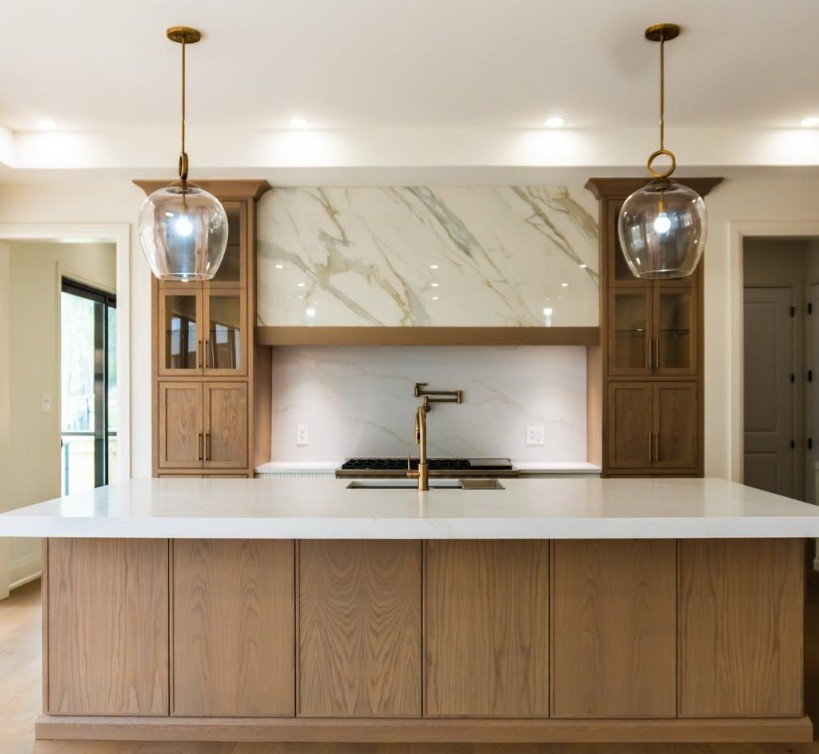
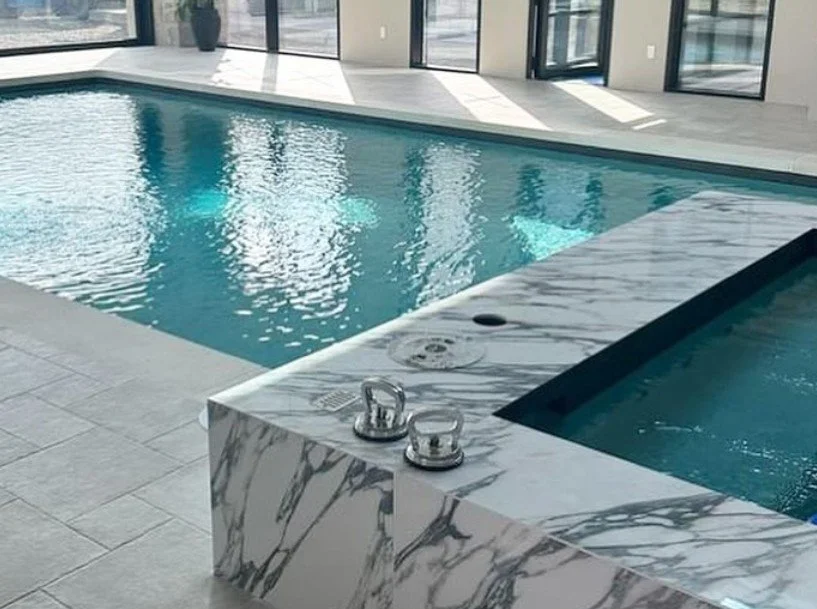
Porcelain Countertop Gallery
See Our Porcelain Countertop Projects
Browse some of our recent porcelain installations to see how homeowners across Ontario have transformed their spaces with this modern surface.


Quartz Countertop Gallery
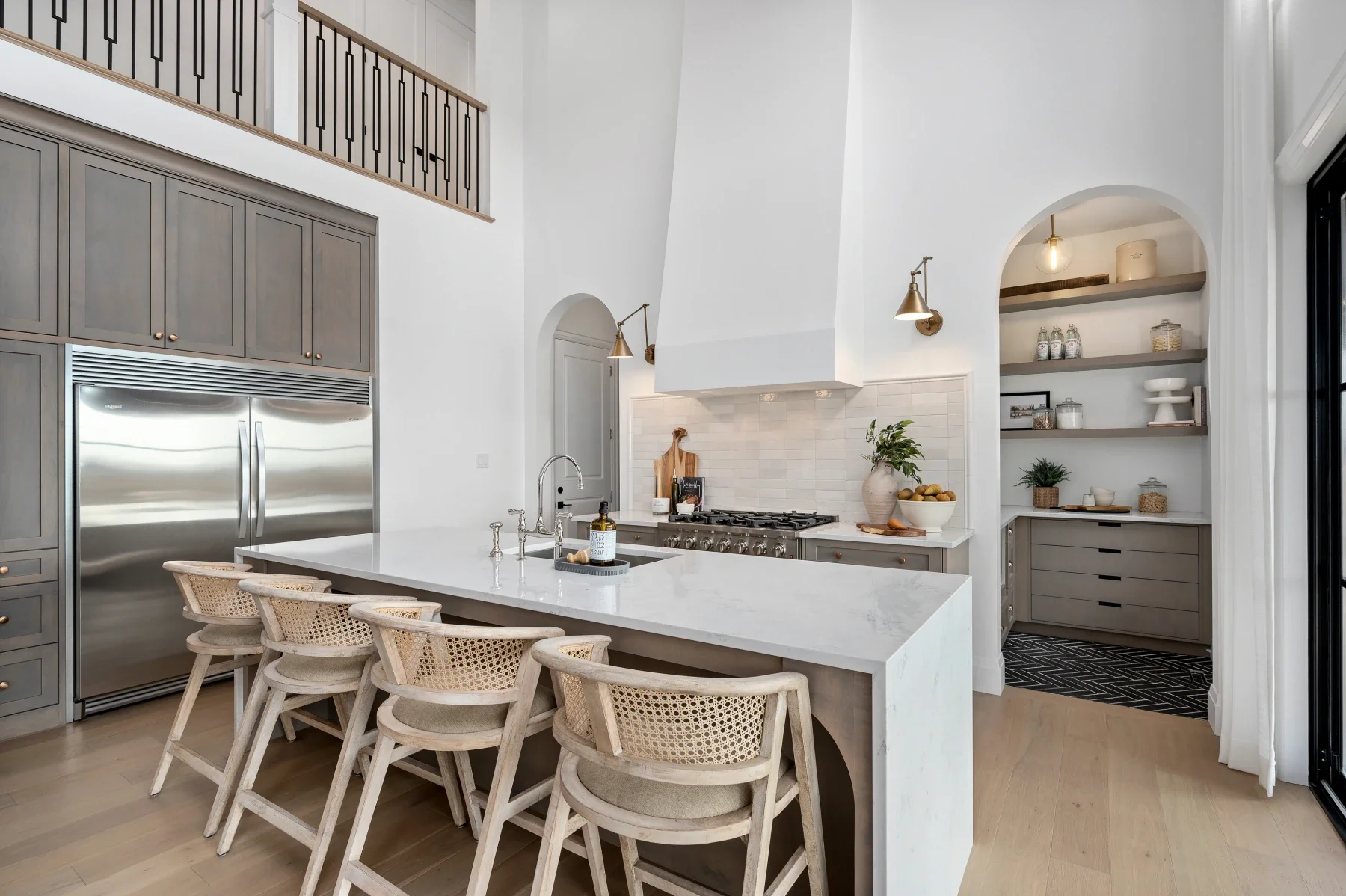
See Our Quartz Countertop Projects
Quartz countertops remain one of the most popular choices for homeowners thanks to their beauty, durability, and low maintenance. Explore our recent quartz countertop installations to discover a wide variety of colours, patterns, and styles that can complement virtually any kitchen or bathroom design.



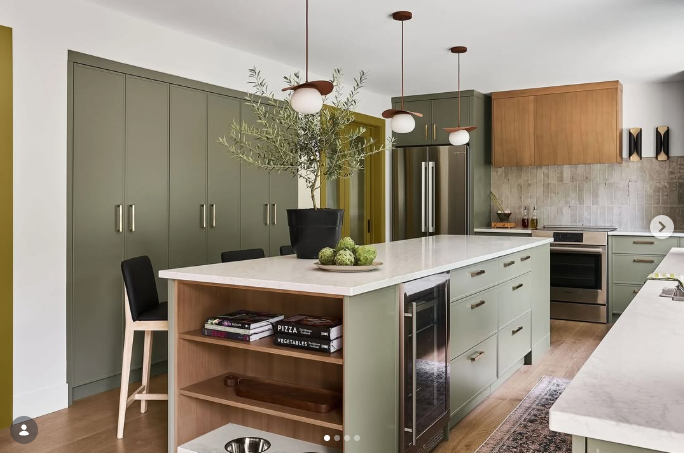
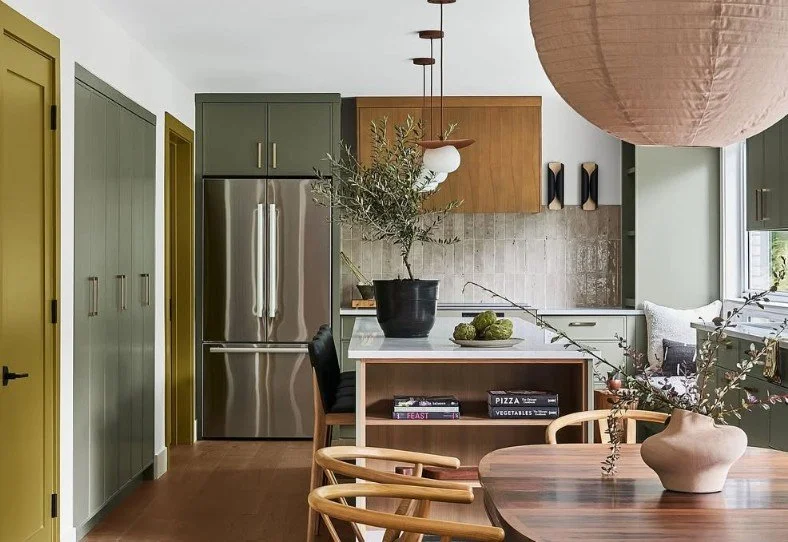
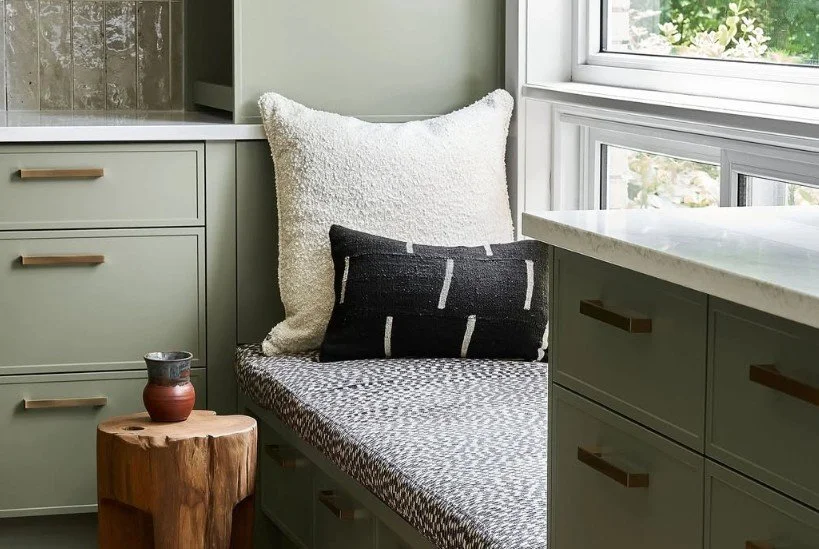
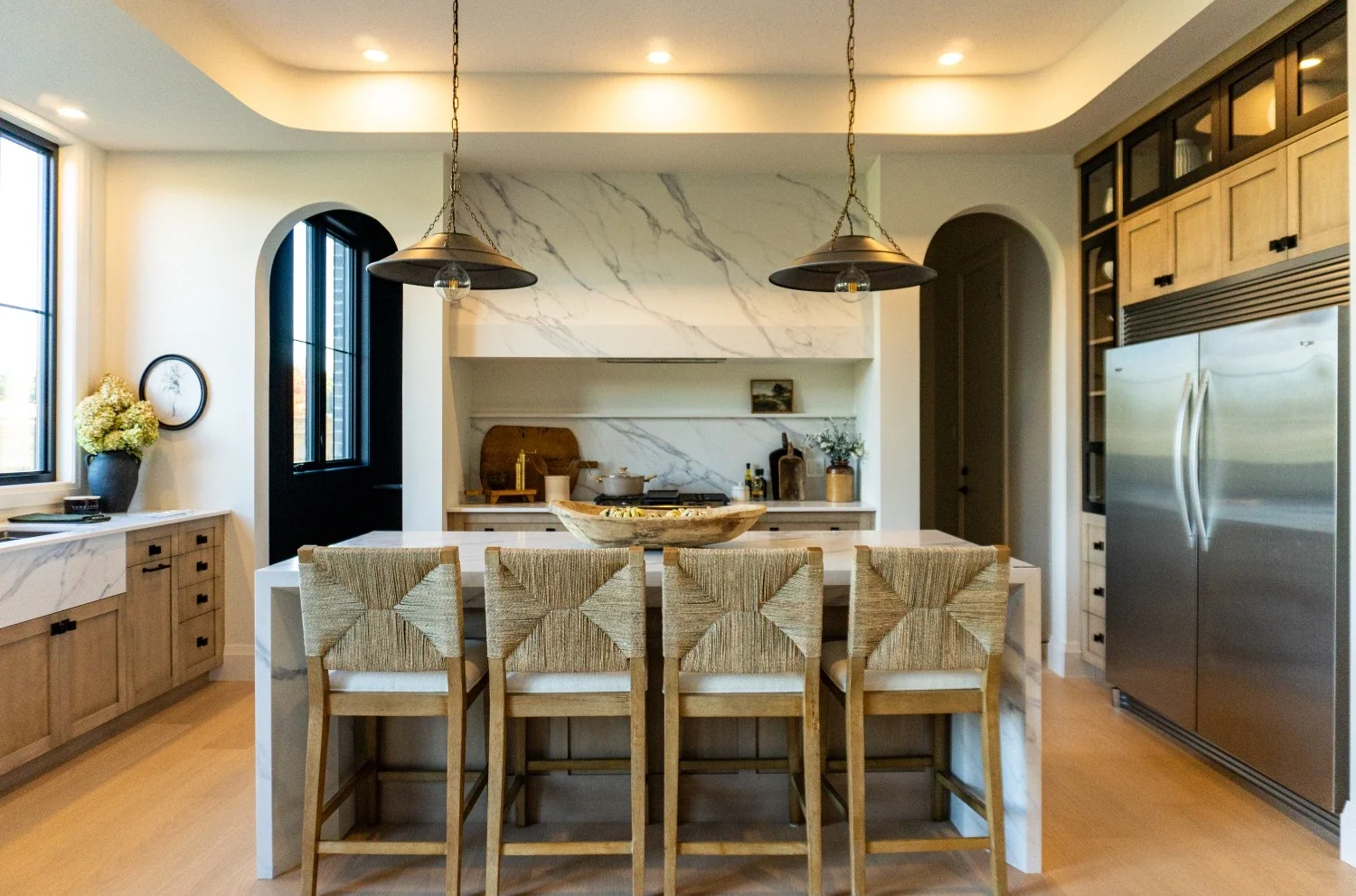
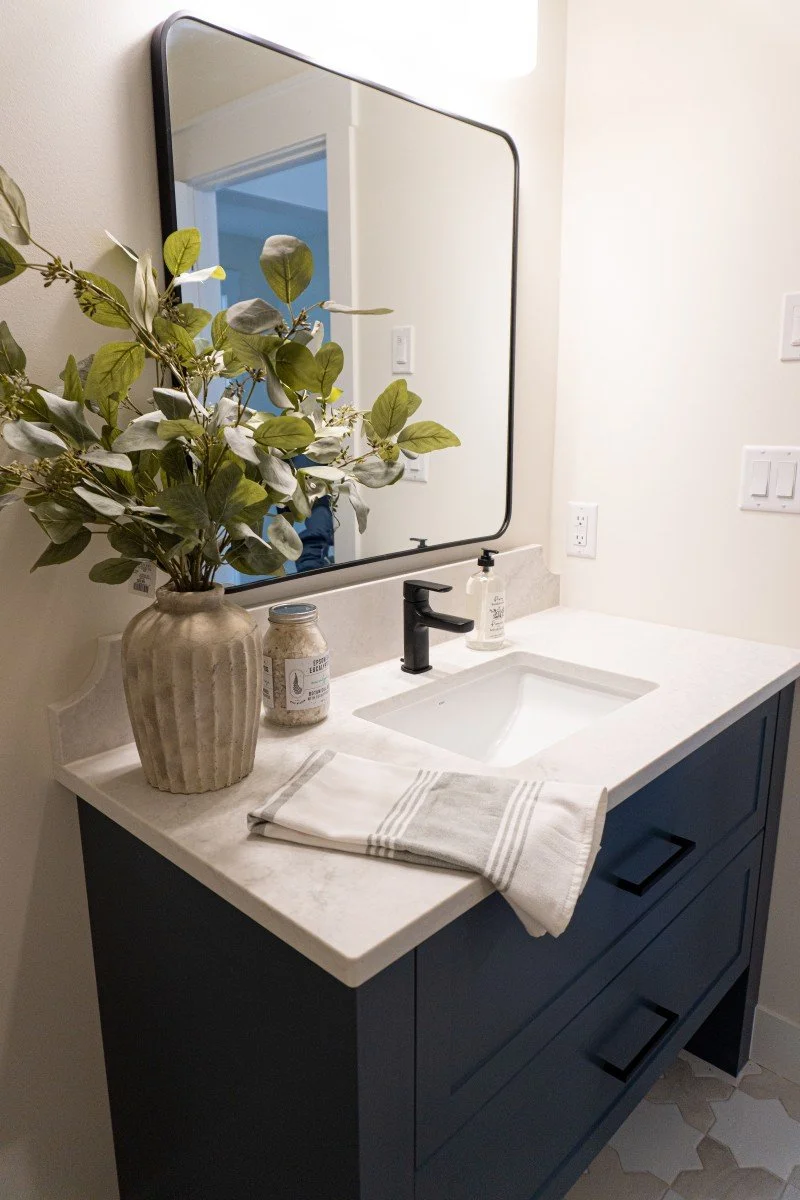
Porcelain Countertops vs Quartz: We Can Help You Decide

If you are searching for the perfect countertops, come to Natural Stone City. We have the largest selection of Granite, Marble, and Quartz in Southern Ontario, with over 1,000 slabs of different colour options.
You can choose from standard colours to super exotic options, shipped directly from Italy, Brazil and around the world. We carefully select each one, keeping the satisfaction of our customers in mind.
When you buy from Natural Stone City you’ll get:
Installations in as little as 1 week
Any colour you want and more
Help from our knowledgeable and friendly staff who are experienced stone countertop specialists
Contact us today and we will help you choose the perfect countertop for your home.
What Our Customers Are Saying…
“Gia was very helpful and had great advice and direction on what best suited my needs.. Very friendly and professional staff.
Delivery and setup was quick and prompt. Follow up service for minor concerns were looked after right away . So impressed with my new countertops I have recommended Natural City Stone to others who are doing kitchen remodeling.
Thank you!!”
— Beverlee Ament