
What Is the Most Durable Countertop Material?

When homeowners ask, “What is the most durable countertop material?”, they’re usually hoping for a simple, one-size-fits-all answer. The reality is a little more complicated. There isn’t just one “most durable” countertop—because durability depends on how you use your kitchen, what kind of maintenance you’re comfortable with, and which type of resistance matters most to you, whether that’s stains, scratches, heat, or impact.
Granite, quartz, quartzite, porcelain, sintered stone, marble, and onyx all perform differently across these categories, and each one has its own strengths depending on your lifestyle and design goals.
If you’re trying to choose the right surface for your home, the team at Natural Stone City can help you compare your options and find the perfect balance of beauty and durability. Contact us today to get expert guidance on your countertop selection.
Key Takeaways
There is no single “most durable countertop material” because durability depends on how and where the surface will be used.
Different materials excel in different categories, such as stain resistance, scratch resistance, heat resistance, and impact resistance.
Granite offers strong all-around performance with excellent heat resistance and good durability, but it requires sealing for stain protection.
Quartz is the best low-maintenance option, offering excellent stain resistance and high scratch resistance, but only moderate heat resistance.
Quartzite is one of the hardest natural stones, delivering excellent heat and scratch resistance, though slab quality and sealing needs can vary.
Porcelain and sintered stone provide some of the highest overall performance levels, with exceptional resistance to heat, stains, and scratches, but may be prone to chipping under impact.
Marble and onyx are best suited for luxury and decorative applications, as they are more sensitive to stains, scratches, and physical damage.
The best countertop choice depends on lifestyle needs, such as heavy cooking, low maintenance preferences, modern design goals, or decorative use.
Consulting with experts like Natural Stone City can help homeowners choose the right material based on real-world performance, not just appearance.
What Is the Most Durable Countertop Material?
1. What Does “Durable” Actually Mean for Countertops?
When people talk about countertop durability, they are usually referring to a mix of different performance factors rather than a single measurable quality. In reality, a countertop can be excellent in one area, such as resisting scratches, but weaker in another, such as handling heat or impact. Understanding these categories helps you compare materials more accurately and choose the right surface for your needs.
Stain Resistance (Porosity & Sealing)
Stain resistance refers to how well a countertop prevents liquids and pigments from penetrating its surface. This is largely determined by how porous the material is and whether it requires sealing.
Stain resistance measures how easily a countertop absorbs liquids like wine, oil, coffee, or juice.
Materials with higher porosity tend to require regular sealing to prevent staining over time.
Non-porous materials naturally resist stains and are generally lower maintenance.
Overall, stain resistance is one of the most important durability factors for busy kitchens where spills are frequent.
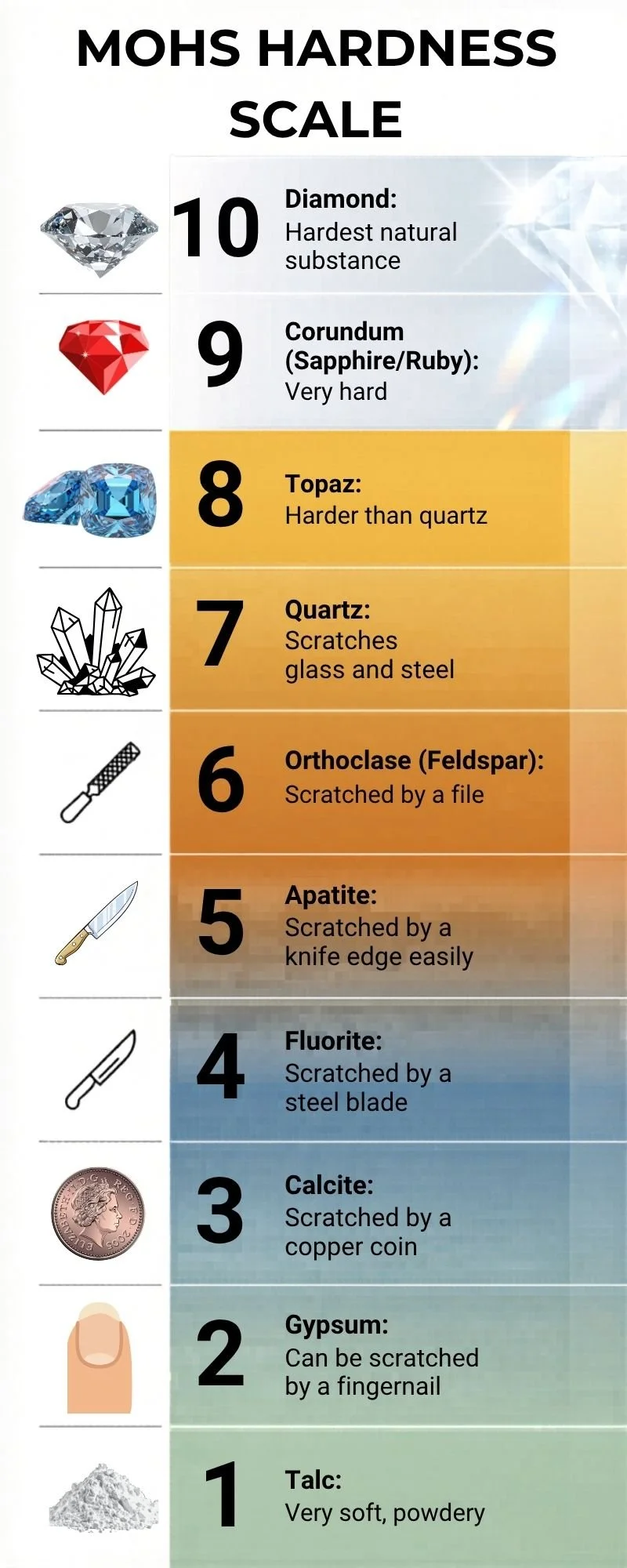
Scratch Resistance (Mohs Hardness Scale)
Scratch resistance describes how well a countertop holds up against everyday wear from knives, cookware, and other abrasive materials. It is often measured using the Mohs hardness scale.
Scratch resistance is influenced by how hard the surface material is on the Mohs scale.
Harder materials are less likely to show visible wear from cutting or dragging objects across the surface.
Even highly scratch-resistant surfaces can still be damaged by extremely hard minerals like quartz particles in sand.
This category is especially important for homeowners who do a lot of food preparation directly on their countertops.
Heat Resistance (Thermal Stability)
Heat resistance refers to a material’s ability to withstand high temperatures without burning, cracking, or discolouring.
Heat resistance measures how well a countertop handles hot pans, pots, and baking trays placed directly on the surface.
Natural stones typically perform better under heat than resin-based engineered materials.
Some materials can suffer thermal shock if exposed to sudden or extreme temperature changes.
This factor is critical for active kitchens where cookware is frequently moved directly from the stove or oven to the countertop.
Crack Resistance (Internal Structure & Flexibility)
Crack resistance refers to how well a countertop can withstand internal stress or external force without splitting or fracturing.
Crack resistance depends on the internal structure and natural flexibility of the material.
Dense, well-formed stone slabs are generally more resistant to cracking under pressure.
Poor installation or uneven support can significantly increase the risk of cracks regardless of material type.
This category is especially important for large island installations or areas with heavy usage.
Chip Resistance (Edge Strength)
Chip resistance measures how well a countertop holds up against impact damage, especially along edges and corners.
Chip resistance is influenced by the strength and density of the material at exposed edges.
Hard but brittle materials may resist scratches well, but still chip if impacted.
Rounded edges and proper fabrication techniques can help reduce chipping risk.
This factor matters most in high-traffic kitchens where pots, pans, and heavy objects are frequently moved around.
Load-Bearing Strength (Slab Density & Structural Integrity)
Load-bearing strength refers to how much weight a countertop can support without bending, cracking, or failing structurally.
Load-bearing strength is determined by the density and internal stability of the slab material.
Stronger materials can better support heavy appliances, large sinks, and thick countertop spans.
Proper cabinetry support is just as important as the material itself in preventing structural issues.
This is a key consideration for large kitchen islands and custom countertop designs.
Understanding these durability categories makes it easier to evaluate countertop materials beyond surface-level impressions. Once you know what type of durability matters most to you, you can make a more informed decision about the best material for your space.
2. Overview of the Materials Being Compared
Before comparing durability in detail, it is important to understand what each countertop material actually is and how it is generally positioned in terms of performance. The seven materials below include both natural stones and engineered surfaces, and they range from highly durable everyday options to more delicate decorative materials.
The Seven Countertop Materials

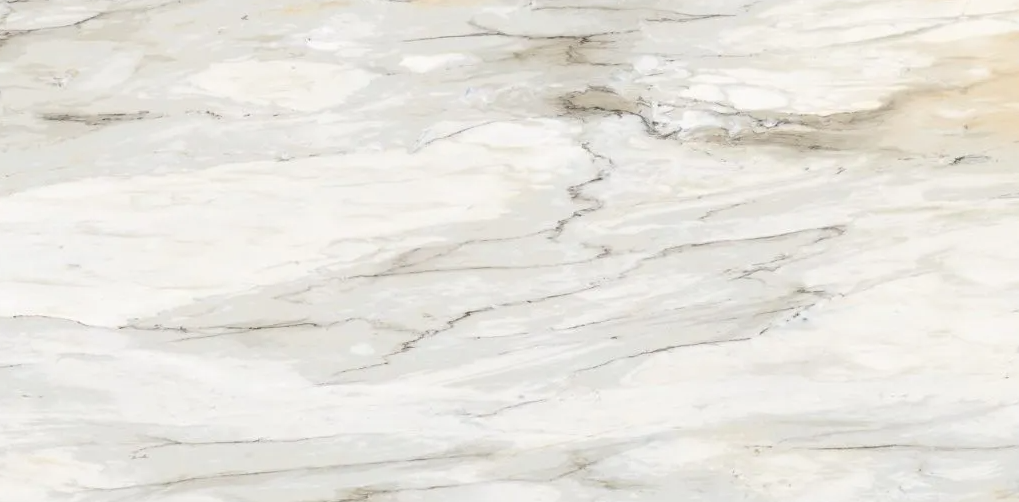
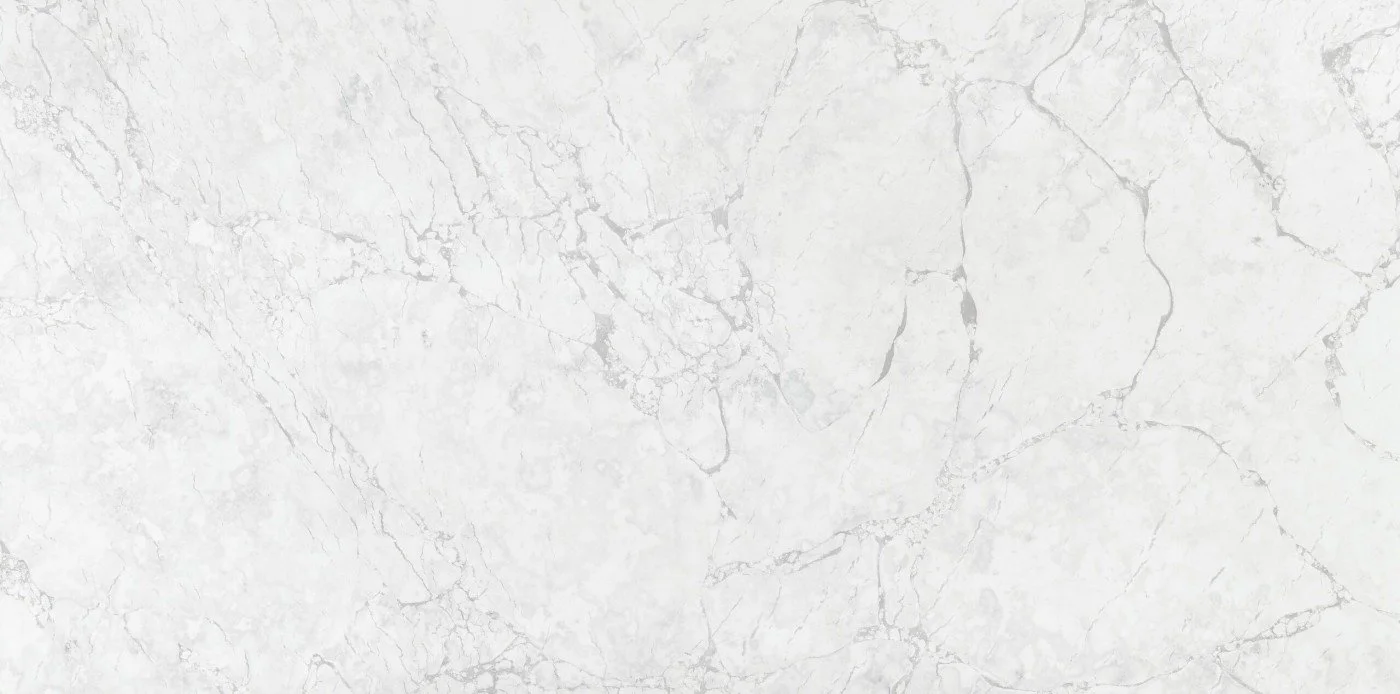
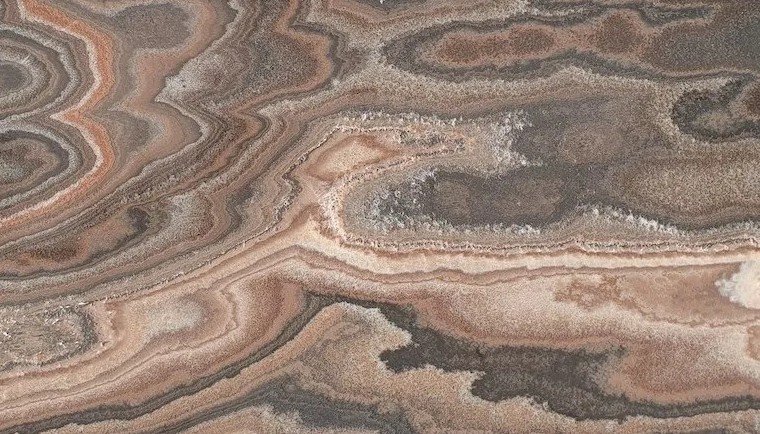
The following list introduces the seven countertop materials being compared in this article and provides a basic understanding of what each one represents.
Granite is a natural igneous stone known for its strength, heat resistance, and overall balanced durability in kitchen applications.
Quartz is an engineered stone made from natural quartz crystals combined with resins and pigments for a consistent, low-maintenance surface.
Quartzite is a natural metamorphic stone formed under intense heat and pressure, making it one of the hardest natural countertop materials available.
Porcelain is a manufactured surface made from refined clay and minerals that are fired at extremely high temperatures for a dense, durable finish.
Sintered Stone is an advanced engineered material created by compressing natural minerals under extreme heat and pressure to mimic geological formation.
Marble is a natural metamorphic stone valued for its elegant appearance but known for being softer and more prone to etching and scratching.
Onyx is a translucent natural stone often used for decorative purposes due to its striking appearance but limited structural durability.
These seven materials form the basis of the durability comparison throughout this article.
Natural Stones vs Engineered Surfaces
One of the most important distinctions when evaluating countertop durability is whether the material is natural or engineered. This affects not only performance but also maintenance requirements and consistency from slab to slab.
Natural stones such as granite, quartzite, marble, and onyx are quarried directly from the earth and cut into slabs, meaning each piece is unique in appearance and structure.
Engineered surfaces such as quartz, porcelain, and sintered stone are manufactured materials designed to improve consistency, performance, and resistance to staining and wear.
Understanding this difference helps explain why engineered materials often offer more predictable performance, while natural stones can vary more in strength and appearance.
Soft Decorative Stones vs High-Performance Materials
Another helpful way to categorize these materials is by their intended purpose and overall durability level. Some stones are chosen primarily for their visual appeal, while others are designed for demanding, high-use environments.
High-performance materials such as quartzite, granite, porcelain, and sintered stone are generally chosen for their strong resistance to heat, scratches, stains, and everyday kitchen wear.
Mid-range materials like quartz offer excellent stain resistance and low maintenance, but may have limitations with heat exposure.
Decorative or softer stones such as marble and onyx are typically selected for their visual beauty and luxury appeal rather than their resistance to wear and tear.
This distinction helps set realistic expectations for how each material will perform in real-world kitchen conditions.
Together, these categories provide a clear foundation for understanding how each countertop material compares when it comes to durability, performance, and long-term use.
3. Granite: The Balanced Natural Performer

*Image by MSI Surfaces

*Image by MSI Surfaces
Granite is one of the most popular natural stone countertop materials because it offers a strong balance of durability, appearance, and long-term performance. It is widely used in kitchens because it can handle everyday cooking demands while still providing a natural, high-end look.
Overall Durability Performance
Granite is considered a well-rounded countertop material that performs strongly across most durability categories.
Granite offers strong overall durability, making it suitable for busy kitchens and high-use areas.
Granite performs reliably in both residential and light commercial applications due to its dense natural structure.
Granite maintains its integrity well over time when properly installed and maintained.
Overall, granite is often chosen because it delivers dependable performance without excelling in only one category.
Heat Resistance
One of granite’s standout strengths is its ability to withstand high temperatures without damage.
Granite has excellent heat resistance and can typically handle hot pots and pans placed directly on its surface.
Granite’s natural formation under extreme heat and pressure makes it more stable under thermal stress.
Granite is less likely to scorch or discolour compared to many engineered surfaces.
This makes granite especially practical for home cooks who frequently work with hot cookware.
Scratch Resistance
Granite also performs well when it comes to resisting everyday wear and surface abrasion.
Granite has good scratch resistance and can withstand regular kitchen use without easily showing damage.
Granite is harder than many common materials, which helps reduce visible wear over time.
Granite may still be scratched by extremely hard minerals, but this is uncommon in typical household use.
This level of scratch resistance makes granite a durable choice for food preparation areas.
Maintenance and Stain Protection
While granite is durable, it does require some maintenance to keep it performing at its best.
Granite requires sealing to help protect against stains and moisture absorption.
Granite can be vulnerable to staining if liquids are left on the surface for extended periods without proper sealing.
Regular sealing helps maintain granite’s resistance to oils, wine, and other common kitchen substances.
With proper care, granite remains a highly functional and attractive countertop surface.
Impact Resistance and Chipping
Although granite is strong, it is not completely immune to damage from impact.
Granite can chip at edges under strong impact, especially around corners and high-traffic areas.
Granite is more vulnerable to chipping if heavy objects are dropped directly onto exposed edges.
Proper edge profiles and installation techniques can help reduce the risk of chipping.
This means granite performs best when installed and handled with attention to edge protection.
Overall, granite remains a dependable and balanced countertop material that offers strong heat and scratch resistance, with only minor weaknesses that can be managed through proper sealing and care.
4. Quartz: The Low-Maintenance Champion

*Image by MSI Surfaces

*Image by Natural Stone City
Quartz is one of the most popular engineered countertop materials because it offers exceptional convenience and consistent performance. It is especially valued in modern kitchens where low maintenance and strong everyday durability are top priorities.
Overall Durability Performance
Quartz delivers reliable day-to-day durability, particularly in environments where ease of maintenance is important.
Quartz provides good everyday durability that makes it suitable for most residential kitchens.
Quartz performs consistently because it is engineered for uniform strength and appearance.
Quartz is widely chosen for its balance of practicality, style, and low upkeep requirements.
Overall, quartz is best described as a dependable, low-maintenance surface rather than an extreme-performance material in every category.
Stain Resistance
One of quartz’s biggest advantages is its excellent resistance to staining.
Quartz offers very strong stain resistance because it is non-porous and does not absorb liquids.
Quartz does not require sealing, which reduces long-term maintenance needs.
Quartz resists common kitchen spills such as coffee, wine, oil, and juice very effectively.
This makes quartz an ideal choice for homeowners who want a clean, worry-free surface.
Scratch Resistance
Quartz also performs very well when it comes to resisting surface wear from daily use.
Quartz has high scratch resistance, making it suitable for regular food preparation activities.
Quartz is engineered with hard mineral content that helps reduce visible surface damage.
Quartz can still be scratched by extremely sharp or abrasive materials, but this is uncommon in normal use.
This level of scratch resistance supports quartz’s reputation as a durable everyday surface.
Heat Resistance
While quartz performs well in many areas, its heat resistance is more limited compared to natural stone options.
Quartz has moderate heat resistance due to the resin binders used in its construction.
Quartz can be damaged by sudden or prolonged exposure to high heat.
Quartz is not heat-proof and requires the use of trivets or heat pads to protect the surface.
This means quartz is best suited for kitchens where users take basic precautions with hot cookware.
Everyday Durability
Quartz is designed to perform reliably under typical household conditions, but it is not intended for extreme heat environments.
Quartz offers strong everyday durability that holds up well under regular kitchen use.
Quartz performs best in environments where stain resistance and low maintenance are priorities.
Quartz is not ideal for direct high-heat contact, but it excels in most other durability categories.
Overall, quartz is a practical and low-maintenance choice that prioritizes convenience and consistency over extreme thermal performance.
5. Quartzite: The Natural Stone Powerhouse
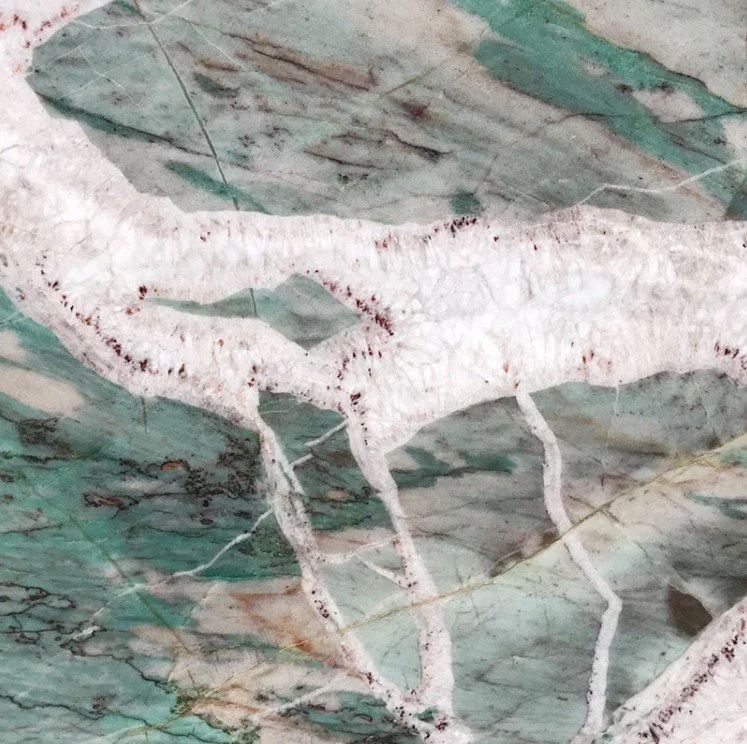
*Image by MSI Surfaces

*Image by MSI Surfaces
Quartzite is often considered one of the strongest natural countertop materials available, making it a top choice for homeowners who want both natural beauty and high-performance durability. It combines the look of natural stone with performance characteristics that rival many engineered surfaces.
Overall Durability Performance
Quartzite stands out among natural stones because of its exceptional hardness and resistance to everyday wear.
Quartzite is one of the hardest natural stones used in countertop applications.
Quartzite offers outstanding durability that makes it suitable for high-use kitchens.
Quartzite is often chosen by homeowners who want a natural stone that performs at a very high level.
Overall, quartzite is widely regarded as a premium natural option for durability-focused installations.
Heat Resistance
Quartzite performs extremely well under high temperatures, making it ideal for active cooking environments.
Quartzite has excellent heat resistance and can handle hot cookware with minimal risk of damage.
Quartzite is formed under extreme heat and pressure, which contributes to its thermal stability.
Quartzite is less likely to scorch or discolour compared to many other countertop materials.
This makes quartzite a strong choice for kitchens where heat exposure is frequent.
Scratch Resistance
Quartzite is also highly resistant to surface scratching due to its natural hardness.
Quartzite offers excellent scratch resistance and can withstand heavy daily use.
Quartzite is harder than granite in many cases, depending on the specific slab.
Quartzite maintains its surface integrity well even in busy kitchen environments.
This level of scratch resistance makes quartzite one of the most durable natural stone options available.
Stain Resistance and Maintenance
While quartzite performs strongly overall, it still requires some attention when it comes to stain protection.
Quartzite offers better stain resistance than granite in many cases due to its dense structure.
Quartzite is still a natural stone and will require sealing to maintain optimal stain resistance.
Quartzite can vary in porosity depending on the quarry and specific slab quality.
This means maintenance needs can differ from slab to slab, even within the same material category.
Strength and Slab Variation
Quartzite is extremely strong, but its performance can vary depending on geological formation and slab quality.
Quartzite is very strong overall and performs well under pressure and heavy use.
Quartzite slabs can vary in consistency, which may affect durability and appearance.
Quartzite should always be selected carefully to ensure the best balance of strength and aesthetics.
Because of this variation, working with an experienced supplier is important when selecting quartzite.
Overall, quartzite is a high-performance natural stone that offers exceptional hardness, excellent heat and scratch resistance, and strong overall durability, making it one of the best all-around choices for demanding kitchen environments.
6. Porcelain: The Hard, Modern Surface

*Image by MSI Surfaces

*Image by MSI Surfaces
Porcelain countertops have become increasingly popular in modern kitchen design because they combine a sleek, contemporary look with impressive durability. They are engineered to perform exceptionally well in several key categories, particularly stain, scratch, and heat resistance.
Overall Durability Performance
Porcelain is best known for its high-performance surface characteristics and consistent, low-maintenance nature.
Porcelain offers extremely strong overall durability for everyday kitchen use.
Porcelain is manufactured under extreme heat, creating a dense and highly resistant surface.
Porcelain is often chosen for modern designs where both aesthetics and performance are important.
Overall, porcelain delivers a strong balance of durability and visual appeal, especially in contemporary spaces.
Stain Resistance
One of porcelain’s most significant advantages is its outstanding resistance to staining.
Porcelain is extremely stain-resistant because it is non-porous and does not absorb liquids.
Porcelain does not require sealing, which makes it very low-maintenance over time.
Porcelain resists common household spills such as wine, oil, and acidic substances with ease.
This makes porcelain an excellent choice for homeowners who prioritize cleanliness and easy upkeep.
Scratch Resistance
Porcelain also performs exceptionally well when it comes to resisting surface damage.
Porcelain has very high scratch resistance due to its dense, hardened surface.
Porcelain is resistant to damage from knives, cookware, and general kitchen use.
Porcelain maintains its appearance well even in high-traffic environments.
This level of scratch resistance makes porcelain one of the toughest surface materials available for countertops.
Heat Resistance
Porcelain is highly stable under heat exposure, making it suitable for demanding kitchen environments.
Porcelain offers excellent heat resistance and can withstand high temperatures without damage.
Porcelain is manufactured at extremely high firing temperatures, contributing to its thermal stability.
Porcelain is unlikely to scorch, burn, or discolour under normal cooking conditions.
This makes porcelain a reliable option for homeowners who frequently use hot cookware.
Brittleness and Edge Performance
Despite its strength in surface performance, porcelain has some limitations when it comes to impact resistance.
Porcelain can be brittle, which increases the risk of chipping at edges and corners.
Porcelain may crack or chip if heavy objects are dropped directly onto vulnerable areas.
Proper fabrication and edge design are important to minimize potential damage.
This means careful handling and installation are essential for long-term performance.
Installation Considerations
Porcelain slabs often require precise installation techniques to ensure durability and structural integrity.
Thin porcelain slabs may require additional support during installation to prevent stress fractures.
Porcelain installations must be handled carefully to avoid damage during transport and fitting.
Professional installation is strongly recommended to ensure proper alignment and stability.
These considerations help ensure that porcelain countertops perform as intended over time.
Overall, porcelain is a high-performance, low-maintenance surface that excels in stain, scratch, and heat resistance, while requiring careful handling to manage its brittleness and installation demands.
7. Sintered Stone: The Engineered Ultra-Durable Option
*Image by Marble Trend
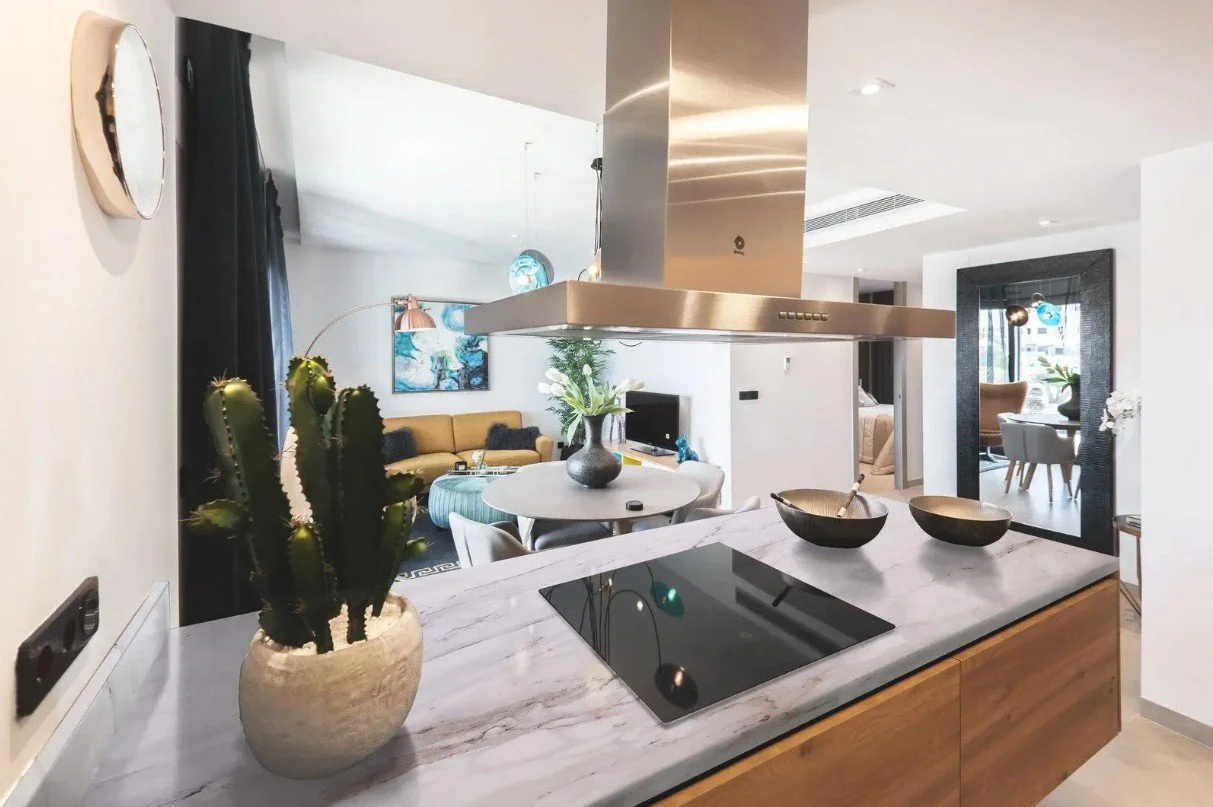
*Image by Marble Trend
Sintered stone is one of the most advanced countertop materials available today, designed to replicate the natural formation of stone under extreme heat and pressure. It is widely recognized for delivering exceptional performance across nearly all durability categories, making it a top-tier choice for demanding residential and commercial applications.
Overall Durability Performance
Sintered stone is engineered for maximum strength and consistency, offering one of the most well-rounded durability profiles in the countertop industry.
Sintered stone provides high resistance across almost all major durability categories.
Sintered stone is designed to perform consistently under heavy daily use in kitchens and high-traffic spaces.
Sintered stone is often considered one of the closest materials to true “all-around durability.”
Overall, sintered stone is widely viewed as a premium performance surface with very few weaknesses.
Resistance to Heat, Stains, UV, and Scratches
One of the key advantages of sintered stone is its ability to withstand multiple forms of wear and environmental exposure.
Sintered stone offers excellent heat resistance and can handle high temperatures without damage.
Sintered stone is highly stain-resistant due to its extremely low porosity.
Sintered stone provides strong UV resistance, making it suitable for both indoor and outdoor applications.
Sintered stone has very high scratch resistance, helping it maintain its appearance over time.
This combination of properties makes sintered stone one of the most versatile countertop materials available.
Porosity and Maintenance
Sintered stone is engineered to be extremely dense, which significantly reduces absorption and maintenance requirements.
Sintered stone has very low porosity, meaning it does not absorb liquids or moisture.
Sintered stone does not require sealing, which makes it low-maintenance over the long term.
Sintered stone is easy to clean and resistant to most household stains and spills.
This makes sintered stone a practical option for homeowners seeking both durability and convenience.
Impact Resistance and Chipping
While sintered stone performs extremely well in most durability categories, it still has some limitations when it comes to impact resistance.
Sintered stone can chip under heavy impact, especially at exposed edges and corners.
Sintered stone is strong overall, but its hardness can also make it more brittle in certain situations.
Proper edge profiles and installation techniques can help reduce the risk of chipping.
This means careful handling and professional installation remain important for long-term performance.
Overall, sintered stone is one of the most advanced countertop materials available, offering exceptional resistance to heat, stains, UV exposure, and scratches, while delivering one of the most complete all-around durability profiles on the market.
8. Marble: Beautiful but Softer and More Sensitive
*Image by Cava Surfaces
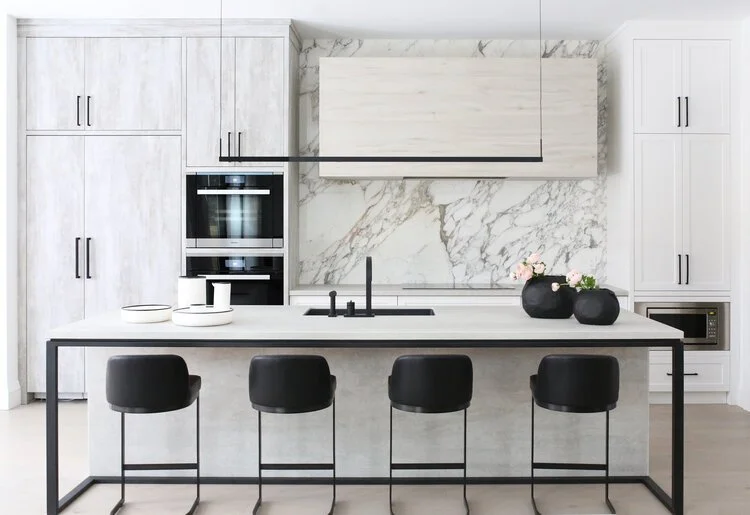
*Image by Cava Surfaces
Marble is one of the most visually iconic natural stones, known for its elegant veining and timeless luxury appeal. However, while it is highly desirable from a design perspective, it is significantly softer and more sensitive than most other countertop materials, which impacts its long-term durability in high-use kitchens.
Overall Durability Performance
Marble is best understood as a design-focused material rather than a high-performance work surface.
Marble is prone to scratching and etching due to its relatively soft composition.
Marble is more vulnerable to everyday wear compared to harder natural stones like granite and quartzite.
Marble is often chosen for its appearance rather than its ability to withstand heavy kitchen use.
Overall, marble performs better in low-traffic or decorative applications than in high-demand cooking environments.
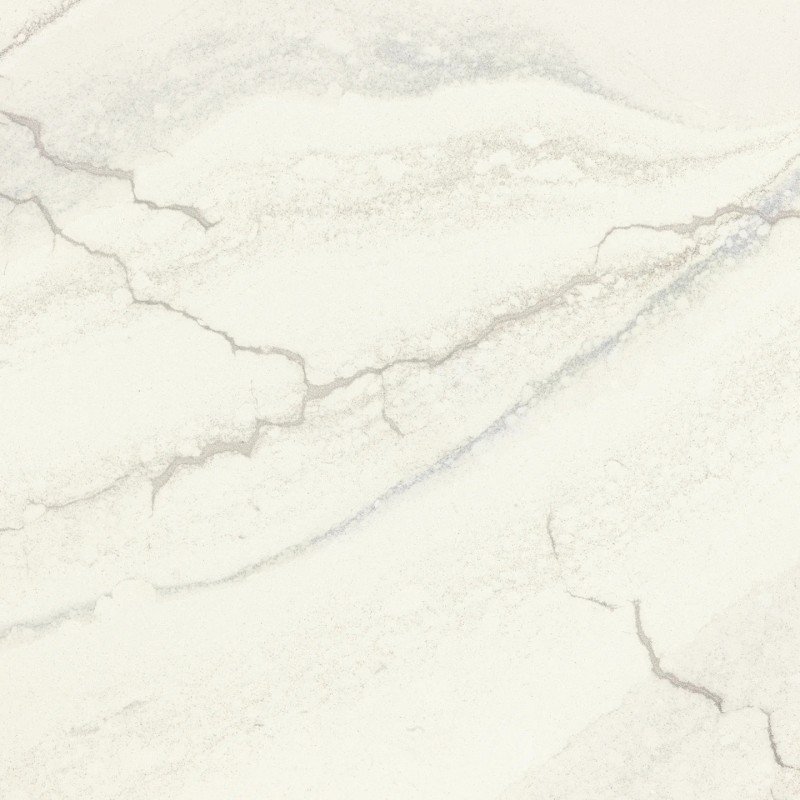
Surface Sensitivity and Etching
One of marble’s main durability concerns is its sensitivity to acids and abrasive contact.
Marble is sensitive to acidic substances, which can cause etching and dull spots on the surface.
Marble can be permanently marked by common household items such as lemon juice, vinegar, and wine.
Marble tends to lose its polished finish more quickly than harder stone materials.
This makes marble a high-maintenance option in kitchens where spills are frequent.
Heat Resistance
Marble performs moderately well when exposed to heat, but it is not immune to thermal damage.
Marble offers moderate heat resistance and can handle typical kitchen temperatures under normal conditions.
Marble is less likely to scorch than some engineered materials, but sudden temperature changes can still cause stress.
Marble may require protection from direct contact with very hot cookware to maintain its surface integrity.
This means basic precautions are still recommended when using marble in kitchen environments.
Impact Resistance and Structural Strength
Compared to harder countertop materials, marble is more susceptible to physical damage from impact.
Marble can crack or chip more easily than denser stones like granite, quartzite, or sintered stone.
Marble is vulnerable to damage along edges and corners if heavy objects are dropped.
Marble requires careful handling during installation and everyday use to avoid structural damage.
This makes marble less suitable for high-impact or high-traffic kitchen areas.
Aesthetic Appeal vs Performance
Despite its durability limitations, marble remains one of the most sought-after materials for luxury design.
Marble is best used for aesthetics rather than high-performance durability.
Marble delivers unmatched visual elegance with its natural veining and soft, luxurious appearance.
Marble is ideal for homeowners who prioritize design impact over heavy-duty functionality.
Overall, marble is a premium design material that offers timeless beauty, but it requires careful maintenance and realistic expectations regarding durability.
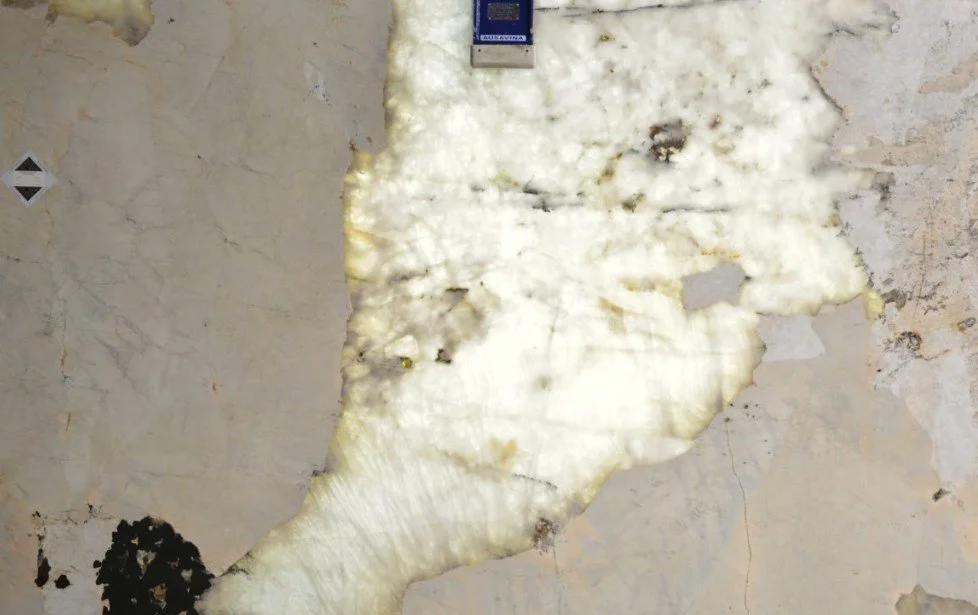
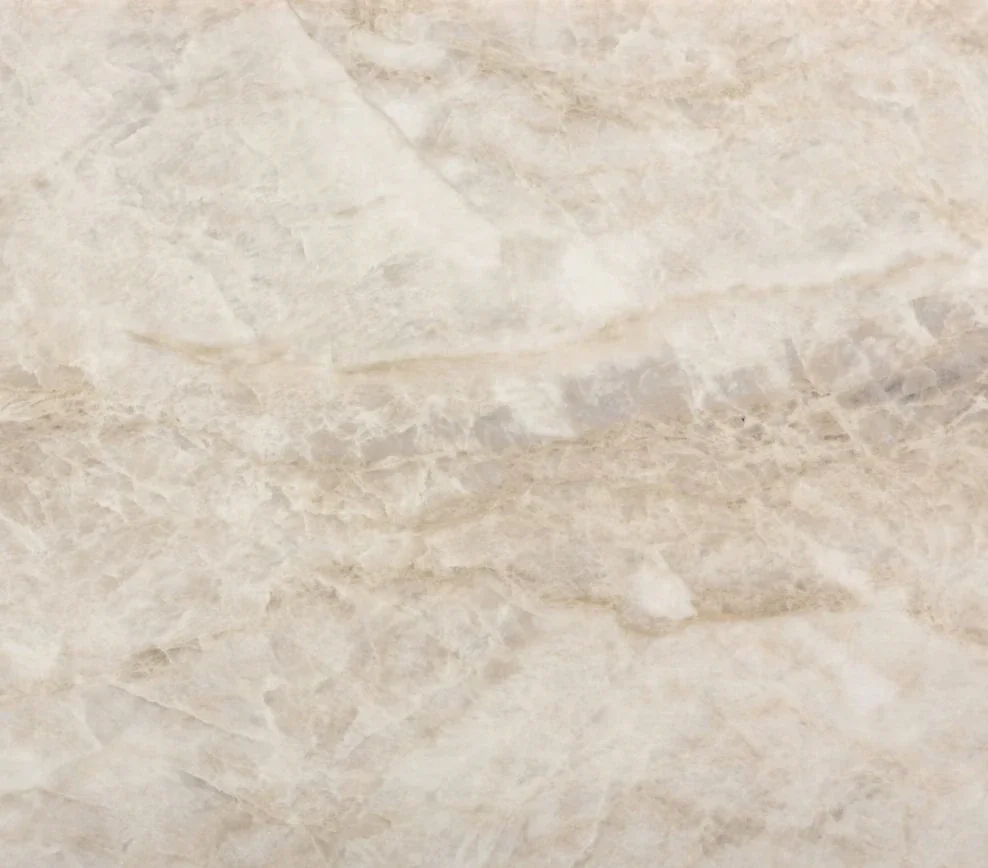
9. Onyx: The Most Fragile Luxury Stone
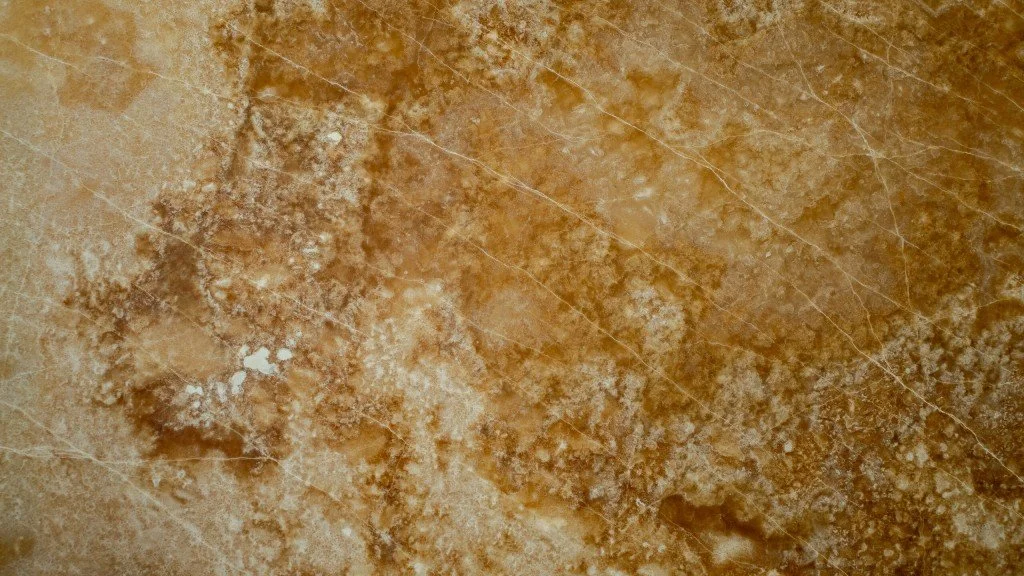
*Image by Cava Surfaces
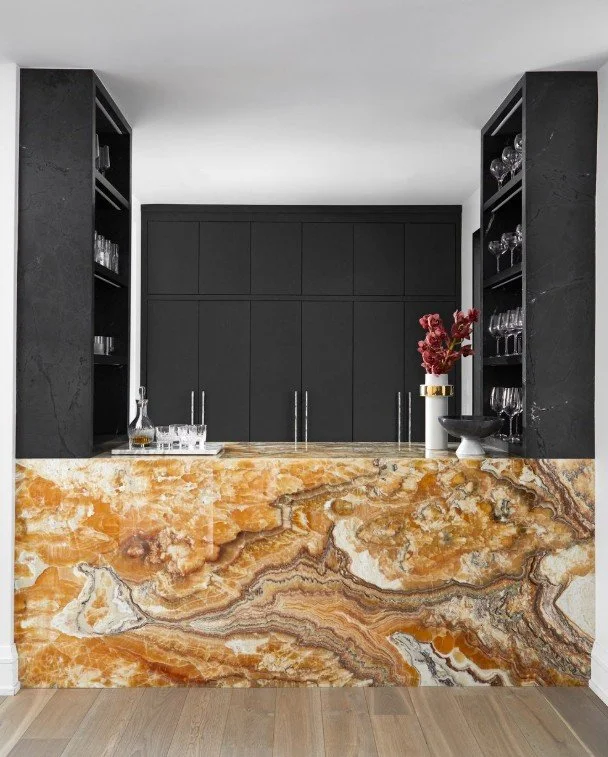
*Image by Cava Surfaces
Onyx is one of the most visually striking natural stones used in interior design, known for its dramatic veining and translucent quality. However, despite its luxury appeal, it is also one of the most fragile countertop materials, making it far less suitable for everyday kitchen use compared to other natural and engineered stones.
Overall Durability Performance
Onyx is primarily valued for its appearance rather than its functional strength or long-term durability.
Onyx is very soft compared to most other countertop materials, including marble and granite.
Onyx has a high risk of scratching and surface damage under normal use conditions.
Onyx is generally not recommended for high-traffic or heavily used kitchen environments.
Overall, onyx is considered a specialty material that prioritizes aesthetics over durability.
Surface Sensitivity and Staining
One of the most significant limitations of onyx is its poor resistance to staining and surface wear.
Onyx has poor stain resistance due to its natural porosity and softness.
Onyx can absorb liquids quickly, leading to visible discolouration if spills are not cleaned immediately.
Onyx requires careful maintenance to preserve its appearance over time.
This makes onyx highly sensitive in environments where spills and food preparation are frequent.
Impact Resistance and Structural Strength
Onyx is also highly vulnerable to physical damage, especially under pressure or impact.
Onyx can crack under load or impact, even from relatively minor forces compared to harder stones.
Onyx is prone to chipping along edges and corners due to its soft structure.
Onyx requires careful installation and handling to avoid damage during fabrication and use.
This means onyx is not suitable for heavy-duty countertop applications.
Ideal Applications
Despite its limitations, onyx remains a popular choice in specific design contexts where durability is not the primary concern.
Onyx is best used for decorative applications such as feature walls, bar fronts, and accent pieces.
Onyx is often selected for luxury installations where visual impact is more important than functionality.
Onyx is not recommended for heavy-use kitchens or work surfaces.
Overall, onyx is a high-end design material that delivers unmatched visual beauty but requires careful use and limited exposure to everyday wear.
10. Side-by-Side Durability Comparison Chart
To help simplify how these materials compare in real-world performance, the chart below provides a clear side-by-side breakdown of each countertop option across the most important durability categories. This quick reference makes it easier to see where each material excels—and where it may have limitations—so you can better understand which option aligns with your lifestyle and kitchen needs.
| Material | Stain Resistance | Scratch Resistance | Heat Resistance | Crack Resistance | Chip Resistance | Load Bearing Strength |
|---|---|---|---|---|---|---|
| Granite | Medium–High | High | Very High | High | Medium | High |
| Quartz | Very High | High | Medium | High | Medium | High |
| Quartzite | Medium | Very High | Very High | Very High | Medium | Very High |
| Porcelain | Very High | Very High | Very High | Medium | Medium–Low | High |
| Sintered Stone | Very High | Very High | Very High | High | Medium | Very High |
| Marble | Low | Low | Medium | Medium | Low | Medium |
| Onyx | Very Low | Very Low | Low | Low | Very Low | Low |
11. Choosing the Right Countertop: Matching Durability to Real-World Use
There is no single universal winner when it comes to countertop durability, because “most durable” depends entirely on how the surface will be used and what performance factors matter most to you. Each material excels in different categories, which means the best choice is the one that aligns with your lifestyle, cooking habits, and design priorities.
There Is No Single “Most Durable” Material
Durability is not one-dimensional, and no countertop material leads in every category at the same time.
There is no universal winner when comparing countertop durability across all performance factors.
“Most durable” depends on which type of durability matters most, such as heat resistance, stain resistance, or impact resistance.
Different materials are engineered or formed in ways that naturally make them stronger in some areas and weaker in others.
This means the right countertop choice is always context-dependent rather than absolute.
Best Materials by Durability Strength
Different materials stand out as leaders in specific performance categories, depending on what you prioritize most.
The best overall balanced durability is typically found in granite and quartzite due to their strong all-around performance.
The best stain resistance is found in quartz and sintered stone because of their non-porous structure.
The best heat resistance is offered by quartzite, porcelain, and sintered stone, which can withstand high temperatures more effectively.
The best scratch resistance is also found in quartzite, porcelain, and sintered stone due to their extreme hardness.
The best luxury aesthetic, but least durable performance, is found in marble and onyx, which prioritize appearance over strength.
Understanding these strengths helps narrow down which material is best suited for your specific needs.
Choosing the Right Countertop for Your Lifestyle
Once you understand how each material performs, the next step is matching it to your daily habits and design goals.
Heavy cooking kitchens benefit most from quartzite, granite, or sintered stone due to their heat and impact resistance.
Low-maintenance homes are best suited to quartz, which offers excellent stain resistance and easy care.
Modern design-focused kitchens that still require strong performance often pair well with porcelain or sintered stone.
Luxury, low-use spaces such as bars, accent areas, or decorative kitchens are ideal for marble or onyx.
By aligning material performance with how the space will actually be used, homeowners can make a more informed and long-lasting countertop decision.
Guide to choosing the right countertop material for your lifestyle, covering four kitchen types: heavy cooking, low-maintenance, modern design, and luxury spaces.
Natural Stone City
Choosing the Right Countertop for Your Lifestyle
Match your daily habits and design goals to the ideal material
High-traffic kitchens need materials that stand up to heat, impact, and daily wear without compromising their surface.
Engineered quartz offers excellent stain resistance and requires minimal upkeep — ideal for busy households.
Contemporary aesthetics with strong performance — sleek, large-format surfaces that hold up to real kitchen use.
Stunning in bars, decorative kitchens, and low-use accent areas where visual impact takes priority over durability.
Final Thoughts: Choosing the Right Countertop with Natural Stone City
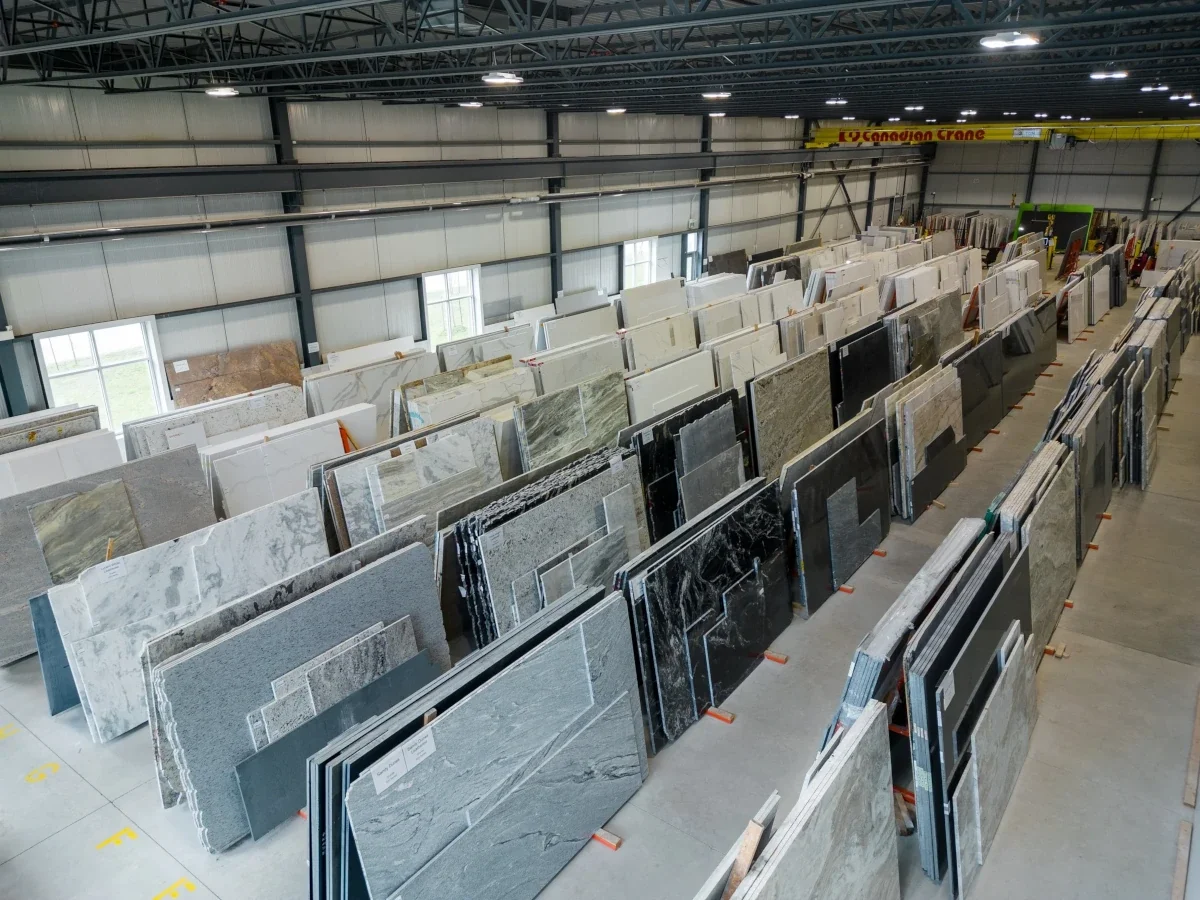
When it comes to answering the question “What is the most durable countertop material?”, the most important takeaway is that there is no single correct answer. Every material has its own strengths and weaknesses, and true durability depends on how the countertop will be used in your home, what level of maintenance you are comfortable with, and which performance factors matter most to you.
In other words, there is no universal “most durable” countertop, only the most durable option for your specific needs and lifestyle.
Choosing the right surface can feel overwhelming with so many options available, from granite and quartz to quartzite, porcelain, sintered stone, marble, and onyx. That’s where expert guidance makes all the difference.
At Natural Stone City, our stone specialists can help you compare materials side by side, understand real-world performance differences, and find the perfect countertop for your space. Whether you’re designing a busy family kitchen or a luxury statement piece, we’re here to help you make a confident, informed decision that you’ll love for years to come.
What Our Customers Are Saying…
“A fabulous company. I say that as this is the fourth time I have ordered countertops from Natural Stone City in the past 17 years for myself and my family. Each time I return I do so as the product they sell is exemplary. They even replaced the black granite they installed 17 years ago with a more modern one. The prices are also better than anywhere else I have checked with. Very pleased.”
— Shawn Thompson
“As a local contractor Never an issue with this company been with them for 10+ years Always been well taken care of with all of their staff with the right prices for a quality job. Highly recommend.”
-Scott Wenderoth
“Gia was excellent at taking us through the warehouse, helping us get exactly what we wre looking for!”
-Scott Wagler