
TAJ MAHAL QUARTZITE
Pricing & Cost Breakdown
Planning a kitchen or bathroom renovation requires a clear, transparent view of material and installation expenses. While Taj Mahal quartzite represents a premium investment in natural stone, its incredible durability, heat resistance, and low-maintenance luxury make it one of the most value-driven choices for modern Ontario homes. Use this guide to explore square-footage pricing, key cost factors, and long-term return on investment to help you budget your custom project with confidence.
How Expensive Is Taj Mahal Quartzite?
With a kitchen or home renovation design, understanding the cost of materials is the most important thing. Taj Mahal Quartzite is an expensive natural stone, yet its charm and long life make it worth the investment for many homeowners.
Why Invest in Taj Mahal Quartzite?
Where Taj Mahal Quartzite might be more expensive up-front, there are some excellent reasons to use this natural stone:
Eternal Style: Its soft, pale colour and sophisticated veining create a design element that's always in style.
Longevity: Quartzite is more scratch-resistant and harder than granite and much more long-lasting than marble and therefore ideal for high-use kitchens and homes.
Resale Value: High-end natural stone surfaces, such as quartzite, will increase your home's value for any potential future buyers.
Low Maintenance: Properly sealed quartzite is stain-resistant and a low-maintenance choice in the long run.
For those who want a luxurious but durable material that will last for decades, investing in Taj Mahal Quartzite is a decision that offers you both timelessness and long-term value.

Average Cost Per Square Foot
Understanding the difference between unworked slab material pricing and full turnkey fabrication and installation costs helps you budget accurately for your kitchen or bathroom project.
Slab Cost Only
- Raw Uncut Slabs: Purchase rate for unprocessed full slabs directly from the wholesaler or distributor.
- Varies by Slab Grade: Pricing depends heavily on background clarity, depth of cream tones, and vein consistency.
- Thickness Variations: 2cm (¾") slabs start near the lower bound, while standard luxury 3cm (1¼") slabs sit at the upper range.
- Excludes Labor: Does not include laser measuring, digital template layout, cutting, edging, or site installation.
Full Fabrication & Installation
- Complete Raw Material: Includes full slab material, waste factor, and delivery to our local fabrication shop.
- Precision Digital Templating: On-site laser mapping to ensure exact wall, corner, and seam fits.
- Diamond CNC Cutting: Specialized high-pressure diamond tooling required to shape ultra-hard quartzite stone.
- Finished Edge Profiles: Standard eased or bevel edges polished by hand.
- Turnkey Installation: Professional delivery, mechanical mounting, seam leveling, and initial stone sealing.
*Pricing Disclaimer: The prices listed above serve as general estimates and baseline guides only. Actual costs vary based on specific slab availability, custom fabrication requirements, edge choices, and project scope. Prices are subject to change without prior notice. Please contact us or request a custom quote for exact project pricing.
Key Factors That Influence the Cost
Understanding what drives the pricing of Taj Mahal quartzite helps you plan your project budget accurately and make informed design decisions.
Surface Area & Material Usage
Total square footage across countertops, islands, and accent walls is the primary cost driver. Because natural stone is purchased by the slab, projects requiring extra material to complete seamless layouts will increase overall costs.
Slab Grade & Clarity
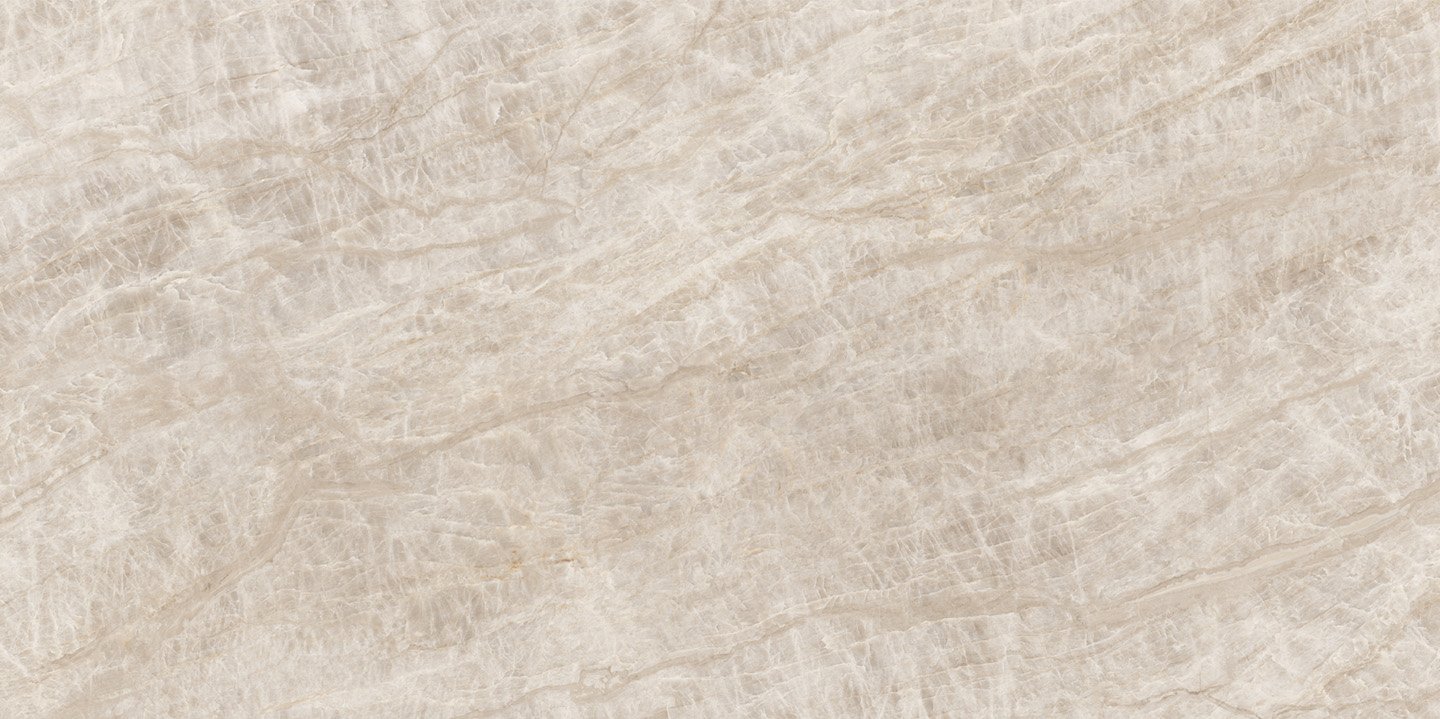
Taj Mahal slabs are graded on background clarity, warmth, and veining density. Premium "A-Grade" slabs with translucent cream backgrounds and crisp amber veining command higher prices than lower-tier slabs with heavy grey clouding.
Slab Thickness (2cm vs. 3cm)
Standard 3cm (1¼") slabs provide a substantial profile and overhang strength without requiring underlayment, typically adding 10%–20% to material costs compared to thinner 2cm options.
Fabrication & Installation Complexity
Quartzite requires specialized diamond equipment to cut. Unique room angles, multiple cooktop cutouts, undermount sink preparations, and custom seams increase fabrication time and precision labor costs.
Edge Profile Selection
Standard eased or rounded edges are included in baseline pricing. Custom edge profiles—such as Ogee, Dupont, or built-up mitered edges simulating extra-thick slab profiles—require skilled hand-finishing.
Waterfall Ends & Miter Cuts
A waterfall edge where stone flows seamlessly down an island side creates a striking focal point. Achieving a virtually invisible 45-degree miter joint demands exact vein-matching and expert craft.
Vein Matching & Bookmatching
Achieving fluid movement across seams or full-height backsplashes requires strategic cutting. Mirror-image "bookmatched" slab sets require purchasing consecutive slabs and precise laser mapping.
Full-Height Backsplash Applications
Extending quartzite vertically up the wall replaces tile with a seamless luxury panel. This requires additional full slabs and intricate electrical outlet cutouts during fabrication.
Long-Term Value: Taj Mahal vs. Marble
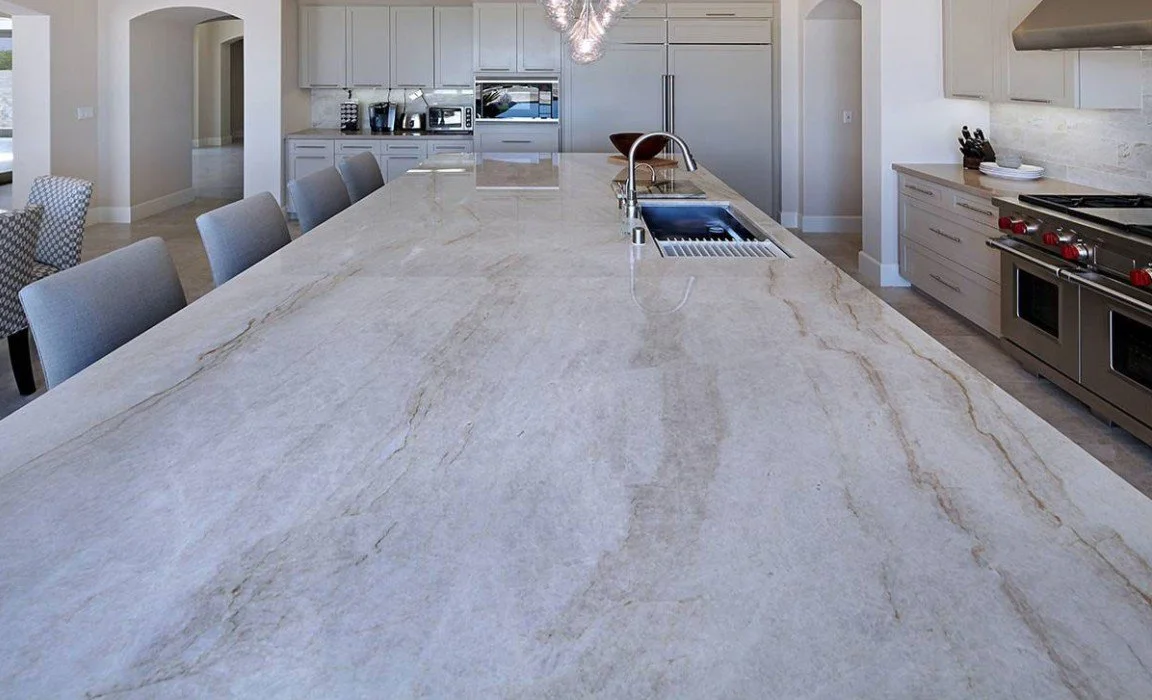
While classic white marble carries a similar upfront aesthetic, evaluating long-term maintenance, etching repairs, and potential replacement costs reveals why Taj Mahal quartzite is the smarter investment.
Taj Mahal Quartzite
- Initial Investment: Slightly higher upfront material and fabrication cost due to ultra-hard stone composition.
- Scratch & Heat Resistance: Harder than granite (7 on the Mohs scale). Hot pans, sharp knives, and heavy cookware will not scorch or scratch the surface.
- Stain & Acid Vulnerability: Zero chemical etching from lemon juice, wine, vinegar, or oils. Requires minimal simple sealing every 1–2 years.
- 10-Year Ownership Cost: $0 in restoration fees. Retains its original factory polish for decades without resurfacing or replacement.
Traditional Natural Marble
- Initial Investment: Moderate to high initial purchase price, but easier and less expensive to cut during fabrication.
- Scratch & Heat Resistance: Soft calcium structure (3 on the Mohs scale). Prone to knife scratches, dulling, and chipping along edges over time.
- Stain & Acid Vulnerability: Reacts instantly with acidic foods (citrus, coffee, wine) causing permanent matte dull spots ("etching") and stubborn stains.
- 10-Year Ownership Cost: High recurring expense. Requires frequent professional honing/re-polishing or total slab replacement within 7–10 years.
Ready to bring Taj Mahal Quartzite beauty into your home? Visit Natural Stone City to get started.
Over 1,000 Slabs of Stone in Inventory
Find the Perfect Slab of Stone for Your Project.
Our Materials
Browse different materials, each with unique looks and benefits.


NSC is a certified installer of the following products:
Sinterstone
Lapitec


Corian Quartz
Silestone Quartz


Natural Stone
City


Kitchener
2188 Shirley Drive
Kitchener, ON N2B 0A6
Hours
Monday - Friday: 9am - 5pm
Saturday: 9am - 3pm
Phone
(519) 489-0441
London
1106 Dearness Dr #5A
London, ON N6E 1N9
Hours
Monday - Friday: 9am - 5pm
Saturday: By appointment only
Phone
(519) 266-3663