
How To Select The Right Countertop for your Kitchen
In short: Choose a countertop material that fits your kitchen lifestyle, budget, and maintenance preferences, then match it with the right colour, style, edge, and professional installation for a perfect fit.
Selecting the right countertop for your kitchen is one of the most important decisions when designing or renovating your kitchen. Your countertops affect the look, functionality, maintenance, and long-term durability of your space, so it’s important to choose a material and style that fits both your lifestyle and your budget. With so many options available, including granite, quartz, marble, and laminate, it can be difficult to know where to start. This guide will walk you through how to select the right countertop for your kitchen so you can make a confident decision.
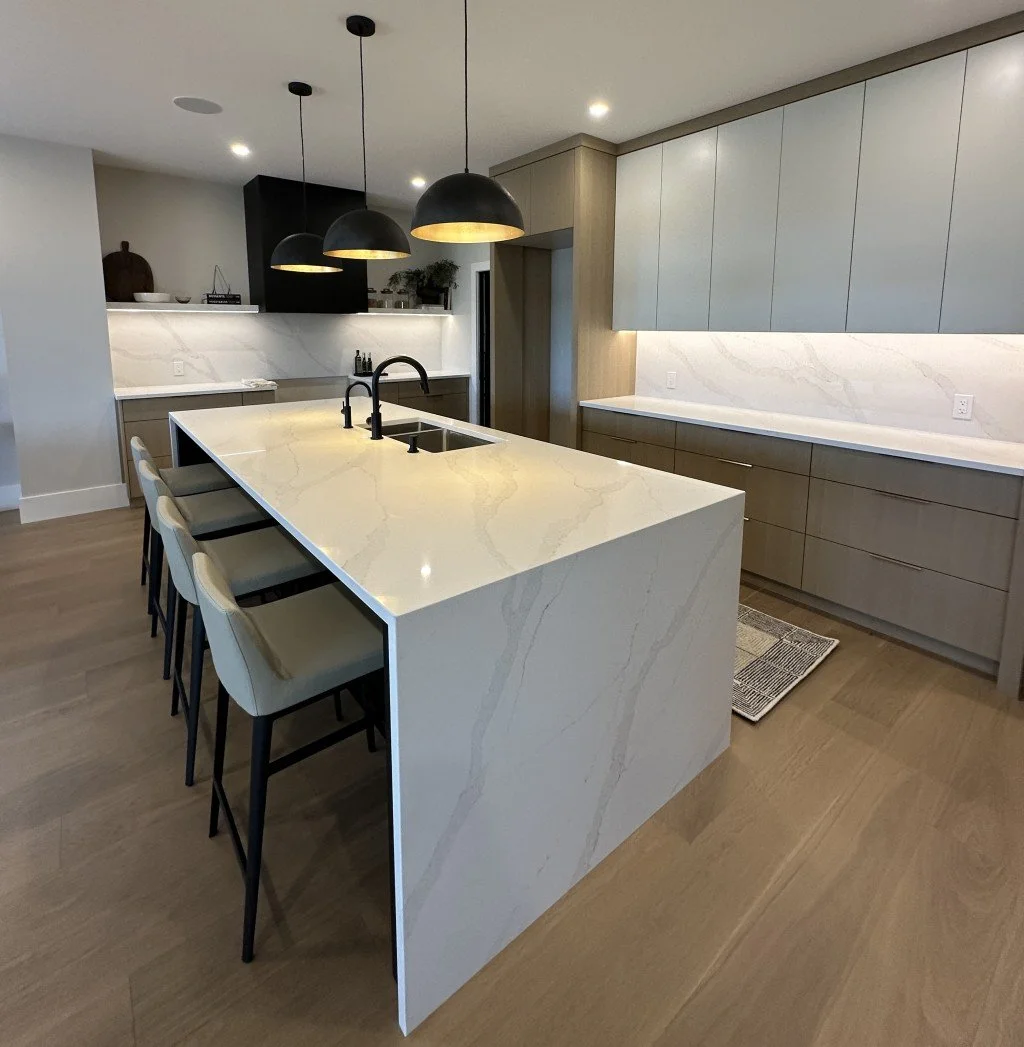
*Image by Natural Stone City
If you need help choosing the best material, colour, or layout, the team at Natural Stone City can help you compare options and find the perfect countertops for your kitchen and budget.
Key Takeaways
Choosing the right countertop starts with selecting the material that fits your lifestyle, kitchen usage, and design preferences.
Your budget should include material costs, installation, edge profiles, cutouts, backsplashes, and removal of existing countertops.
Consider durability and maintenance: high-use kitchens benefit from strong, low-maintenance materials like quartz, granite, or sintered stone.
Colour and style should complementyour cabinets, flooring, and overall kitchen design; always view samples in your own lighting.
Most durable countertops include quartz, granite, quartzite, sintered stone, and porcelain.
Lowest maintenance countertops include quartz, porcelain, sintered stone, and laminate, ideal for busy or low-upkeep kitchens.
Edge profiles and finishes impact both aesthetics and functionality, so choose edges and finishes that suit your style and daily use.
Accurate measurements and layout planning are essential; professional templating ensures a perfect fit for countertops, islands, and cutouts.
Professional installation is recommended for stone and engineered surfaces to avoid cracks, ensure level surfaces, and achieve seamless results.
Lead times can vary, but suppliers with in-stock slabs, like Natural Stone City, can often install countertops in as little as one week.
When choosing a countertop supplier, look for slab selection, professional installation, positive reviews, showroom access, warranty, and experience.
How To Select The Right Countertop for your Kitchen
1. Are All Kitchen Countertop Materials the Same?
Learning how to select the right countertop for your kitchen is the most important first step in your kitchen design. The material you select will determine how your countertops look, how they perform over time, and how much maintenance they require.
There are several popular countertop materials to choose from, each with its own strengths and ideal use cases. Understanding the differences will help you narrow down your options quickly.
| Material | Durability | Maintenance | Appearance & Best Use | Price Range |
|---|---|---|---|---|
Quartz |
High | Low | Consistent patterns, modern finish Heavy-use kitchens |
$$$ |
Granite |
High | Medium | Natural stone veining, unique slabs Luxury kitchens, cooking |
$$$–$$$$ |
Marble |
Medium | High | Classic, elegant veining Low-use & luxury areas |
$$$–$$$$ |
Quartzite |
Very High | Medium | Dramatic natural veining High-use & luxury spaces |
$$$$ |
Sintered Stone |
Very High | Very Low | Modern, consistent patterns Heavy-use & outdoor kitchens |
$$$$ |
Porcelain |
Very High | Very Low | Sleek, modern & versatile Indoor/outdoor, high-traffic |
$$$$ |
Butcher Block |
Medium | High | Warm, natural wood look Casual kitchens, prep areas |
$$–$$$ |
Laminate |
Low | Low | Wide variety of patterns & colors Budget kitchens, rentals |
$ |
Granite Countertops
Granite is one of the most popular natural stone countertops, known for its durability and unique patterns.
Granite is extremely durable and resistant to heat and scratches, making it ideal for busy kitchens.
Granite requires periodic sealing to protect against stains, but daily maintenance is minimal.
Granite offers a natural, one-of-a-kind appearance with unique veining and colour variations.
Granite typically falls into the mid- to high-price range depending on the slab quality and rarity.
Granite is best suited for homeowners who want a durable, natural stone surface with long-term value.
Granite is a great all-around choice if you want a balance of performance, beauty, and longevity.
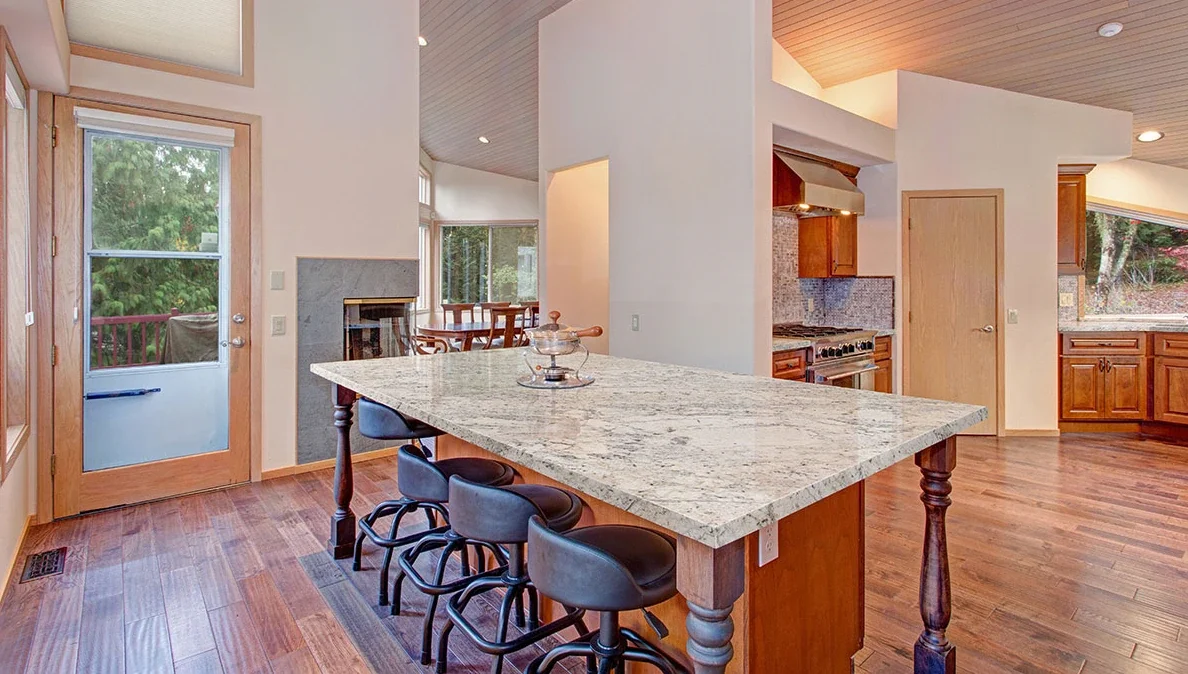
*Image by MSI Surfaces
Quartz Countertops
Quartz is an engineered stone designed for durability and low maintenance.
Quartz is highly durable and resistant to scratches, chips, and stains.
Quartz is non-porous and does not require sealing, making it one of the lowest-maintenance options available.
Quartz offers a consistent appearance and comes in a wide range of colours and patterns, including designs that mimic natural stone.
Quartz is typically priced in the mid- to high-range, similar to or slightly higher than granite.
Quartz is best suited for busy households that want a clean look with minimal upkeep.
Quartz is ideal for homeowners who want durability without the need for ongoing maintenance.
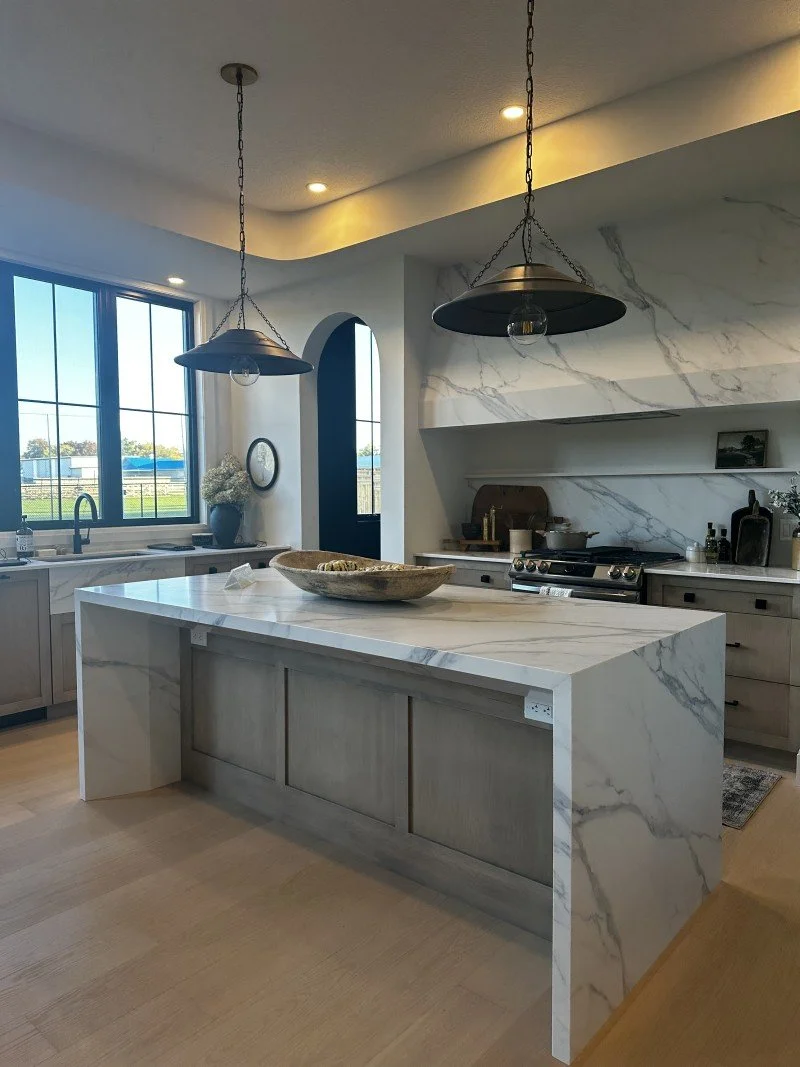
*Image by Natural Stone City
Marble Countertops
Marble is known for its timeless elegance and high-end appearance.
Marble is softer than granite and more prone to scratching and etching.
Marble requires regular sealing and careful maintenance to prevent staining.
Marble features a classic, luxurious look with soft veining that is highly sought after.
Marble is typically in the higher price range due to its premium status.
Marble is best suited for low-traffic kitchens or homeowners focused on aesthetics over durability.
Marble is a beautiful option, but it requires more care than most other materials.
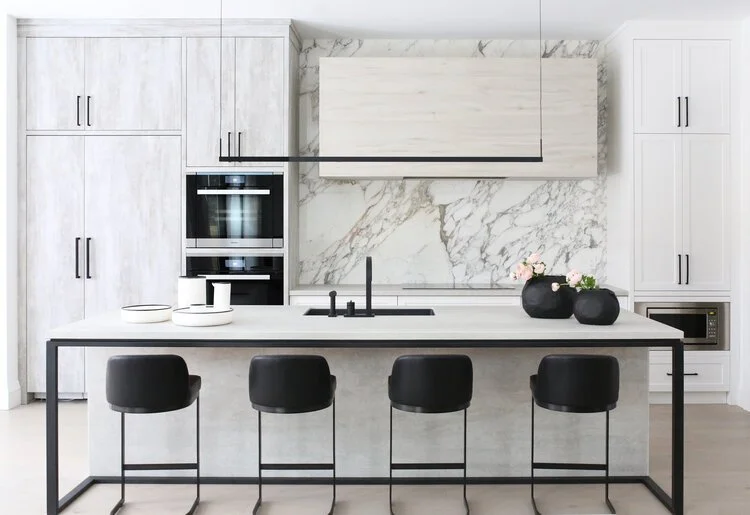
*Image by Cava Surfaces
Quartzite Countertops
Quartzite is a natural stone that offers the look of marble with greater durability.
Quartzite is extremely durable and harder than granite in many cases.
Quartzite requires sealing to maintain stain resistance, similar to granite.
Quartzite often resembles marble, but with more natural variation and depth.
Quartzite is generally in the high-price range due to its durability and appearance.
Quartzite is best suited for homeowners who want the look of marble with better performance.
Quartzite is an excellent choice for combining luxury aesthetics with strength.
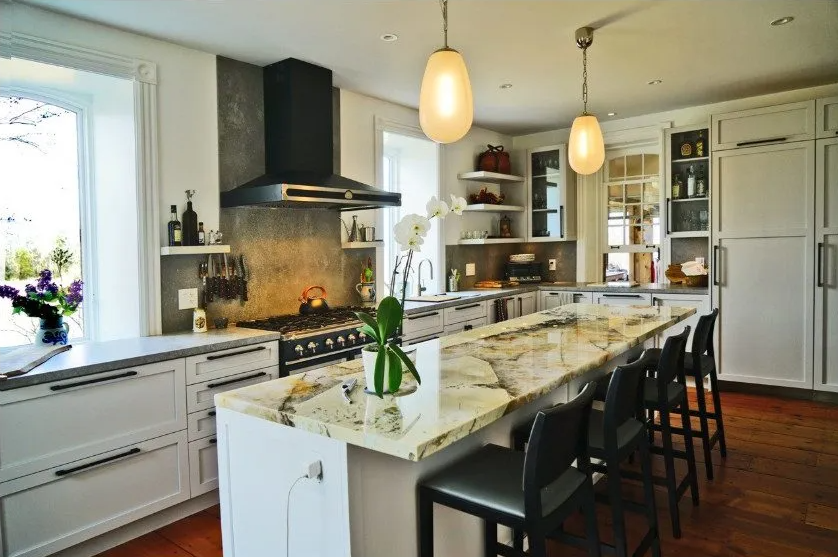
*Image by Marble Trend
Sintered Stone Countertops
Sintered stone is a newer countertop material that is becoming increasingly popular due to its durability and modern appearance. It is made by compressing natural minerals under extreme heat and pressure, which creates a very dense and durable surface.
Sintered stone is extremely durable and highly resistant to scratches, heat, stains, and UV rays.
Sintered stone requires very little maintenance and does not need sealing because it is non-porous.
Sintered stone offers a modern, consistent appearance and is often designed to look like marble, concrete, or natural stone.
Sintered stone typically falls into the mid- to high-price range depending on the brand and thickness.
Sintered stone is best suited for modern kitchens, outdoor kitchens, and homeowners who want a very durable, low-maintenance surface.
Sintered stone is a great option for homeowners who want a sleek, modern look combined with extremely high durability and very low maintenance.
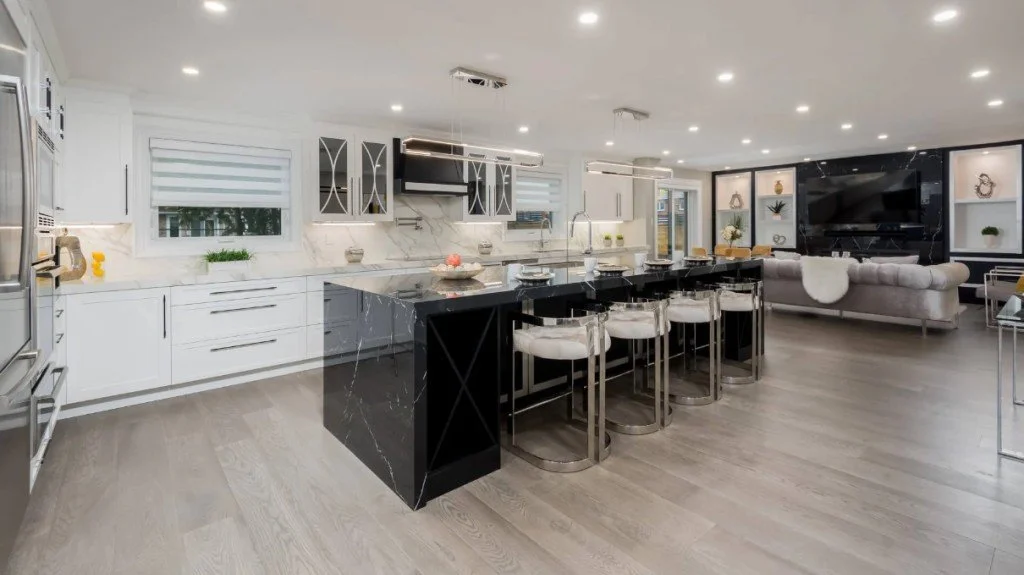
*Image by Marble Trend
Porcelain Countertops
Porcelain countertops are another durable, low-maintenance option that has become more common in modern kitchen designs. Porcelain is made from refined clay and fired at very high temperatures, which creates a hard, dense surface.
Porcelain countertops are very durable and resistant to heat, scratches, stains, and UV exposure.
Porcelain countertops are non-porous and very low maintenance, requiring only regular cleaning.
Porcelain countertops often feature designs that mimic marble, stone, or concrete with very realistic patterns.
Porcelain countertops are typically in the mid- to high-price range, similar to quartz or granite.
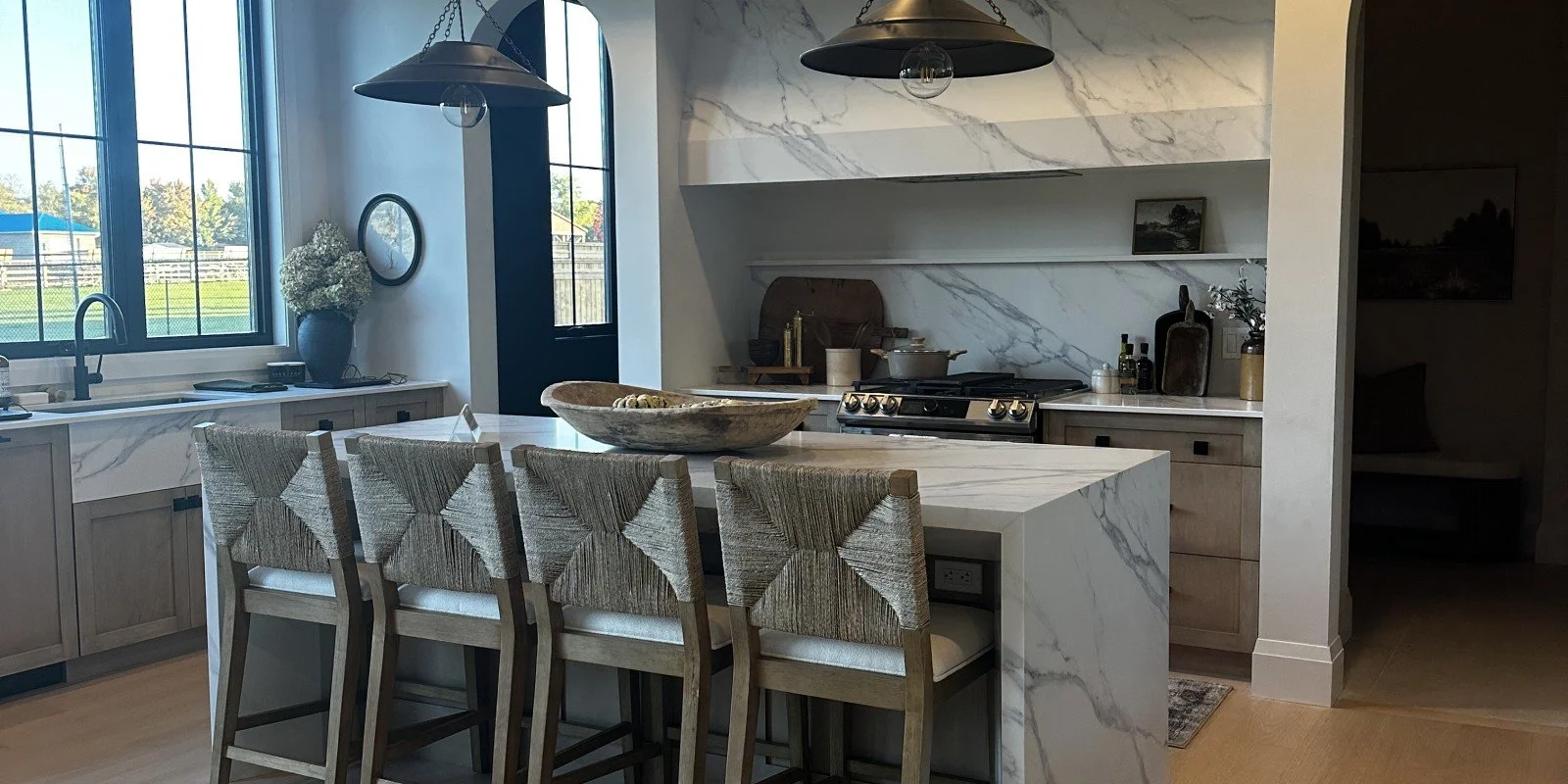
Porcelain countertops are best suited for modern kitchens, waterfall islands, and homeowners looking for a durable surface with a thin, contemporary profile.
Porcelain countertops are an excellent choice for homeowners who want a modern appearance, low maintenance, and strong resistance to heat and stains.

*Image by MSI Surfaces
Laminate Countertops
Laminate is a budget-friendly option that has improved significantly in appearance over the years.
Laminate is less durable than stone and can be damaged by heat and sharp objects.
Laminate is very low-maintenance and easy to clean.
Laminate comes in a wide variety of colours and patterns, including realistic stone looks.
Laminate is one of the most affordable countertop options available.
Laminate is best suited for budget-conscious projects, rentals, or quick upgrades.
Laminate is a practical choice when affordability is the top priority.
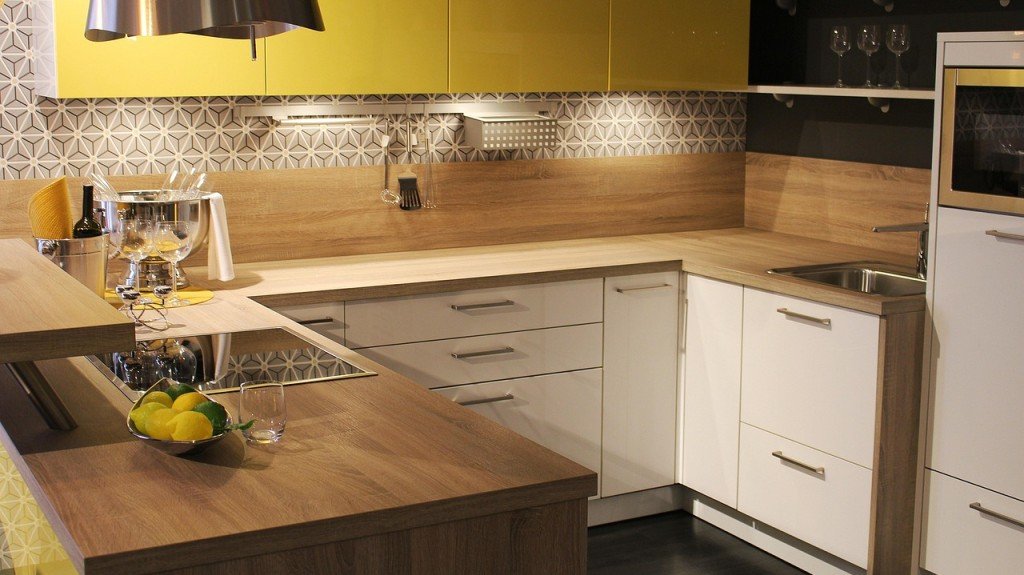
Butcher Block Countertops
Butcher block countertops bring warmth and natural texture to a kitchen.
Butcher block is softer than stone and can be scratched or dented more easily.
Butcher block requires regular oiling to prevent drying and cracking.
Butcher block offers a warm, natural wood appearance that suits rustic or farmhouse styles.
Butcher block is typically in the low- to mid-price range depending on wood type.
Butcher block is best suited for accent areas, islands, or homeowners who enjoy natural materials.
Butcher block is a great way to add warmth, but it requires consistent care.
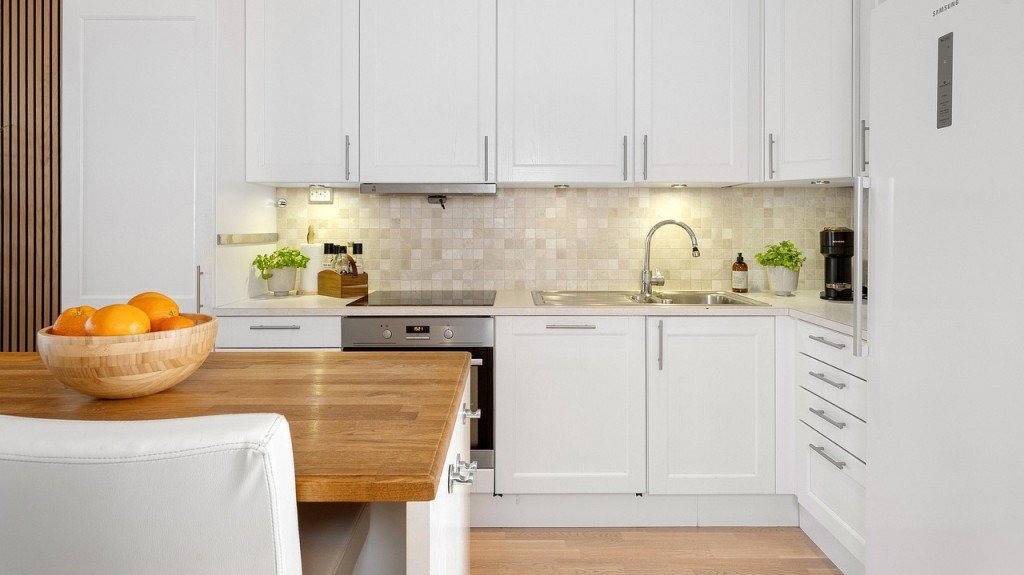
Quick Tip: Choosing the Right Material
To simplify your decision, keep these quick guidelines in mind:
If you want low maintenance, you should choose quartz.
If you want natural stone, you should choose granite or quartzite.
These simple rules can help you narrow down your options before diving into colours, styles, and finishes.
Choosing the right countertop material sets the foundation for your entire kitchen, so take the time to compare your options carefully before moving on to the next step.
2. How Do I Know What Type of Countertop I Need?
After choosing a few countertop materials you like, the next step is to think about how you actually use your kitchen. This step is very important because the best countertop for one household may not be the best choice for another. Your cooking habits, family situation, and maintenance preferences should all influence your decision.
When selecting a countertop, consider the following lifestyle questions:
If you cook often, you will need a countertop that is durable, scratch-resistant, and easy to clean.
If you have kids, you should choose a countertop that resists stains, scratches, and spills.
If you place hot pans directly on the counter, you should choose a material that is heat-resistant.
If you want low maintenance, you should choose a non-porous material that does not require sealing.
If you entertain often, you may want a countertop that makes a visual statement and adds style to your kitchen.
Thinking about how your kitchen is used every day will help you avoid choosing a material that looks great but doesn’t perform well for your lifestyle.
Best Countertops for Heavy-Use Kitchens
Heavy-use kitchens need countertops that can handle cooking, cleaning, spills, and daily wear without showing damage quickly.
The best materials for heavy-use kitchens include:
Quartz is an excellent choice for heavy-use kitchens because it is non-porous, stain-resistant, and very durable.
Granite is a great option for heavy-use kitchens because it is heat-resistant and highly scratch-resistant.
Quartzite works well in heavy-use kitchens because it is extremely hard and very durable.
Porcelain and sintered stone are also good options because they resist heat, scratches, and stains.
If your kitchen is used daily for cooking and family activities, durability and low maintenance should be your top priorities.
Best Countertops for Low-Use Kitchens
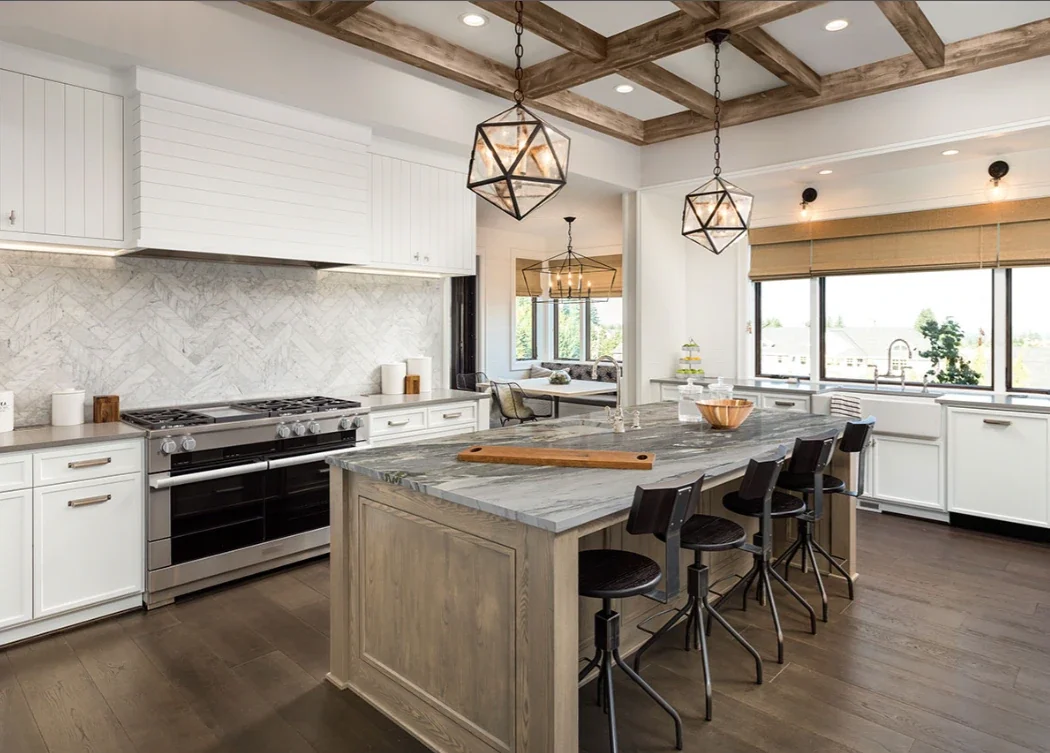
*Image by MSI Surfaces
Some kitchens are used less frequently, such as in condos, secondary homes, or homes where cooking is minimal. In these situations, appearance may be more important than maximum durability.
The best materials for low-use kitchens include:
Marble is a good choice for low-use kitchens because it offers a high-end look but requires more maintenance.
Butcher block can work well in low-use kitchens because occasional maintenance is manageable.
Laminate is a budget-friendly option that works well in kitchens with light use.
If your kitchen does not see heavy daily use, you may have more flexibility to choose materials based on appearance rather than durability alone.
Best Countertops for Rental Properties
Rental properties require countertops that are affordable, durable, and easy to maintain.
The best materials for rental properties include:
Laminate is a popular choice for rentals because it is affordable and easy to replace if damaged, but you may want to consider how often it will need to be replaced and whether it may end up costing you more in the long run.
Quartz is a good long-term investment for rentals because it is very durable and low-maintenance.
Granite can work well in higher-end rentals because it is durable and adds value to the property.
For rental properties, the goal is to balance durability, cost, and ease of maintenance.
Best Countertops for Luxury Kitchens
Luxury kitchens often focus on appearance, unique materials, and high-end finishes.
The best materials for luxury kitchens include:
Marble is commonly used in luxury kitchens because of its elegant and timeless appearance.
Quartzite is popular in luxury kitchens because it combines natural beauty with high durability.
High-end granite slabs with unique patterns are often used in luxury kitchen designs.
Porcelain and sintered stone are used in modern luxury kitchens, especially for waterfall islands and large slabs.
In luxury kitchens, the countertop often becomes a focal point and design feature.
Best Countertops for Outdoor Kitchens
Outdoor kitchens require materials that can handle temperature changes, moisture, and sunlight.
The best materials for outdoor kitchens include:
Granite is one of the best outdoor countertop materials because it handles weather and temperature changes well.
Quartzite is a strong outdoor option because it is very durable and resistant to weathering.
Porcelain is a good outdoor material because it is UV-resistant and non-porous.
Sintered stone works well outdoors because it is heat-resistant, UV-resistant, and very durable.
Outdoor kitchens require materials that are specifically suited for exterior conditions, so material choice is very important.
Choosing a countertop based on your kitchen lifestyle and usage will help ensure your countertops look great and perform well for many years.
Quick Guide: Choosing the Right Countertop
Choosing the perfect countertop for your kitchen can feel overwhelming with so many materials, styles, and maintenance options available. A simple way to narrow down your choices is to focus on your lifestyle, priorities, and budget.
The flow chart below helps you quickly decide which countertop material may be the best fit for your kitchen based on maintenance preferences, desire for natural stone, and budget considerations. It’s an easy visual guide to simplify your decision-making process.
3. What Countertop Materials Are the Least/Most Expensive?
Once you have an idea of the materials that fit your lifestyle and usage, the next step is to set a realistic budget. Countertop costs are influenced not just by the material itself but also by installation, edge profiles, sink cutouts, backsplashes, and removal of existing countertops. Understanding all these factors will help you plan your kitchen remodel without surprises.
Factors That Affect Countertop Costs
Several elements impact the total cost of your countertop project:
Material cost differences:
Natural stones like granite and quartzite generally cost more than laminate or butcher block. Engineered options like quartz fall in the mid- to high-range depending on brand and quality.Installation costs:
Professional installation is essential for stone and engineered surfaces. Installation costs vary depending on slab size, complexity, and location.Edge profiles:
Simple straight edges cost less, while intricate edges like ogee or bullnose add to the overall price.Sink cutouts:
Integrating sinks, cooktops, or other appliances requires precise cutting and may increase fabrication costs.Backsplashes:
Extending the countertop material up the wall or adding a full backsplash adds materials and labour costs.
Removal of old countertops: Removing and disposing of existing countertops adds both labour and potential disposal fees.
Taking all these factors into account will help you understand the full investment required for your kitchen countertop project.
Budget Ranges for Countertops
Countertops can be grouped into three general price ranges based on material, complexity, and installation.
Budget Countertops
Laminate countertops are the most affordable option and can mimic the look of stone at a fraction of the cost.
Butcher block countertops are also relatively low-cost but require regular maintenance.
Budget countertops are ideal for rentals, temporary kitchens, or homeowners prioritizing cost over luxury.
Mid-Range Countertops
Quartz and solid surface countertops fall into the mid-range category due to their durability, appearance, and lower maintenance.
Mid-range granite and porcelain options are also included in this category.
Mid-range countertops balance quality, aesthetics, and long-term durability.
High-End Countertops
High-end countertops include premium granite, marble, quartzite, and custom sintered stone or porcelain slabs.
These options often feature unique veining, rare patterns, or large custom slabs with waterfall edges.
High-end countertops are suited for luxury kitchens and homeowners who prioritize appearance and prestige over cost.
By understanding your budget range, you can narrow down material choices and plan the scope of your project more accurately.
4. How Do I Choose the Right Colour and Style?
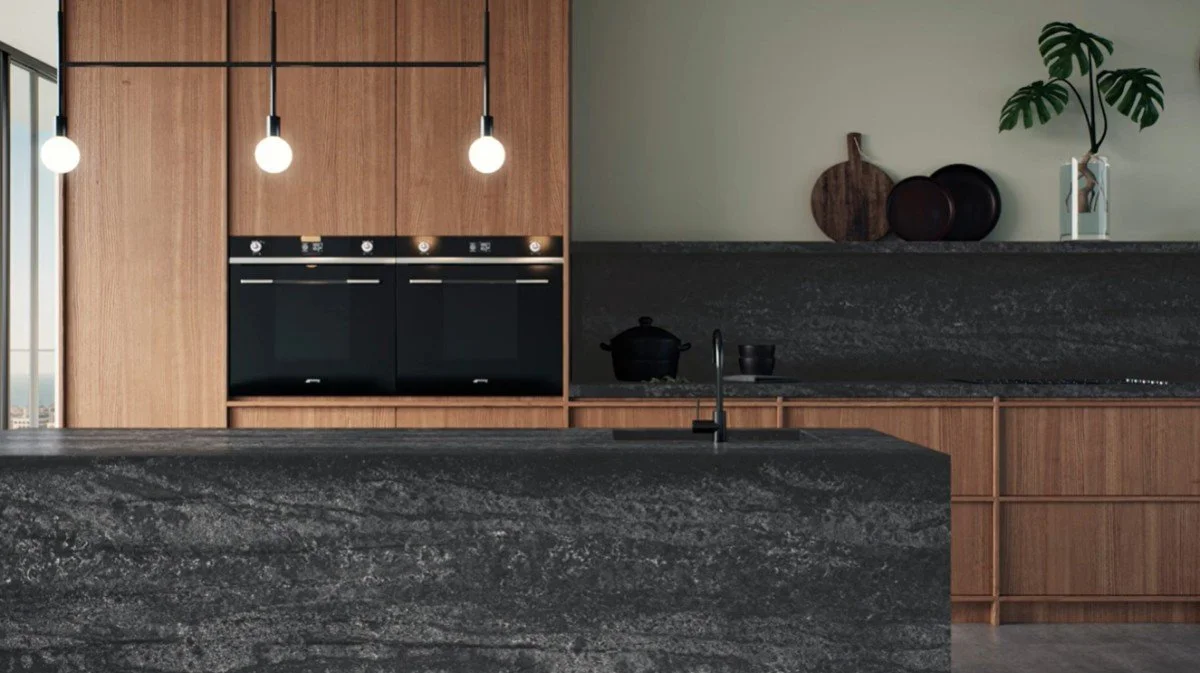
*Image by Caesarstone
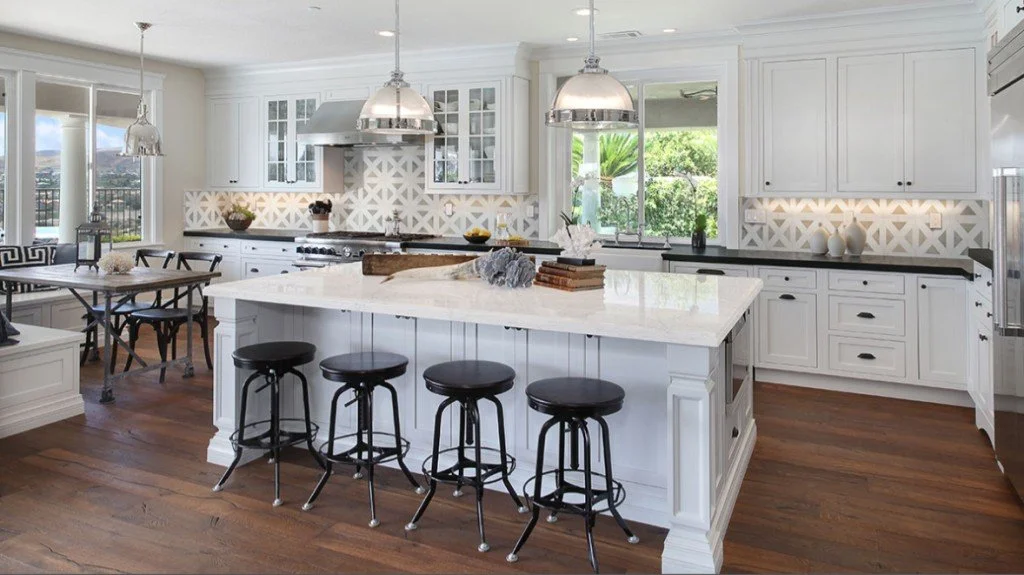
*Image by MSI Surfaces
Once your budget is clear, the next step is to select a countertop colour and style that complements your kitchen design.
Light vs. dark countertops:
Light countertops can make a kitchen feel more spacious, while dark countertops create a bold, dramatic look.Patterned vs. solid colours:
Patterned stone provides visual interest and hides minor stains or scratches, while solid colours offer a clean, modern look.Matching cabinets:
Consider how the countertop colour complements or contrasts with your cabinet finish.Matching flooring:
Your countertop should coordinate with the flooring to create a cohesive look.Modern vs. traditional kitchens:
Sleek, minimal countertops work well in modern kitchens, while ornate patterns and rich colours suit traditional kitchens.Veining patterns:
Natural stones like marble, granite, and quartzite feature veining that can become a focal point of the kitchen.Popular countertop trends:
Consider trending colours and finishes, but prioritize materials and styles that you’ll enjoy long-term.
Tip: Always bring countertop samples home and view them in your kitchen lighting before making a final decision. Lighting can dramatically affect how colours and patterns appear in your space.
Setting a thoughtful budget and selecting the right colour and style ensures that your countertops will not only fit your financial plan but also enhance the overall look and feel of your kitchen.
5. Select Edge Profiles and Finishes
After choosing your countertop material, it’s important to consider the edge profiles and finishes. These details may seem small, but they significantly impact your countertop’s style, price, ease of cleaning, and durability. The right edge and finish can enhance your kitchen’s design while ensuring functionality and longevity.
Common Edge Profiles


Different edge profiles can dramatically change the look and feel of your countertops. Here are the most popular options:
Flat edge:
A simple, clean edge with no embellishments. It is cost-effective, easy to clean, and works well in modern or minimalist kitchens.Beveled edge:
Features a slanted angle along the edge, adding a subtle decorative detail while remaining easy to maintain.Bullnose edge:
Smooth, rounded edge that is gentle to the touch and practical for households with children.Ogee edge:
A decorative, curved profile that adds elegance and sophistication to traditional or luxury kitchens.Waterfall edge:
Extends the countertop material down the sides of cabinets or islands for a dramatic, continuous look, often used in modern kitchens.
Edge profiles affect price, style, cleaning, and durability. More intricate designs cost more due to additional fabrication time, while simple edges are easier to clean and maintain.
Countertop Finishes
The finish of your countertop determines its texture, sheen, and overall feel. Popular finishes include:
Polished:
High-gloss finish that enhances colour and veining, ideal for a luxurious and modern look. Polished surfaces are smooth but can show fingerprints and scratches more easily.Honed:
Matte or satin finish that softens the appearance of the stone. Honed finishes are less reflective and hide scratches and etches better than polished surfaces.Leathered:
Textured finish with a slightly soft sheen, providing a natural, tactile feel. Leathered finishes hide fingerprints and minor imperfections while adding visual depth.
Selecting the right finish ensures your countertops look beautiful while meeting your lifestyle needs for cleaning and maintenance.
6. Which Countertop Materials Are the Most Durable?
If longevity and toughness are your top priorities, choosing a highly durable countertop is essential. Durability matters if you cook frequently, have kids, or want a countertop that resists daily wear and tear.
Some of the most durable countertop materials include:
Quartz: Engineered for strength, quartz is extremely resistant to scratches, stains, and heat. It maintains its appearance even in heavy-use kitchens.
Granite: Natural granite is incredibly hard and heat-resistant, making it ideal for kitchens with frequent cooking and high traffic.
Quartzite: This natural stone is even harder than granite, offering excellent scratch and heat resistance.
Sintered Stone and Porcelain: These modern materials are virtually impervious to scratches, heat, and UV damage, making them perfect for both indoor and outdoor kitchens.
Choosing a durable countertop ensures that your kitchen surfaces withstand years of use without showing significant signs of wear, making it a smart long-term investment.
7. Which Countertop Materials Have the Lowest Maintenance
For homeowners who want a beautiful kitchen without spending hours on upkeep, low-maintenance countertops are key. These materials require minimal sealing, cleaning, or special care.
The best low-maintenance countertop options include:
Quartz: Non-porous and stain-resistant, quartz is easy to clean with soap and water and requires no sealing.
Porcelain: Extremely resistant to stains, heat, and scratches, porcelain is virtually maintenance-free.
Sintered Stone: With its dense, non-porous surface, sintered stone resists stains, scratches, and heat while requiring almost no upkeep.
Laminate: Affordable and easy to clean, laminate is a practical option for low-maintenance kitchens, though it is less heat- and scratch-resistant than stone.
Selecting a low-maintenance countertop lets you spend more time enjoying your kitchen and less time worrying about spills, stains, or regular upkeep.
Durability vs Maintenance Comparison
When selecting a countertop, two of the most important factors to consider are durability and maintenance. Some materials are extremely durable but require regular sealing or special care, while others are very low maintenance but may not be as resistant to heat or scratches. The goal is to find the right balance between how tough the countertop is and how much maintenance you are willing to do.
The table below compares common countertop materials based on overall durability and maintenance level. This will help you quickly identify which materials are best if you want a countertop that lasts a long time, requires minimal upkeep, or offers a balance of both.
| Material | Durability | Maintenance Required |
|---|---|---|
Quartz |
High |
Low |
Granite |
High |
Medium |
Laminate |
Low |
Low |
Sintered Stone / Porcelain |
Very High |
Very Low |
8. How to Measure Your Kitchen and Plan Its Layout
Once you’ve selected your countertop material, colour, edge, and finish, the next step is to measure your kitchen and plan the layout. Accurate measurements are critical to ensure a proper fit and smooth installation.
Key considerations include:
Countertop square footage:
Measure all surfaces to determine how much material you need, including main counters, islands, and peninsulas.Island countertops:
Include overhangs and seating areas when measuring islands.Overhangs:
Plan for functional overhangs for seating or decorative purposes.Backsplashes:
Decide whether the countertop material will extend up the wall or if a separate backsplash will be used.Sink and cooktop cutouts:
Account for precise locations of sinks, cooktops, and other appliances.Seam placement:
Plan seams carefully to minimize visibility and maintain structural integrity.Slab size limitations:
Some natural stone slabs have maximum dimensions, which may affect seam placement and fabrication.
Professional templating is highly recommended. A countertop expert will create a detailed template of your kitchen, ensuring precise cuts for sinks, cooktops, and edges. This reduces installation errors and ensures your new countertops fit perfectly.
Separating these two sections makes it clear that edges and finishes are a design and functional choice, while measurement and layout are a practical step necessary for accurate fabrication and installation.
9. Benefits of Professional Installation vs DIY
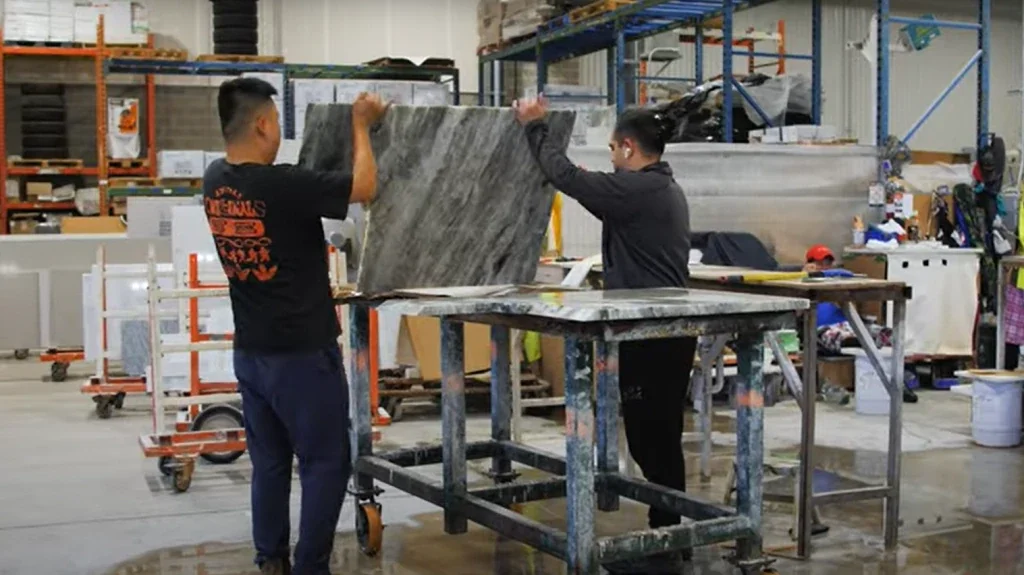

After selecting your countertop material, edge profile, finish, and measuring your kitchen, the next critical step is deciding how to install your countertops. While DIY projects can be appealing, many countertop materials, especially natural and engineered stone, require professional fabrication and installation to ensure safety, durability, and a perfect fit.
Why Stone Countertops Require Professional Fabrication
Stone countertops, such as granite, quartz, marble, and quartzite, are heavy and brittle, which makes professional handling essential.
Stone countertops must be cut precisely to match your kitchen layout, including sink and cooktop cutouts.
Professional fabricators ensure seam placement is strategically planned for strength and visual appeal.
Level cabinets are critical; uneven surfaces can cause cracks or gaps during installation.
Attempting DIY installation on stone countertops increases the risk of damaging or cracking slabs.
Professional fabrication and installation help avoid costly mistakes and preserve the lifespan of your countertops.
Benefits of Professional Installers
Hiring trained countertop installers ensures your project is completed safely, accurately, and efficiently.
Professional installers have the tools and expertise to handle heavy stone slabs without risk of injury.
Experienced installers can achieve seamless joins and consistent finishes, improving both appearance and durability.
Installers can account for complex layouts, overhangs, backsplashes, and unusual edge profiles.
Professional installation often comes with warranties or guarantees, giving homeowners peace of mind.
Choosing professional installation ensures your countertops are installed correctly, minimizing damage and maximizing both beauty and functionality.
Even if you enjoy DIY projects, professional installation is highly recommended for stone and other high-end countertops. The precision, safety, and long-term durability provided by trained installers make it a worthwhile investment.
10. Lead Times and Installation Timeline
Once you’ve chosen your countertop material and planned your layout, it’s important to understand how long the process will take from selection to installation. Knowing the typical lead times helps you schedule your kitchen remodel efficiently and avoid delays.
Steps in the Countertop Installation Process
Installing a countertop involves several stages, each of which takes time and careful attention:
Slab selection:
Choosing the perfect slab is the first step. This includes inspecting colours, patterns, and veining to ensure they match your kitchen vision.Templating:
A professional template of your kitchen ensures precise measurements for countertops, cutouts, and edge profiles.Fabrication:
Once templated, the slabs are cut, polished, and finished to match your chosen edge profiles and specifications.Installation timeline:
After fabrication, the countertops are delivered and installed in your kitchen. Careful handling is required to prevent damage or misalignment.
Understanding each step in the process helps you anticipate how long your kitchen remodel will take from start to finish.
Typical Timeline for Countertop Installation
The typical timeline for countertop installation varies depending on material availability and fabrication schedules:
Standard lead times are usually 1–3 weeks after templating, allowing for fabrication and finishing.
For natural stone, sourcing slabs from suppliers can sometimes extend the timeline, especially for rare or custom materials.
However, at Natural Stone City, we carry an extensive selection of over 1,000 slabs in stock, which often allows us to complete installations in as little as one week without waiting for special orders.
By planning ahead and working with a supplier that has a large in-stock inventory, you can significantly reduce the timeline and enjoy your new countertops faster.
Understanding lead times and the installation process ensures you can coordinate your kitchen remodel smoothly while avoiding surprises or delays.
11. How To Choose a Countertop Supplier
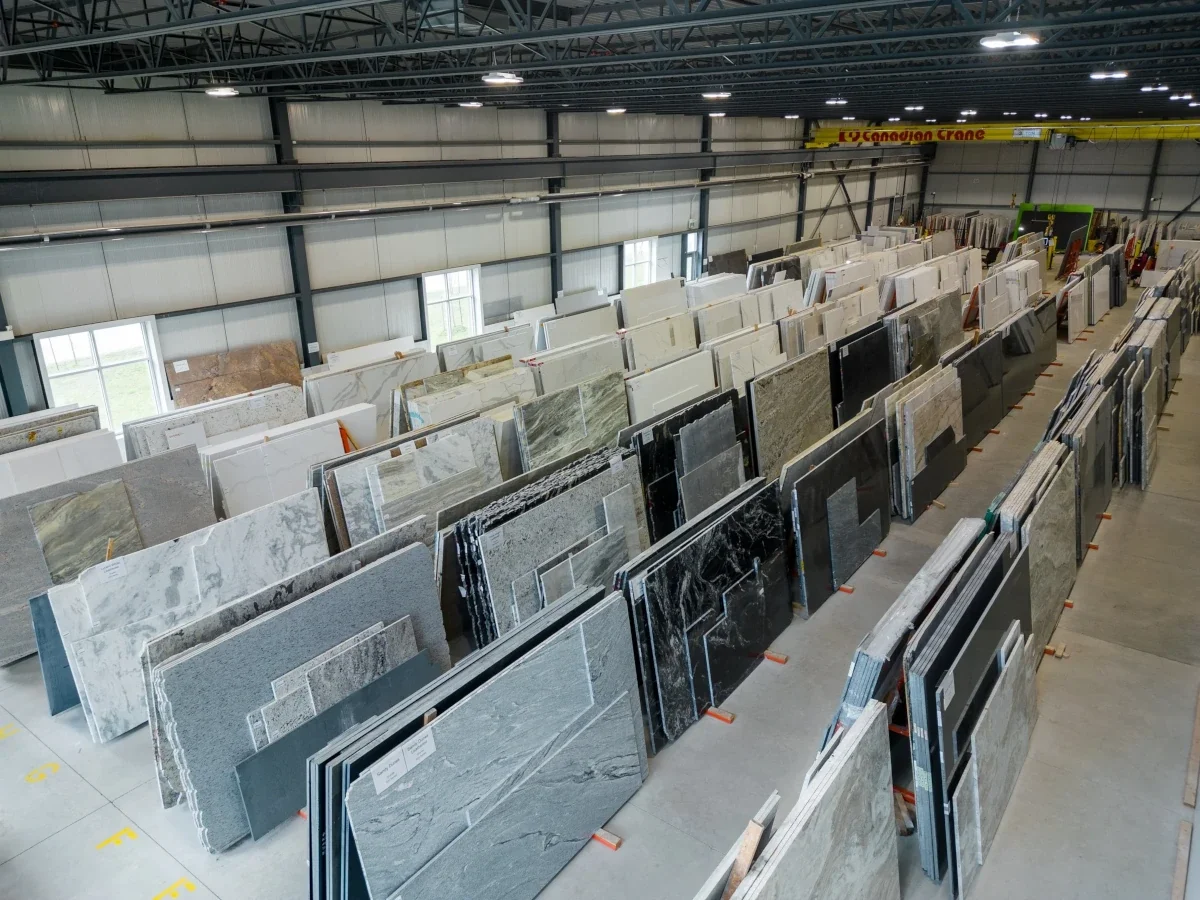
Choosing the right countertop supplier is just as important as selecting the material itself. A reliable supplier ensures you have access to a wide range of high-quality options, professional guidance, and expert installation, helping your kitchen project go smoothly from start to finish.
When evaluating countertop suppliers, consider these key factors:
Large slab selection:
A supplier with a wide variety of slabs allows you to choose the perfect colour, pattern, and material to match your kitchen style.In-stock inventory:
Suppliers that keep countertops in stock can dramatically reduce lead times and make it possible to install your countertops quickly.Professional installation:
A trusted supplier should offer experienced installers who can handle precise cuts, edge profiles, and seam placement for a flawless finish.Reviews:
Check customer reviews and testimonials to ensure the supplier has a strong reputation for quality products and service.Showroom:
Visiting a physical showroom allows you to see slabs in person, compare colours and finishes, and get professional advice.Warranty:
A reputable supplier should offer warranties on both materials and installation for peace of mind.Experience:
Suppliers with years of experience bring knowledge about materials, fabrication techniques, and installation challenges.
At Natural Stone City, we make choosing your countertops easy. With over 1,000 slabs in stock, professional installation, a welcoming showroom, and a long history of satisfied customers, we provide everything you need for a seamless countertop experience.
Selecting the right supplier ensures your countertops look beautiful, perform well, and are installed correctly, making your kitchen remodel stress-free and successful.
12. Summary: How To Select The Right Countertop for Your Kitchen
Selecting the perfect countertop for your kitchen can feel overwhelming, but breaking the process down into clear steps makes it manageable. Here’s a step-by-step summary to guide you through choosing a countertop that looks great, performs well, and fits your lifestyle.
Step-by-Step Countertop Selection
Follow these steps to make informed decisions at every stage of your countertop project:
Choose your material:
Consider durability, maintenance, and appearance to select the best material for your lifestyle and kitchen usage.Determine your budget:
Factor in material costs, installation, edge profiles, cutouts, backsplashes, and removal of existing countertops to set a realistic budget.Consider durability and maintenance:
Evaluate how often you cook, entertain, or need low-maintenance surfaces, and choose a material that fits your daily needs.Choose colour and style:
Select a colour, pattern, and finish that complements your cabinets, flooring, and overall kitchen design. Always bring samples home to view in your lighting.Select edge profile and finish:
Pick an edge style and finish that enhances both the look and functionality of your countertops.Measure and plan layout:
Accurately measure countertops, islands, overhangs, and cutouts to ensure a proper fit. Professional templating is highly recommended.Work with a professional installer:
Hire trained installers to handle heavy stone slabs, precise cuts, and seam placement for a flawless finish.
Schedule fabrication and installation: Understand lead times for slab selection, templating, fabrication, and installation. Choosing a supplier with in-stock slabs can shorten the timeline.
Step by Step
Final Tips
Prioritize both aesthetics and practicality to ensure your countertops are beautiful and long-lasting.
Work with a reputable supplier and installer, like Natural Stone City, to simplify the process and guarantee a professional result.
Plan ahead for each step to avoid delays and make your kitchen remodel as smooth as possible.
By following this step-by-step approach, you can confidently select the right countertop for your kitchen and enjoy a space that combines style, durability, and functionality.
Let Natural Stone City Help You Select the Right Countertop for Your Kitchen
If you’re searching for the perfect countertop, look no further than Natural Stone City. We have the largest selection of Granite, Marble, and Quartz in Southern Ontario, with over 1,000 slabs in a wide variety of colours, patterns, and finishes.
For the best selection of countertops near you, visit Natural Stone City. From timeless neutrals to bold, exotic stones imported from Brazil, Italy, and around the world, we carefully curate our inventory to ensure every slab meets our high standards and yours.
When you choose Natural Stone City, you’ll get:
Your countertop can be professionally installed in as little as 1 week
Access to one of the most extensive in-stock selections in the region
Expert guidance from our knowledgeable and friendly staff who specialize in natural stone
Contact us today, and we’ll help you find the perfect countertop to complete your kitchen or bathroom.
What Our Customers Are Saying…
“A fabulous company. I say that as this is the fourth time I have ordered countertops from Natural Stone City in the past 17 years for myself and my family. Each time I return I do so as the product they sell is exemplary. They even replaced the black granite they installed 17 years ago with a more modern one. The prices are also better than anywhere else I have checked with. Very pleased.”
— Shawn Thompson