
Is Your Countertop Scratching?

*Image by Caesarstone
If you’ve started noticing marks, scuffs, or lines on your countertop, you’re probably wondering “Is your countertop scratching?” The good news is that countertop scratches are fairly common, and in many cases, they can be repaired or even prevented from getting worse. Different countertop materials scratch differently, and sometimes what looks like a scratch is actually just a surface mark.
In this guide, we’ll explain why countertops scratch, what you should do if yours is scratching, how to prevent future damage, and when it might be time to repair or replace your surface.
If you’re unsure about the condition of your countertops or you would like to replace them, the team at Natural Stone City can help you determine your best solution.
Key Takeaways – Is Your Countertop Scratching?
Countertop scratches are common and can occur on any material, though some surfaces are more prone than others.
Light surface scratches can often be cleaned or buffed, while deeper scratches may require polishing or professional repair.
Common causes of scratches include cutting directly on the countertop, dragging heavy objects, using abrasive cleaners, softer stone materials, and worn sealers.
Preventative measures, such as using cutting boards, trivets, lifting heavy objects, gentle cleaning, resealing stone, and cleaning spills promptly, can significantly reduce the risk of scratches.
Harder materials like granite, quartz, sintered stone, porcelain, and quartzite are more scratch-resistant, while marble, soapstone, and laminate require extra care.
Many scratches can be repaired, and full replacement is rarely necessary unless damage is severe.
If your countertops are heavily scratched or worn, replacement is often the best option to restore your kitchen’s appearance and durability.
Choosing scratch-resistant materials and consulting experts can help maintain the beauty and durability of your countertops for years.
Is Your Countertop Scratching?
1. Common Reasons Countertops Scratch
Natural Stone City
Common Reasons
Countertops Scratch
Stone Care Education
| Reason | Example |
|---|---|
| 1Cutting Directly on Countertop | Using knives without a cutting board |
| 2Dragging Heavy Objects | Sliding pots, pans, or appliances |
| 3Abrasive Cleaners or Sponges | Steel wool or harsh chemicals |
| 4Softer Stone Materials | Marble or soapstone scratching easily |
| 5Worn Sealers or Finish | Loss of protective layer making stone vulnerable |
Countertops are designed to be durable, but they are not indestructible. Over time, daily use, cleaning habits, and the type of material can all contribute to scratches appearing on the surface. If your countertop is scratching, one of the common causes below is usually the reason.
Reason #1 – Cutting Directly On The Countertop
One of the most common reasons countertops scratch is cutting directly on the surface without using a cutting board. Even though some countertop materials are very hard, knives and sharp kitchen tools are harder than many stone surfaces and can leave marks over time.
Common cutting-related causes of scratches include:
Cutting vegetables, fruit, or meat directly on the countertop without a cutting board.
Using serrated knives, which can be especially rough on countertop surfaces.
Repeated cutting in the same area, which slowly wears down the finish.
Sliding knives or sharp utensils across the surface instead of lifting them.
Using a cutting board is one of the easiest ways to prevent countertop scratches and extend the life of your surface.
Reason #2 – Dragging Heavy Objects
Dragging heavy objects across the countertop is another major cause of scratches. Many kitchen items have rough or metal bottoms that can scratch the surface when moved instead of lifted.
Common objects that may scratch countertops include:
Pots and pans with rough or exposed metal bottoms.
Small kitchen appliances like toasters, blenders, and coffee makers.
Decorative items such as vases, bowls, or stone décor.
Grocery bags or boxes with rough cardboard bottoms.
To prevent scratches, heavy or rough-bottomed items should always be lifted rather than dragged across the countertop.
Reason #3 – Abrasive Cleaners or Sponges
Cleaning products and tools can also cause scratches if they are too abrasive for the countertop surface. Many people accidentally damage their countertops while trying to clean them.
Cleaning-related causes of scratches include:
Using scouring pads or steel wool on the countertop surface.
Using abrasive powder cleaners.
Using harsh chemical cleaners not designed for stone or quartz.
Scrubbing aggressively to remove stains or stuck-on food.
Using a soft cloth, sponge, and a cleaner designed for stone or quartz surfaces will help prevent surface scratching and dull spots.
Reason #4 – Softer Stone Materials
Some countertop materials are naturally softer than others, which makes them more prone to scratching. This does not mean these materials are poor choices, but they do require a bit more care and maintenance.
Stone materials that scratch more easily include:
Marble, which is softer and can scratch and etch more easily than granite.
Soapstone, which is a softer natural stone that can develop scratches over time.
Honed or matte finishes, which show scratches more easily than polished finishes.
Some engineered surfaces that have a softer finish layer.
Understanding the type of material you have helps you know how careful you need to be with daily use and cleaning.
Reason #5 – Worn Sealers or Finish
Natural stone countertops are typically sealed to protect them from stains and surface damage. When the sealer wears off, the stone becomes more exposed and more vulnerable to scratching and dull spots.
Signs that your sealer may be worn include:
The countertop looks dull or faded in certain areas.
Scratches appear more easily than before.
Water no longer beads on the surface.
The surface feels rough instead of smooth.
Resealing natural stone countertops periodically helps protect the surface and reduce the likelihood of scratches.
Understanding the common reasons countertops scratch is the first step in preventing further damage and keeping your countertops looking new for as long as possible.
2. What To Do If Your Countertop Is Scratched
Natural Stone City
How Bad Is
Your Scratch?
Scratch Severity Guide
Light Surface Scratch
Recommended Action
Clean or buff with gentle methods at home.
Small Scratch You Can Feel
Recommended Action
Polish or refinish with a professional.
Deep Scratch or Chip
Recommended Action
Professional repair or resurfacing needed.
If you notice a scratch on your countertop, the first step is to determine how deep the scratch is. Some scratches are only surface marks that can be cleaned off, while others may require polishing or professional repair. The solution depends on the severity of the scratch and the type of countertop material you have.
Light Surface Scratches
Light surface scratches are very common and are often not actually scratches in the stone itself. In many cases, these are metal marks, scuffs, or residue sitting on top of the surface rather than damage that has penetrated the countertop.
For light surface scratches or marks, you can try the following:
You should clean the area with a soft cloth and a stone-safe cleaner to remove any surface residue.
You can try using a non-abrasive sponge to gently buff the mark.
Metal marks from pots and pans can sometimes be removed with a specialized stone cleaner.
You should always test any cleaning method on a small, hidden area first.
In many cases, light surface scratches or marks can be removed with proper cleaning and gentle buffing.
Small Scratches You Can Feel
If you run your finger over the scratch and can feel it, the scratch has likely gone slightly below the surface. These scratches are more noticeable but are still often repairable without replacing the countertop.
If your countertop has small scratches you can feel, the following solutions may help:
The countertop may be professionally polished to reduce the appearance of the scratch.
Honed stone surfaces can sometimes be refinished to blend the scratch into the surrounding area.
Some natural stone countertops can be resealed after polishing to restore protection.
DIY repair kits exist for some materials, but professional repair usually produces better results.
Small scratches usually do not require countertop replacement, but they may require polishing or refinishing to fully repair the surface.
Deep Scratches or Chips
Deep scratches, gouges, or chips are more serious and usually require professional repair. These types of scratches often occur from dropping heavy objects or hitting the edge of the countertop.
If your countertop has deep scratches or chips, you should consider the following:
A professional can often fill chips or deep scratches with a colour-matched resin or epoxy.
The countertop may need to be resurfaced or polished to blend the repair.
In severe cases, a section of the countertop may need to be replaced.
Edge chips are very common and are often repairable without replacing the entire countertop.
Deep scratches or chips may look serious, but many of them can still be repaired by a professional without needing a full countertop replacement.
The most important thing to remember is that many countertop scratches can be repaired, and the best solution depends on how deep the scratch is and what material your countertop is made from.
3. How To Prevent Countertop Scratches
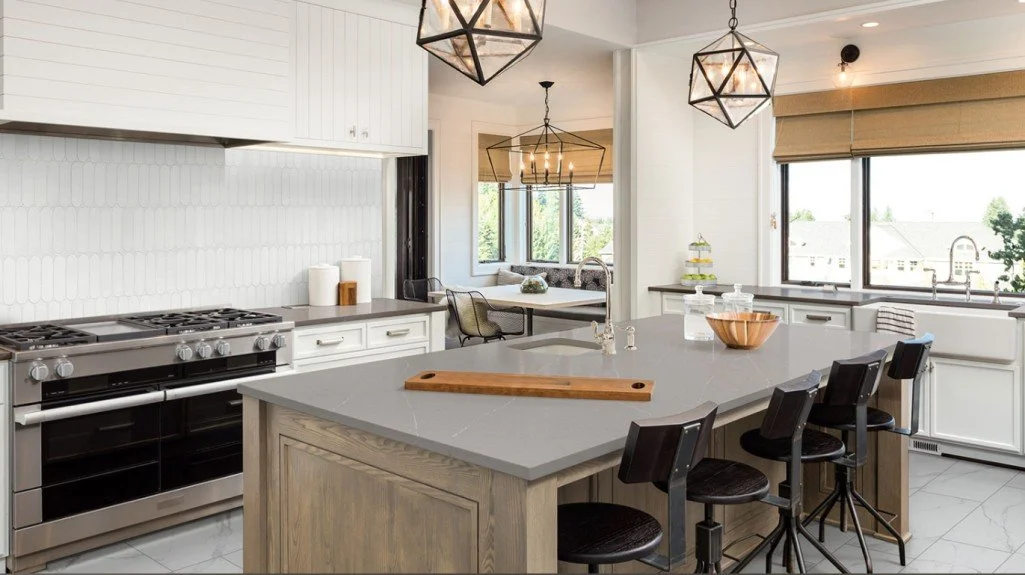
*Image by MSI Surfaces
Preventing scratches on your countertop is easier than repairing them. By adopting a few simple habits and using the right tools, you can keep your countertop looking new for years. The following tips will help protect your investment and reduce the risk of scratches.
Use Cutting Boards
Cutting directly on your countertop is one of the most common causes of scratches. Always use a cutting board to protect the surface from knives, serrated tools, and other sharp objects.
Always place a cutting board under knives, fruit, vegetables, or meat when preparing food.
Use separate cutting boards for raw meats and other foods to avoid cross-contamination.
Avoid cutting in the same spot repeatedly to minimize wear over time.
Using cutting boards consistently is one of the simplest ways to prevent scratches and preserve your countertop’s finish.
Use Trivets and Mats
Hot pots, pans, and dishes can cause damage to your countertop surface, including scratches or heat marks. Protect your countertop by using trivets or mats whenever placing hot or heavy items.
Place trivets under hot pots, pans, and appliances to prevent scratches and heat damage.
Use placemats under decorative items or objects with rough bottoms.
Consider soft silicone mats for appliances that are used frequently, like coffee makers or mixers.
Using protective mats reduces the risk of scratches caused by heavy or abrasive items.
Avoid Dragging Appliances
Dragging heavy or rough-bottomed objects across your countertop can leave scratches that are difficult to repair. Always lift items instead of sliding them.
Lift appliances such as toasters, blenders, and mixers when moving them.
Avoid sliding pots, pans, or decorative items across the surface.
Encourage family members to do the same to protect the countertop.
Lifting objects instead of dragging them helps prevent scratches and keeps your countertop looking smooth.
Use Soft Cloths and Gentle Cleaners
Harsh cleaning tools and abrasive cleaners can slowly damage your countertop over time. Using gentle cleaning methods helps maintain the finish and reduces the risk of scratches.
Clean your countertop with soft cloths, microfiber towels, or non-abrasive sponges.
Use cleaners specifically formulated for your countertop material.
Avoid scouring pads, steel wool, or harsh chemical cleaners that can scratch or dull the surface.
Gentle cleaning habits go a long way in preventing scratches and preserving your countertop’s natural beauty.
Reseal Natural Stone Regularly
Many natural stone countertops, such as granite and marble, are sealed to protect them from stains and damage. Over time, the sealer wears off, leaving the surface more vulnerable to scratches.
Reseal natural stone countertops according to the manufacturer’s recommendations.
Check the surface periodically to see if water beads or absorbs quickly, which indicates it’s time to reseal.
Professional sealing can restore both protection and shine to your countertops.
Regular sealing helps maintain the durability and scratch-resistance of natural stone surfaces.
Clean Spills Quickly
Spills can lead to staining, etching, or surface damage that makes scratches more noticeable. Prompt cleaning protects your countertop and reduces the risk of long-term damage.
Wipe up spills immediately with a soft cloth or paper towel.
Avoid letting acidic liquids like lemon juice, vinegar, or wine sit on the surface.
Rinse the area with water and gently dry after cleaning.
Quick and careful cleaning keeps your countertop safe from scratches, stains, and etching.
By following these preventive measures, you can protect your countertop from scratches, extend its lifespan, and keep it looking beautiful for years to come.
4. Which Countertop Materials Scratch The Most?
Not all countertop materials are created equal when it comes to scratch resistance. Some surfaces are naturally harder and more durable, while others require more careful handling. Understanding which materials are more prone to scratching can help you choose the right countertop for your lifestyle and prevent damage over time.
Natural Stone City
Scratch Resistance
by Material
Countertop Comparison Guide
| Material | Scratch Resistance |
|---|---|
| Granite |
|
| Quartz |
|
| Marble |
|
| Soapstone |
|
| Laminate |
|
| Sintered Stone |
|
| Porcelain |
|
| Quartzite |
|
Here’s a more detailed comparison of common countertop materials and how easily they scratch:
Granite – Scratch Resistant
Granite is one of the hardest natural stones, making it highly resistant to scratches. It can handle daily kitchen activities without showing marks easily.
Granite is resistant to knives, pots, and pans under normal use.
Even so, dragging heavy metal objects across granite can leave marks over time.
Polished granite surfaces are slightly more scratch-resistant than honed finishes.
Granite is an excellent choice if you want a durable surface with minimal risk of scratching.
Quartz – Scratch Resistant but Not Scratch Proof
Quartz countertops are engineered from natural quartz and resins, making them very durable. However, they are not completely impervious to scratches.
Quartz can withstand most daily use without scratching.
Avoid cutting directly on the surface to maintain its finish.
Quartz can be scratched by very hard or sharp objects, so protective measures are recommended.
Quartz is ideal for busy kitchens, but using cutting boards is still important to preserve its appearance.
Marble – Scratches Easier
Marble is a softer natural stone that can scratch more easily than granite or quartz. Its beautiful veining can also make scratches more noticeable.
Marble scratches can occur from knives, utensils, and even certain acidic foods.
Honed marble is more prone to scratches than polished marble.
Regular maintenance and careful use help reduce visible scratches.
Marble offers timeless beauty but requires extra care to prevent surface damage.
Soapstone – Softer and Scratches Easier
Soapstone is a natural stone that is softer than granite or quartz. Scratches can appear more easily, but many owners appreciate its ability to develop a natural, “lived-in” patina over time.
Light scratches are common but can often be smoothed with mineral oil or sanding.
Heavy objects can cause deeper scratches if not handled carefully.
Soapstone’s softness makes it forgiving, but careful use is recommended.
Soapstone is a softer stone that can scratch easily, but its charm often lies in the unique character that develops with use.
Laminate – Can Scratch Fairly Easily
Laminate countertops are made of a thin decorative layer over particleboard or MDF, which makes them more vulnerable to scratching than stone surfaces.
Sharp objects or abrasive cleaning can leave marks.
Heavy dragging or impacts can damage the surface permanently.
Protective mats, cutting boards, and careful cleaning help maintain laminate countertops.
Laminate is budget-friendly, but it requires care to avoid visible scratches over time.
Sintered Stone – Highly Scratch Resistant
Sintered stone is a modern, engineered material made under high pressure and heat, making it extremely hard and durable.
Sintered stone is resistant to knives, pots, and pans.
Scratches are rare under normal kitchen use.
Heavy abuse can still cause marks, but it is among the most scratch-resistant materials available.
Sintered stone is ideal for households that want a very low-maintenance, scratch-resistant countertop.
Porcelain – Very Scratch Resistant
Porcelain countertops are made from dense, fired ceramic materials, which makes them highly resistant to scratches.
Cutting directly on porcelain should still be avoided.
The surface maintains its appearance even with frequent use.
Porcelain is highly durable but may chip if heavy objects are dropped.
Porcelain combines beauty and durability, offering one of the hardest surfaces for modern kitchens.
Quartzite – Scratch Resistant
Quartzite is a natural stone harder than marble and nearly as hard as granite, making it very scratch-resistant.
Quartzite handles daily kitchen activities without showing marks easily.
It is less likely to scratch than marble or softer stones.
Proper sealing enhances durability and reduces the risk of scratches.
Quartzite is a great choice for a natural stone surface that balances beauty and scratch resistance.
By understanding the scratch-resistance of different materials, you can choose a countertop that fits your lifestyle and take the right precautions to protect your investment.
5. Countertop Scratching FAQ

*Image by MSI Surfaces
If you’re noticing scratches or scuffs on your countertops, you likely have a lot of questions. The answers often depend on the material, the depth of the scratch, and how you care for your surfaces. Here are some common questions and answers to help you better understand countertop scratching.
Can Granite Countertops Scratch?
Granite is one of the most scratch-resistant natural stones, but it is not completely impervious.
Granite can resist most daily use without showing marks.
Dragging heavy metal objects or cutting directly on the surface can leave scratches.
Regular cleaning and using cutting boards will help maintain its scratch resistance.
While rare, scratches on granite can happen with enough force or improper use.
Can Quartz Countertops Scratch?
Quartz is engineered for durability but is not completely scratch-proof.
Quartz can resist most scratches from daily kitchen tasks.
Very sharp or hard objects, such as knives, can scratch the surface if cutting is done directly on it.
Using cutting boards and avoiding abrasive cleaners will extend the surface’s life.
Quartz provides excellent durability, but proper precautions are always recommended.
Can Scratches Be Repaired?
Yes, scratches can often be repaired depending on their depth and the countertop material.
Light surface scratches can usually be cleaned or buffed out with gentle methods.
Small scratches may require polishing or refinishing to restore a smooth surface.
Deep scratches or chips typically need professional repair with colour-matched resins or resurfacing.
Knowing the severity of the scratch helps determine the best repair method.
Do I Need to Replace My Countertop If It Scratches?
Not necessarily. Most scratches can be repaired without replacing the entire countertop.
Surface scratches can often be polished or buffed.
Deeper scratches may require professional repair or partial resurfacing.
Full replacement is usually only necessary if the damage is extensive or affects structural integrity.
Replacement is rarely needed for minor or moderate scratches.
How Do I Protect My Countertops From Scratches?
Preventing scratches is easier than repairing them. Taking proactive measures can extend the life of your countertop.
Always use cutting boards when preparing food.
Lift heavy or sharp objects instead of dragging them across the surface.
Use soft cloths and stone-safe cleaners for routine maintenance.
Reseal natural stone countertops as recommended by the manufacturer.
Clean up spills immediately to prevent surface damage.
A few simple habits can go a long way in protecting your countertop.
Are Certain Countertop Materials More Prone to Scratching than Others?
Yes, softer materials like marble and soapstone scratch more easily than harder stones like granite, quartzite, sintered stone, or porcelain. Knowing your countertop’s material helps you adjust how you use and maintain it.
Will scratches affect the value of my countertop?
Minor scratches typically do not impact value, especially if they are light and repairable. Deep or visible scratches can affect the appearance, but repairs often restore both beauty and function.
Understanding these common questions and answers will help you care for your countertops effectively and minimize scratches over time.
6. Need Help Replacing Your Countertops? Contact Natural Stone City
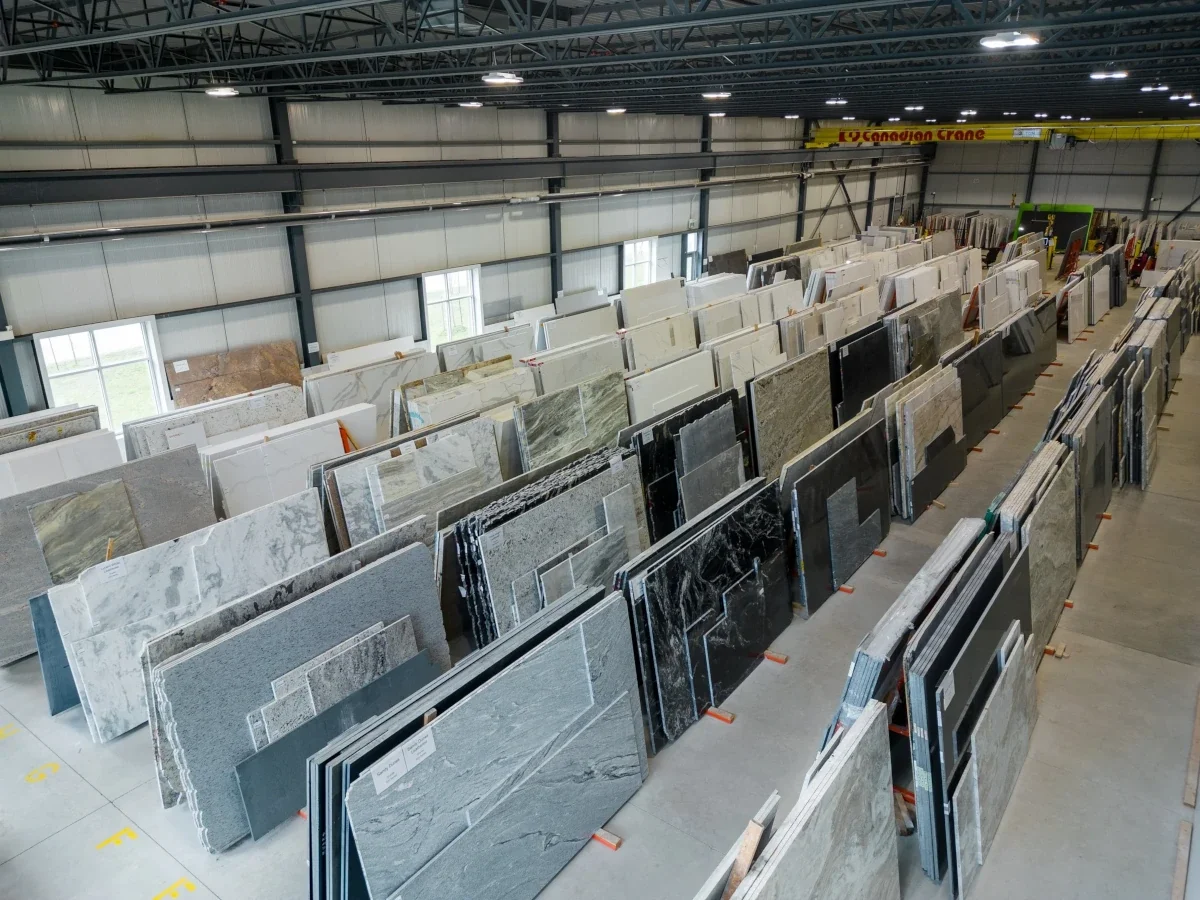
If your countertops are scratched, worn, or no longer suit your kitchen, it may be time to consider a replacement. The team at Natural Stone City can help you select the perfect material and design to meet your lifestyle, durability needs, and aesthetic goals.
Choose Scratch-Resistant Materials
Replacing your countertops is an excellent opportunity to select a more durable, scratch-resistant surface that will stand up to daily use. Consider:
Sintered stone, which offers extreme durability and low maintenance.
Porcelain, known for its high scratch resistance and modern appeal.
Quartz or quartzite, which combine natural beauty with excellent durability.
Our experts can guide you in selecting the ideal material for your kitchen habits and design preferences.
Visit Our Showroom or Contact Us
Seeing and feeling countertop materials in person makes it easier to choose the right surface for your home. You can:
Visit our showroom to explore a wide selection of natural stone and engineered countertops.
Speak with our team to get expert advice on material options, finishes, and layouts.
Request a consultation or quote to plan your countertop replacement.
Upgrading to new, scratch-resistant countertops not only improves your kitchen’s appearance but also ensures a durable, long-lasting surface. Natural Stone City is here to help you choose the right material and make the replacement process smooth and easy.
What Our Customers Are Saying…
“Super happy with the result and also with the experience we had with Natural Stone City team. Easy to order, very helpful and experienced team members, 3 hours installation. Pictures speak for themselves.Thank you!”
- Liviu Ojog