
Is Your Countertop Cracking?
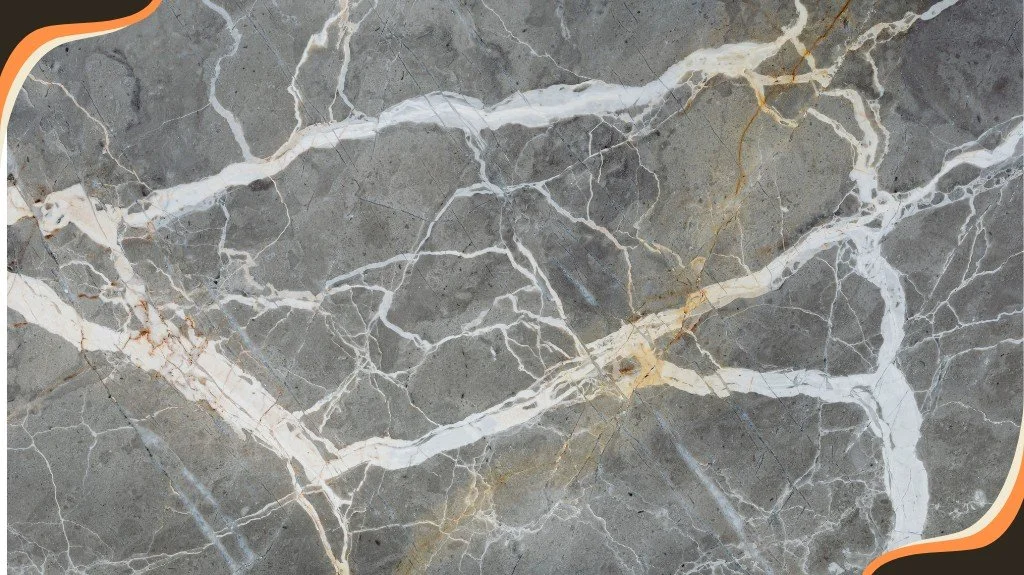
If you’ve noticed a crack forming in your countertop, you’re probably wondering what caused it and whether it can be fixed. Countertops are built to be durable, but cracks can still happen due to installation issues, impact damage, heat, or even normal house settling over time. Some cracks are cosmetic and can be repaired, while others may indicate a larger structural issue that requires replacement. In this guide, we’ll explain why countertops crack, how serious the problem might be, and what you should do next.
If your countertop is cracking and you’re not sure what your options are, contact Natural Stone City for expert advice and help choosing the right replacement countertop for your home.
Key Takeaways
Not every line on a countertop is a crack; natural fissures, seams, and surface marks are often normal.
Countertops can crack due to improper installation, heat exposure, excess weight, impact, house settling, or natural weak points in the stone.
There are different types of cracks: hairline, stress, edge, sink-area, and settlement cracks—some cosmetic, others structural.
If your countertop is cracking, stop using the area, check the support, document the damage, and contact a professional.
Small cracks can often be repaired with epoxy, while large or structural cracks may require full replacement.
Prevent cracks by using trivets, avoiding standing on countertops, ensuring proper support, keeping cabinets level, and hiring professional installers.
Replacement should be considered if cracks are spreading, multiple, near sinks or cooktops, or if the countertop is lifting or has large structural damage.
Consulting with Natural Stone City ensures expert assessment, safe repairs, and guidance on replacing damaged countertops with durable stone surfaces.
Is Your Countertop Cracking?
1. First: Is It Actually a Crack?
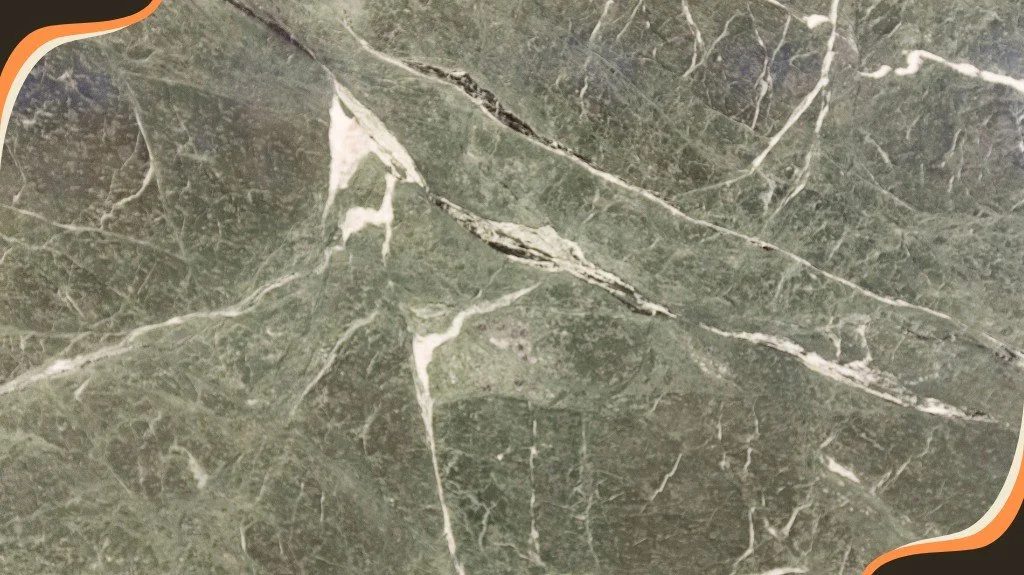
Before you assume your countertop is cracking, it is important to take a closer look. What appears to be a crack is not always structural damage. Many stone countertops naturally have lines, seams, or surface marks that can look like cracks but are completely normal and not a cause for concern.
Natural Fissures in Stone
Natural stone materials such as granite, marble, and quartzite often contain fissures. These are naturally occurring lines that formed in the stone as it developed in the earth, and they are part of the stone’s natural character.
Fissures are naturally occurring features and are not considered defects in the stone.
Fissures are common in granite, marble, and quartzite countertops.
Fissures typically do not change over time and usually cannot be felt easily with your fingernail.
Understanding fissures can help you avoid worrying about damage that is actually just a normal characteristic of natural stone.
Countertop Seams
If your countertop is large or has a corner, it was likely installed in multiple pieces with a seam where the pieces meet. Seams are normal and necessary for many countertop installations.
Seams are commonly used on large countertops, L-shaped kitchens, and islands.
Seams are usually filled and polished, but may still be visible depending on the stone pattern.
Seams should be smooth and level, even if you can see the line where the pieces join.
Seams are a normal part of many countertop installations and should not be mistaken for cracks.
Scratches or Surface Marks
Sometimes a scratch or surface mark can look like a crack, especially on darker countertops or polished surfaces.
Surface scratches usually only affect the finish and not the structure of the countertop.
Scratches are often lighter in colour and may disappear when the surface is wet or cleaned.
Surface marks do not typically spread or grow over time as a true crack would.
These types of marks are usually cosmetic and often can be polished or repaired.
How to Tell If It Is a True Crack
A true crack usually has a few clear signs that make it different from a fissure, seam, or scratch.
A true crack will often catch your fingernail when you run it across the surface.
A true crack may run across the stone in an irregular line rather than along a natural pattern.
A true crack may grow or spread over time, especially near sinks or edges.
If the line catches your fingernail or appears to be spreading, it is more likely that you are dealing with a real crack rather than a natural feature or surface mark.
Taking a few minutes to determine whether you are looking at a fissure, seam, scratch, or true crack can help you decide what to do next and whether professional help is needed.
2. Common Reasons Countertops Crack
Natural Stone City — Expert Guide
Common Reasons Countertops Crack
| Cause | Example | Prevention Tip |
|---|---|---|
| Improper Installation | Lack of support under overhangs or around sinks | Ensure cabinets are level and support is adequate |
| Heat Damage | Placing hot pans directly on the countertop | Always use trivets or heat pads |
| Excess Weight | Standing or sitting on countertops | Avoid standing on the stone and support heavy appliances |
| Impact Damage | Dropping heavy objects onto the surface | Handle items carefully and avoid dropping heavy objects |
| House Settling | Cabinets shifting or floors settling over time | Professional installation with proper leveling and support |
If your countertop is truly cracking, the next step is understanding why it happened. Countertops are very durable, but they are not indestructible. Cracks are usually caused by stress, movement, heat, or impact rather than the stone itself being defective.
Improper Installation
Improper installation is one of the most common reasons countertops crack. Stone countertops are very heavy and must be properly supported across the entire surface, especially around sinks, dishwashers, and overhangs.
Common installation issues that can lead to cracks include:
A lack of support under countertop overhangs can cause the stone to flex and eventually crack.
Insufficient support around sink cutouts can create weak points where cracks often start.
Uneven cabinets can put stress on the stone and cause pressure cracks over time.
Over-tightened fasteners or screws can create pressure points that lead to cracking.
When countertops are installed correctly with proper support and level cabinets, the risk of cracking is significantly reduced.
Heat Damage (Thermal Shock)
Heat can also cause countertops to crack, especially when there are sudden temperature changes. This is known as thermal shock, and it happens when one part of the stone expands faster than another.
Common heat-related causes include:
Placing hot pans or pots directly on the countertop can cause rapid expansion in the stone surface.
Sudden temperature changes, such as placing a hot pan on a cold countertop, can create stress inside the stone.
Repeated heat exposure in the same area can weaken the stone over time.
Using trivets or heat pads is one of the easiest ways to prevent heat-related countertop cracks.
Excess Weight or Pressure
Stone countertops are strong, but they are not designed to support body weight or extremely heavy loads, especially in unsupported areas.
Excess weight and pressure can come from:
Standing or sitting on countertops can put too much weight on the stone.
Placing heavy appliances on unsupported overhangs can cause the stone to bend slightly and crack.
Leaning heavily on countertop edges or corners can create stress points.
Avoiding excessive weight on countertops can help prevent stress cracks from forming.
Impact Damage
Impact damage is another common cause of countertop cracks. Even a very hard stone can crack if something heavy hits it with enough force.
Impact-related damage often happens when:
Heavy objects such as pots, appliances, or tools are dropped on the countertop.
A small chip forms on the edge and later develops into a larger crack.
Repeated impacts in the same area weaken the stone over time.
What starts as a small chip can sometimes turn into a crack later, so chips should be addressed early when possible.
House Settling or Cabinet Movement
Sometimes the countertop is not the problem at all. Movement in the house or cabinets can put stress on the stone and cause cracks to form.
Movement-related cracks can happen when:
A house settles over time and shifts slightly.
Cabinets move, warp, or become uneven.
Floors shift and change the level of the cabinets supporting the countertop.
Stress builds up around sinks, corners, and seams where the stone is weaker.
These types of cracks often appear near sink cutouts, inside corners, or seams.
Natural Weak Points in Stone
Natural stone is formed in the earth and can have veins, fissures, or natural patterns that create weaker areas in the slab.
Natural weak points may include:
Veins in marble or quartzite that are naturally softer than the surrounding stone.
Fissures in granite that can become weak points under stress.
Areas with heavy natural patterning that may not be as strong as solid sections.
This does not mean the stone is defective, but it does mean some areas may be more vulnerable to cracking if stress or impact occurs.
Understanding the most common causes of countertop cracks can help you determine whether the issue was caused by installation, impact, heat, or structural movement, which is important when deciding whether the countertop can be repaired or needs to be replaced.
3. Types of Countertop Cracks
Types of Countertop Cracks
Natural Stone City · Know the difference
Hairline Cracks
Thin, shallow lines on the surface. Usually natural mineral movement. Rarely a cause for concern.
Stress Cracks
Runs through the stone thickness. Often from weight, flexing, or sudden impact. Needs professional assessment.
Cracks Around Sink Cutouts
Cracks radiate from cutout corners — a high-stress zone. Often caused by improper support or installation.
Edge Cracks
Chips or cracks along the outer edge. Often from impact. Cosmetic if shallow; structural if it extends inward.
Settlement Cracks
Caused by shifting cabinets or a settling foundation. The slab flexes unevenly and cracks along areas of stress. Requires checking cabinet level and support before repair.
Not all countertop cracks are the same. Some cracks are purely cosmetic and do not affect the strength of the countertop, while others are structural and may require repair or replacement. Understanding the type of crack you are dealing with can help you determine how serious the problem is and what your next step should be.
Hairline Cracks
Hairline cracks are very thin cracks that usually appear on the surface of the countertop. These cracks are often difficult to see unless you look closely or light reflects off the surface.
Hairline cracks typically have the following characteristics:
Hairline cracks are very thin and may look like a fine line across the surface.
Hairline cracks are often cosmetic and may not affect the structural integrity of the countertop.
Hairline cracks may be caused by minor stress, small impacts, or natural stone characteristics.
In many cases, hairline cracks can be repaired or filled, and they are usually not considered a structural problem.
Stress Cracks
Stress cracks occur when pressure builds up in the stone due to poor support, uneven cabinets, or excessive weight. These cracks are more serious than hairline cracks and may continue to grow over time.
Stress cracks often have the following signs:
Stress cracks often run in straight lines or across narrow sections of the countertop.
Stress cracks are commonly caused by uneven cabinet support or pressure points.
Stress cracks may worsen over time if the underlying support issue is not fixed.
Stress cracks are usually considered structural and should be inspected by a professional.
Cracks Around Sink Cutouts
Sink areas are one of the most common places for countertops to crack because the stone is thinner and weaker around the cutout.
Cracks around sinks often occur because of the following:
The stone around the sink cutout has less support and is more fragile.
Heavy sinks or improper installation can put stress on the stone.
People often lean on the counter near the sink, which adds pressure to a weak area.
Cracks around sink cutouts are usually structural and often require repair or replacement, depending on the severity.
Edge Cracks
Edge cracks occur along the front edge or corners of the countertop. These cracks are often caused by impact or pressure on the edge.
Edge cracks commonly happen due to the following:
Heavy objects are dropped on the edge of the countertop.
People sit or lean on the edge of the countertop.
The edge overhang does not have enough support.
Some edge cracks are cosmetic and can be repaired, but larger edge cracks may become structural issues if they spread.
Settlement Cracks
Settlement cracks occur when the house, floor, or cabinets shift over time. This movement puts pressure on the countertop and can cause cracks to form.
Settlement cracks often have these characteristics:
Settlement cracks often appear near seams, corners, or sink cutouts.
Settlement cracks may appear months or years after installation.
Settlement cracks are caused by cabinet movement, floor shifting, or house settling.
Settlement cracks are usually structural because they are caused by movement and pressure on the stone.
Understanding the different types of countertop cracks can help you determine whether the crack is cosmetic and repairable or structural and more serious, which will help you decide whether repair or replacement is the best option.
4. What To Do If Your Countertop Is Cracking
What to Do When You Notice a Crack
Natural Stone City · Step-by-step guide
Stop Using the Area
Avoid putting weight or heat on the crack. Keep the area clear until it has been assessed.
Check Cabinets and Support
Look for uneven cabinets or gaps beneath the countertop. Poor support is a common cause of cracking.
Take Photos
Document the crack thoroughly — multiple angles, close-up and wide. Useful for warranty claims or when describing the damage to a professional.
Contact a Professional
Have a stone expert assess whether repair or full replacement is needed. Early intervention can prevent further damage.
Do Not Attempt DIY Repairs
Improper fillers or techniques can make the crack worse and may void your warranty. Always consult a stone professional first.
If you notice a crack in your countertop, it’s important to act carefully. Taking the right steps early can prevent the crack from worsening and help you determine whether repair or replacement is needed. Here’s a step-by-step guide to handling a cracking countertop safely and effectively.
Step 1 – Stop Using the Area
The first thing to do is limit any stress on the cracked area. Avoid putting weight or heat on or near the crack, as this can cause it to expand.
Do not stand, sit, or lean on the cracked area.
Avoid placing hot pans or heavy appliances near the crack.
Keep the area clear until it has been assessed by a professional.
Stopping the use of the affected area helps prevent the crack from growing and gives you time to evaluate the next steps.
Step 2 – Check the Cabinets and Support
Next, inspect the cabinets and base that support your countertop. Uneven or weak cabinets are a common cause of cracks, and identifying these issues can guide repair or replacement decisions.
Look for gaps between the countertop and cabinets.
Check whether the cabinets are level and solid.
Observe any visible sagging or movement that might stress the stone.
Identifying support issues early can help you address the underlying problem and prevent further cracking.
Step 3 – Take Photos
Documenting the crack is essential, especially if your countertop is under warranty or if you need professional advice.
Take clear photos from different angles and distances.
Capture close-ups of any chips, edges, or spreading cracks.
Keep a dated record of the crack to track changes over time.
Having a photo record ensures you have evidence of the damage for warranties, insurance, or professional consultations.
Step 4 – Contact a Professional
A qualified stone professional can evaluate whether the crack can be repaired or if a replacement is necessary.
Contact a stone fabricator or installer with experience in repairing natural stone.
Ask for an assessment of the crack and recommended next steps.
Discuss repair options such as epoxy filling or partial replacement if needed.
Professional guidance ensures that any repair is done safely and effectively, protecting your investment.
Step 5 – Do Not Attempt DIY Repairs
While it may be tempting to fix the crack yourself, improper repairs can make the problem worse.
Avoid using household adhesives or fillers not designed for stone.
Do not attempt to cut, sand, or drill near the crack.
Leave any repair or restoration to trained professionals.
DIY repairs can compromise the integrity of the stone and may void any warranty, so professional intervention is always recommended.
Following these steps carefully can help you manage a cracking countertop safely, preserve the stone, and determine the best solution for repair or replacement.
5. Can a Cracked Countertop Be Repaired?
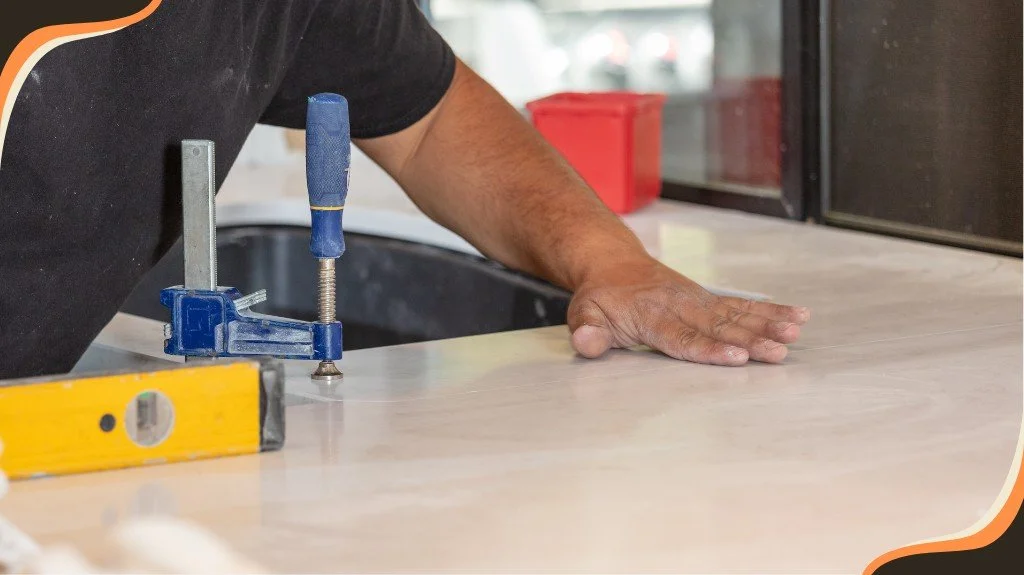
Whether a cracked countertop can be repaired depends on the size, location, and type of crack. Some cracks are minor and cosmetic, while others compromise the structural integrity of the stone. Understanding your options can help you decide the best course of action.
Small Cracks
Small, hairline cracks are usually cosmetic and can often be repaired without replacing the countertop.
Small cracks can often be filled with a colour-matched epoxy to restore the appearance of the countertop.
Hairline cracks that do not affect the countertop’s strength typically do not require replacement.
Professional repair ensures the crack is sealed properly and blends in with the surrounding stone.
Repairing small cracks early can prevent them from spreading and maintain the overall look of your countertop.
Large or Structural Cracks
Cracks that compromise the stability of the countertop or run across large sections of the stone may require more extensive solutions.
Large structural cracks may weaken the countertop and often require replacement.
Cracks across the slab, particularly near sinks or corners, are harder to repair and may continue to grow over time.
A professional assessment is essential to determine whether repair is feasible or if replacement is the safest option.
Addressing large or structural cracks promptly can prevent further damage and ensure the countertop remains safe to use.
Edge Cracks
Cracks along the edge of the countertop are usually easier to repair than cracks that run across the main surface.
Edge cracks can often be filled with epoxy or patched without replacing the slab.
Minor edge cracks do not usually affect the structural integrity of the countertop.
Repairing edge cracks can improve the appearance and prevent chips from forming or spreading.
Edge crack repairs are typically straightforward and can restore both the look and function of your countertop.
In many cases, a cracked countertop can be repaired effectively, but larger or structural cracks may require professional replacement. Consulting with a stone expert can help determine the best solution for your specific situation.
6. How To Prevent Countertop Cracks

Preventing countertop cracks is much easier than repairing them. Most cracks result from stress, impact, heat, or improper installation, so taking proactive steps can protect your investment and keep your countertop looking great for years to come.
Heat Protection
High heat is a common cause of cracks, so protecting your countertop from hot items is essential.
Always use trivets or heat pads when placing hot pans or pots on your countertop.
Avoid exposing the stone to sudden temperature changes that could cause thermal shock.
Do not place hot appliances like slow cookers or toaster ovens directly on the stone surface.
By protecting your countertop from heat, you reduce the risk of thermal stress and cracking over time.
Weight and Impact Safety
Excessive weight or impact can create cracks, so it’s important to handle your countertop with care.
Do not stand, sit, or lean heavily on the countertop.
Avoid dropping heavy objects onto the surface, especially near edges and corners.
Keep large appliances properly supported and avoid dragging them across the countertop.
Taking these precautions can prevent stress cracks and edge damage that may develop into larger problems.
Proper Installation and Support
Many cracks result from poor installation or insufficient support, so ensuring proper installation is key.
Make sure overhangs have adequate support brackets or corbels to carry the weight of the stone.
Ensure cabinets are level and properly secured before countertop installation.
Use professional installers who are experienced with stone countertops.
Proper installation and support minimize stress points and help prevent cracks from forming over time.
By following these preventive measures, you can greatly reduce the risk of countertop cracks and extend the life of your stone surface while maintaining its beauty and durability.
7. When It’s Time to Replace Your Countertop

While some countertop cracks can be repaired, there are situations where replacement is the safest and most practical option. Recognizing the signs that your countertop may need to be replaced can help you avoid further damage and maintain the functionality and appearance of your kitchen.
Signs Replacement May Be Needed
Certain indicators suggest that a countertop is no longer structurally sound or cosmetically viable.
If a crack is spreading or growing over time, it may indicate a serious structural issue.
Countertop lifting or separation from the cabinets can signal that the underlying support has failed.
Large structural cracks, particularly across the main surface of the countertop, often cannot be safely repaired.
Multiple cracks appearing in different areas of the countertop may show that the stone is under stress or deteriorating.
Damage near sinks, cooktops, or other high-stress areas is especially concerning, as these spots are prone to additional stress and wear.
Monitoring these signs carefully can help you decide when repair is no longer sufficient and replacement is the best solution.
Why Replacement Is Sometimes the Best Option
Replacing a cracked countertop ensures safety, restores the kitchen’s appearance, and provides peace of mind that the new surface will last for years. In cases of large or structural cracks, replacement is often the most cost-effective solution in the long term, compared to repeated repairs.
If you notice any of these warning signs, it’s a good idea to consult with a professional to evaluate whether replacement is necessary and to explore options for your next countertop.
Protect Your Countertops with Expert Guidance from Natural Stone City
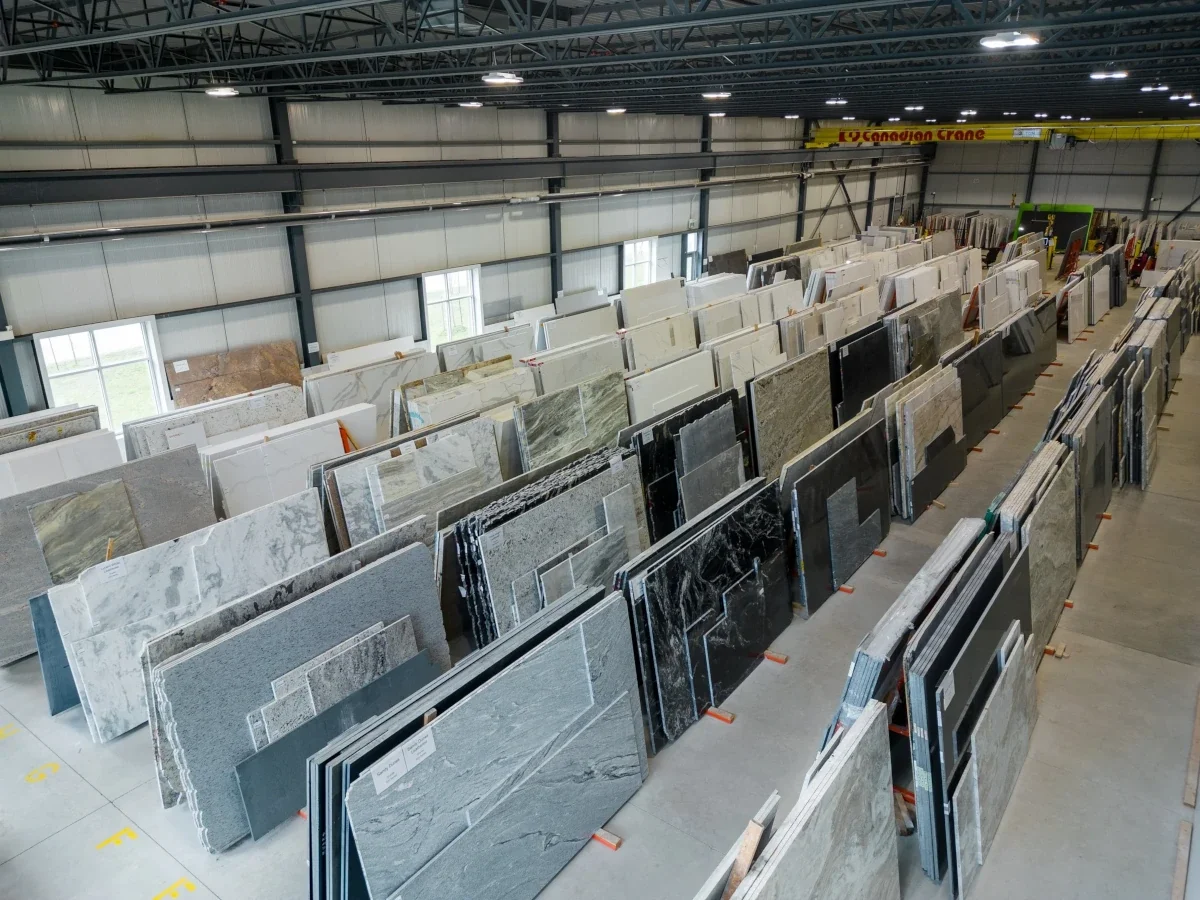
Cracks in your countertop can be concerning, but understanding the causes and types of cracks can help you take the right action. Whether the crack is minor or structural, it’s important to have a professional inspect your countertop to determine the best solution.
If you notice cracking in your countertop, contact Natural Stone City for expert guidance. Their team can assess the damage, recommend repairs, or help you choose a beautiful new stone countertop to replace a damaged surface. Taking action early ensures your countertop remains both safe and visually stunning for years to come.
What Our Customers Are Saying…
“Natural Stone City provided top notch service and quality. From the first time we walked into the showroom through to final installation, they went above and beyond to ensure that their costumer is not just satisfied, but truly happy with their investment. We especially want to publicly recognize and thank Maria for taking the time to walk us through the warehouse explaining the pro’s and con’s of different choices. This being our first time through the process of choosing countertops for the kitchen and bathroom, Maria’s knowledge and honesty was invaluable.
We give this company and all their employees the highest ratings possible and will recommend them to everyone we know. Go visit them, you will not be disappointed!”
-Rob Coutts
“As a local contractor Never an issue with this company been with them for 10+ years Always been well taken care of with all of their staff with the right prices for a quality job. Highly recommend.”
-Scott Wenderoth
“Gia was excellent at taking us through the warehouse, helping us get exactly what we wre looking for!”
-Scott Wagler