
Should I Choose Cabinets or Countertops First For My New Kitchen?
When planning a new kitchen, one of the first big decisions homeowners face is surprisingly simple, but incredibly important: should you choose cabinets or countertops first? The order you choose can impact everything from your kitchen’s layout and design flow to your budget and installation timeline.
In most cases, the best approach is to choose your cabinets first, then select your countertops.
Cabinets define the structure of your kitchen; everything from layout and storage to colour and style; while countertops are custom-fabricated to fit precisely on top of them. Starting with cabinets helps avoid costly mistakes, ensures accurate measurements, and gives you far more flexibility when it comes to selecting the perfect stone surface.
That said, there are a few scenarios where starting with countertops can make sense, especially if you’ve found a standout slab you want to design around. In this guide, we’ll break down the pros and cons of each approach so you can make the right decision for your kitchen with confidence.
Pros and Cons Comparison: Cabinets First vs Countertops First
How Countertops Are Measured and Installed (Why Order Matters)
Final Verdict: Cabinets First Is the Smart Choice for Most Kitchens
If you’re planning a kitchen renovation, visit Natural Stone City to explore premium countertops, view full stone slabs in person, and get expert guidance on pairing the perfect stone with your cabinet design.
Key Takeaways
The best approach for most kitchen renovations is to choose cabinets first, as they define the layout, functionality, and structure of the space.
Countertops are custom fabricated to fit installed cabinets, making accurate templating and measurement essential before installation.
Choosing cabinets first provides more flexibility with countertop materials, colours, and edge profiles.
Starting with countertops is only recommended in special cases, such as when designing around a unique natural stone slab or matching existing finishes.
Cabinets-first reduces the risk of costly mistakes, design limitations, and installation issues.
The countertop installation process relies on precise templating after cabinets are installed, which is why order matters.
Working with professionals helps ensure cabinets and countertops are properly matched, measured, and installed for the best results.
Should I Choose Cabinets or Countertops First
1. Why Choosing Cabinets First Is Usually the Best Option
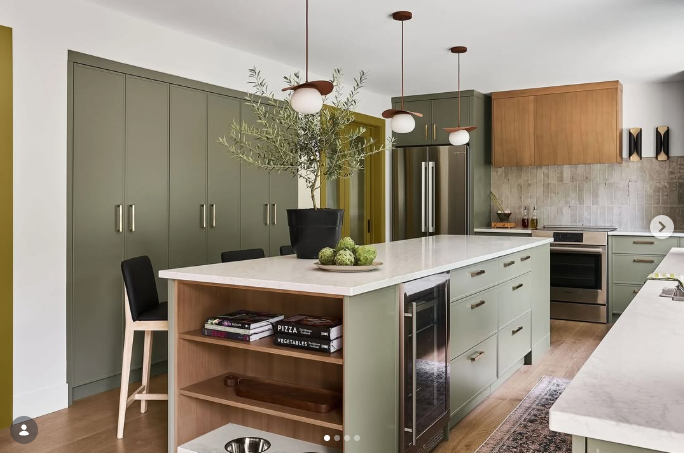
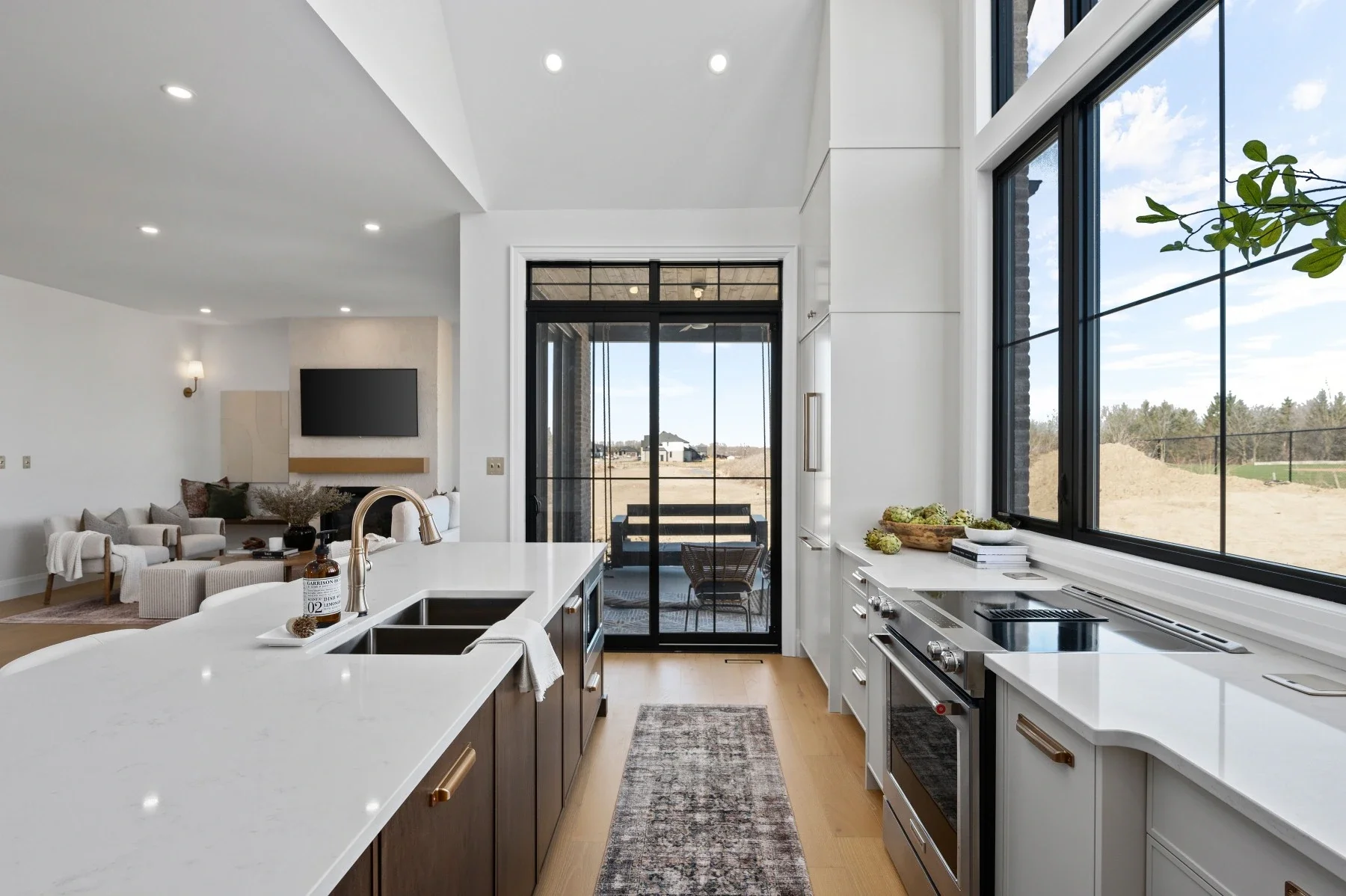
For most kitchen renovations, starting with cabinets is the smartest and most practical approach. Cabinets act as the foundation of your kitchen design, influencing everything from layout and functionality to how your countertops will ultimately look and fit.
Cabinets Set the Kitchen Layout
Cabinets define the structure and flow of your kitchen, which makes them the logical starting point. Before anything else can fall into place, you need to know how your space will function day-to-day.
Appliance placement is determined by where cabinets are installed, ensuring everything fits and functions properly.
The kitchen workflow, often referred to as the “kitchen triangle,” is shaped by cabinet positioning to create an efficient cooking space.
Storage configuration is established through cabinet selection, affecting how much space you have and how it is organized.
Once this layout is finalized, countertops are custom-cut to fit precisely on top of the cabinets, ensuring a seamless and professional finish.
More Flexibility With Countertop Materials
Choosing cabinets first gives you far more freedom when it comes to selecting your countertops. Instead of trying to match cabinets to a fixed surface, you can explore a wider range of options that complement your overall design.
It becomes easier to match stone colour, pattern, and edge profile to your cabinet style and finish.
You avoid being locked into a limited cabinet selection that may not suit your preferred countertop material.
This approach allows you to create a more cohesive and visually appealing kitchen without unnecessary compromises.
Accurate Measurements & Installation
One of the most important reasons to choose cabinets first is the need for precise measurements. Countertops are not pre-made, they are fabricated specifically for your kitchen after cabinets are installed.
Cabinets must be fully installed before templating can take place, ensuring exact measurements are captured.
This process helps prevent gaps between surfaces that can affect both appearance and durability.
It also avoids misalignment issues that can occur if measurements are taken too early.
Ultimately, it reduces the risk of costly rework or delays during installation.
By following the proper order, you ensure a smoother installation process and a higher-quality end result.
Better Budget Control
Starting with cabinets also helps you manage your renovation budget more effectively. Since cabinets are typically the largest expense in a kitchen remodel, it makes sense to prioritize them first.
Cabinets often represent the biggest upfront investment in your kitchen renovation.
Once cabinets are selected, you can allocate the remaining budget toward countertop upgrades such as granite or quartz.
This strategy helps you make more informed financial decisions while still achieving the look and performance you want from your countertops.
In the end, choosing cabinets first creates a stronger foundation for your entire kitchen project, making every decision that follows simpler, more accurate, and more cost-effective.
2. When It Might Make Sense to Choose Countertops First
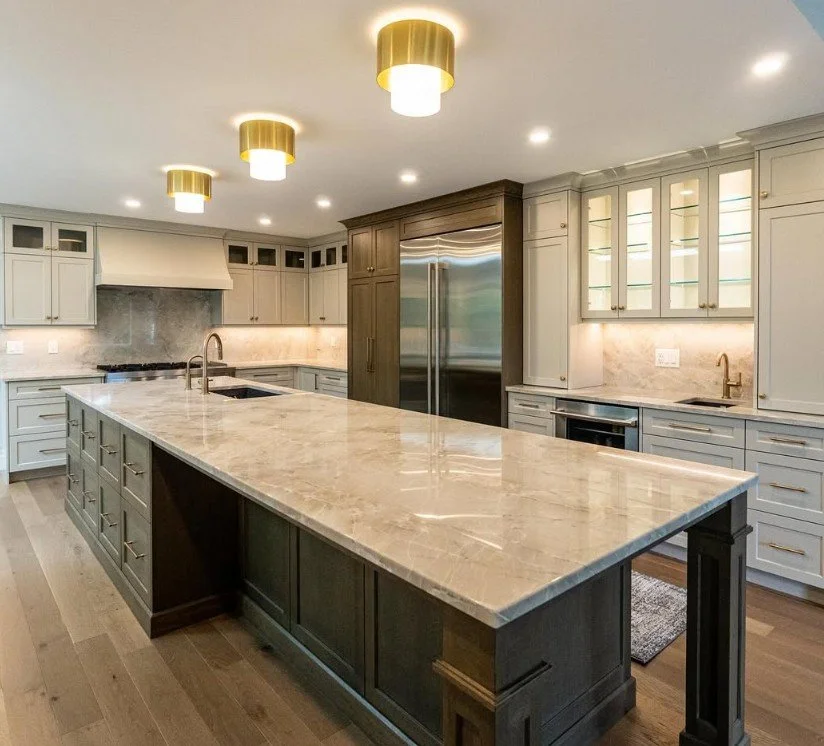
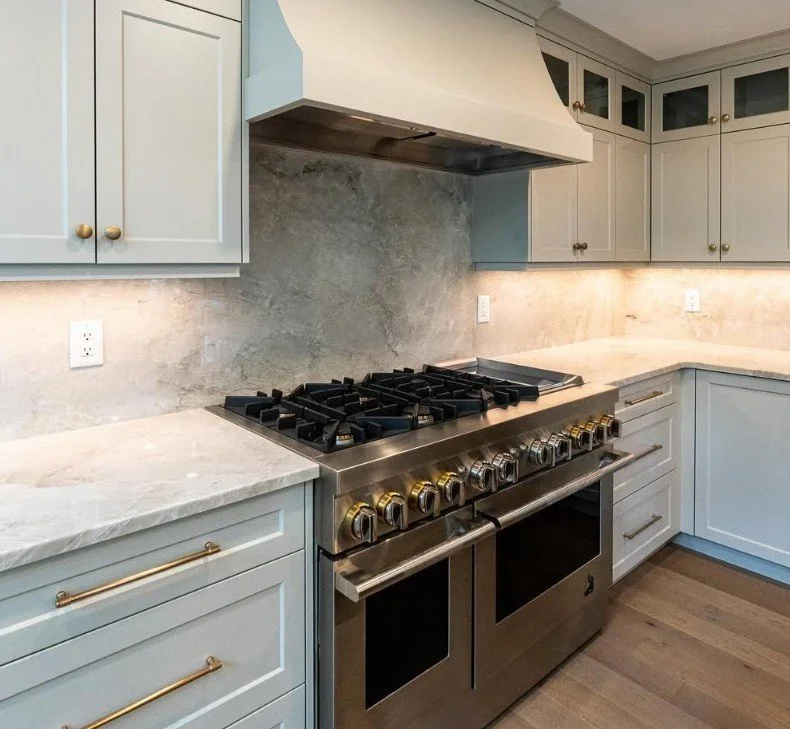
While choosing cabinets first is usually the best route, there are certain situations where starting with countertops can be the right design decision. If your kitchen renovation is being driven by a very specific aesthetic vision or you are working around existing design elements, selecting your countertop material first can help guide the rest of the project.
You’ve Fallen in Love With a Unique Slab
Natural stone is unlike manufactured materials because every slab is completely unique. If you’ve found a granite or marble slab with distinctive veining, colour variation, or movement that you absolutely love, it may make sense to build your kitchen design around it.
There are several reasons you might choose this approach when working with natural stone.
Natural stone slabs often feature one-of-a-kind patterns that cannot be replicated.
A dramatic slab can become the visual focal point of the entire kitchen.
Choosing the slab first allows you to select cabinet colours and finishes that enhance its natural beauty.
In this case, the countertop becomes more than just a functional surface, it becomes the statement piece that defines the room’s overall style.
You’re Matching Existing Elements
Not every kitchen renovation starts from scratch. If you are updating only certain parts of your kitchen, choosing countertops first can help ensure everything works together visually.
This is especially useful when you are trying to coordinate with features that are staying in place.
You may be keeping your existing cabinetry and need a countertop that complements its colour and style.
You might need your countertops to coordinate with flooring that is not being replaced.
You may want your countertop selection to tie in with an existing backsplash or wall finish.
Starting with countertops in these situations can make it easier to create a cohesive final design without needing to replace perfectly functional elements.
High-End or Designer-Led Kitchens
In luxury kitchen design, it is not uncommon for the countertop to lead the entire design direction. Many professional designers begin with a standout material, often referred to as a “hero” material, and build every other element around it.
This approach is often used when the goal is to create a highly customized, visually striking kitchen.
Designers may choose premium quartzite or marble as the centrepiece of the space.
Cabinet colours, hardware finishes, and backsplash selections are then chosen to complement that feature material.
This strategy creates a polished, intentional look often seen in custom high-end kitchens.
While this method requires careful planning and often a larger budget, it can produce truly stunning results when executed properly.
Ultimately, choosing countertops first works best when there is a clear design vision already in place. For most homeowners, cabinets-first remains the more practical choice, but if your countertop is the defining feature of your dream kitchen, starting there can absolutely make sense.
3. Pros and Cons Comparison: Cabinets First vs Countertops First
Choosing between cabinets-first or countertops-first ultimately comes down to your priorities; whether that’s practicality, design flexibility, or creating a statement piece. Understanding the advantages and drawbacks of each approach can help you make a more confident decision.
| Cabinets First | Countertops First | |
|---|---|---|
| Pros |
Cabinets First
Easier installation process
Better layout planning and functionality
More flexibility with countertop selection
Lower risk of measurement or fit errors
|
Countertops First
Design built around a standout material
Ideal for unique or luxury stone slabs
|
| Cons |
Cabinets First
May limit ultra-specific countertop visions or pre-selected slab designs
|
Countertops First
Limited cabinet options to match chosen countertop
Higher risk of fit issues or redesign
Can increase costs and cause delays
|
Cabinets First – Pros
Starting with cabinets is the most common and practical approach for a reason. It helps streamline both the design and installation process while reducing potential issues down the line.
The installation process is easier because countertops are templated and fabricated to fit already-installed cabinets.
Layout planning is more effective since cabinets define the structure, workflow, and functionality of the kitchen.
You have more flexibility when choosing countertops because you can match materials, colours, and finishes after cabinets are finalized.
There is a lower risk of mistakes since measurements are taken after cabinets are in place, reducing the chance of costly errors.
These advantages make cabinets-first the safest and most efficient choice for the majority of kitchen renovations.
Cabinets First – Cons
While this approach is generally recommended, it does come with a minor limitation for certain design-focused projects.
It may limit ultra-specific countertop visions if you had a very particular slab or material in mind from the beginning.
In most cases, however, this drawback is minimal and can still be managed with the wide variety of countertop options available.
Countertops First – Pros
Choosing countertops first can be a strong design-driven decision, especially when aesthetics are your top priority.
The design can be built around a standout material, allowing the countertop to become the focal point of your kitchen.
This approach is ideal for showcasing unique or luxury slabs with distinctive patterns and character.
For homeowners or designers aiming to create a high-end, custom look, these benefits can outweigh the practical challenges.
Countertops First – Cons
Despite its design advantages, starting with countertops introduces several practical challenges that can complicate your project.
Cabinet choices may become limited because they need to match the selected countertop rather than the other way around.
There is a higher risk of poor fit or the need for redesign if measurements or layout assumptions change.
This approach can increase overall costs and lead to delays due to adjustments, rework, or material constraints.
Because of these downsides, countertops-first is typically best reserved for very specific design scenarios rather than standard kitchen renovations.
By weighing these pros and cons, it becomes clear why most homeowners and professionals prefer starting with cabinets—while still recognizing that countertops-first can be the right choice in the right situation.
4. How Countertops Are Measured and Installed (Why Order Matters)
Understanding how countertops are measured and installed helps explain why the order of your renovation matters so much. Unlike cabinets, countertops are not standard, off-the-shelf products—they are custom fabricated to fit your exact kitchen layout.
The Countertop Installation Process
1. Cabinets Installed
The kitchen layout is finalized and cabinets are installed to define exact structure and spacing.
2. Templating
Precise measurements are taken directly from installed cabinets to ensure a perfect fit.
3. Fabrication
The countertop is custom cut, shaped, and finished in a workshop based on exact measurements.
4. Installation
The finished countertop is installed and secured for a seamless, professional result.
Countertops go through a precise, step-by-step process to ensure a perfect fit. Each stage depends on the one before it being completed correctly.
Cabinets are installed first to establish the final layout, spacing, and structure of the kitchen.
Templating is then done, where exact measurements are taken directly from the installed cabinets.
Fabrication follows, where the countertop is cut, shaped, and finished in a workshop based on those measurements.
Installation is the final step, where the finished countertop is carefully placed and secured in your kitchen.
This process ensures that every countertop is tailored specifically to your space for a seamless fit and finish.
Why Templating Is So Important
Templating is one of the most critical steps in the entire process because it captures the real-world conditions of your kitchen after cabinets are installed. Even small variations can impact the final result, which is why accuracy at this stage is essential.
Cabinets may have slight variations in placement that only become clear after installation.
Walls are not always perfectly straight, especially in older homes or renovations.
Appliances and sink placements must be accounted for with precise measurements.
Because of these factors, templating ensures the countertop is fabricated to fit your kitchen exactly as it exists, not as it appears on paper.
Countertops Cannot Be Accurately Cut Before Cabinets Are Installed

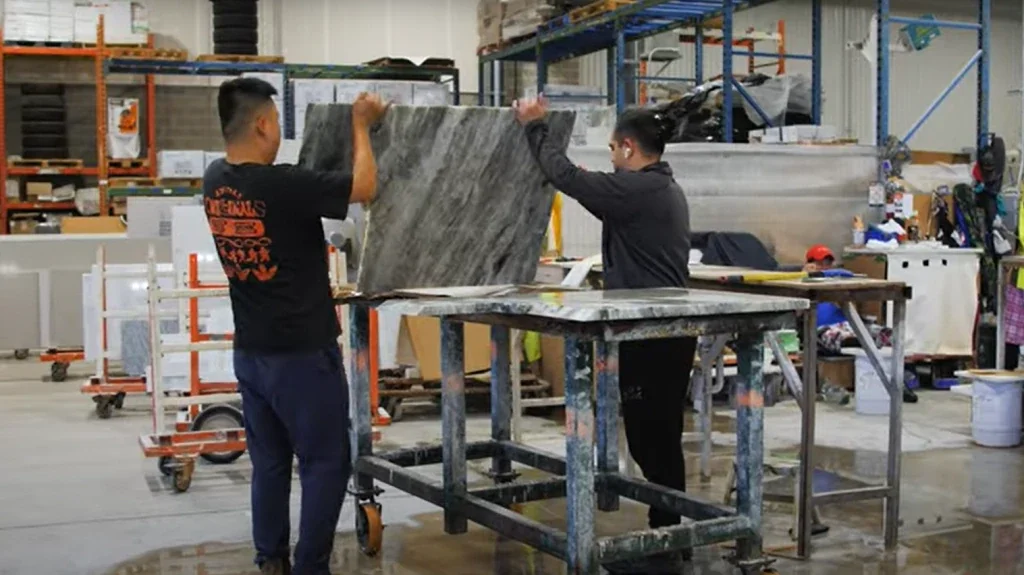
One of the most important reasons cabinets must come first is that countertops cannot be reliably pre-cut in advance. Even with detailed plans, there are too many variables that affect the final fit.
Countertops are custom-made based on real measurements, not estimates or design drawings. If they were cut before cabinets were installed, even small discrepancies could lead to major issues such as gaps, overhang problems, or misalignment.
This is why professionals always wait until cabinets are fully in place before moving forward with templating and fabrication. It ensures accuracy, reduces waste, and guarantees a much higher-quality finished result.
By following the correct order, cabinets first, countertops second, you ensure a smoother installation process and a kitchen that fits together exactly as intended.
5. Design Tips for Choosing Cabinets and Countertops Together
Even though cabinets are usually chosen first, it’s important to think about how both cabinets and countertops will work together as a complete design. A coordinated approach helps ensure your kitchen looks cohesive, functions well, and feels intentional rather than pieced together.
Start With a Style Direction
Before selecting specific materials, it helps to establish an overall design style for your kitchen. This provides a clear direction for both cabinet and countertop choices and helps narrow down your options.
Modern kitchens typically feature clean lines, flat-panel cabinets, and sleek stone surfaces such as quartz.
Traditional kitchens often include detailed cabinetry paired with warm, classic countertop materials like granite or marble.
Farmhouse-style kitchens usually combine shaker cabinets with natural-looking stone and softer, more organic finishes.
By defining your style early, you create a consistent foundation that makes every other design decision easier and more cohesive.
Use Contrast or Complement
One of the most effective ways to create visual interest in your kitchen is by deciding whether you want contrast or harmony between your cabinets and countertops. Both approaches can work well when done intentionally.
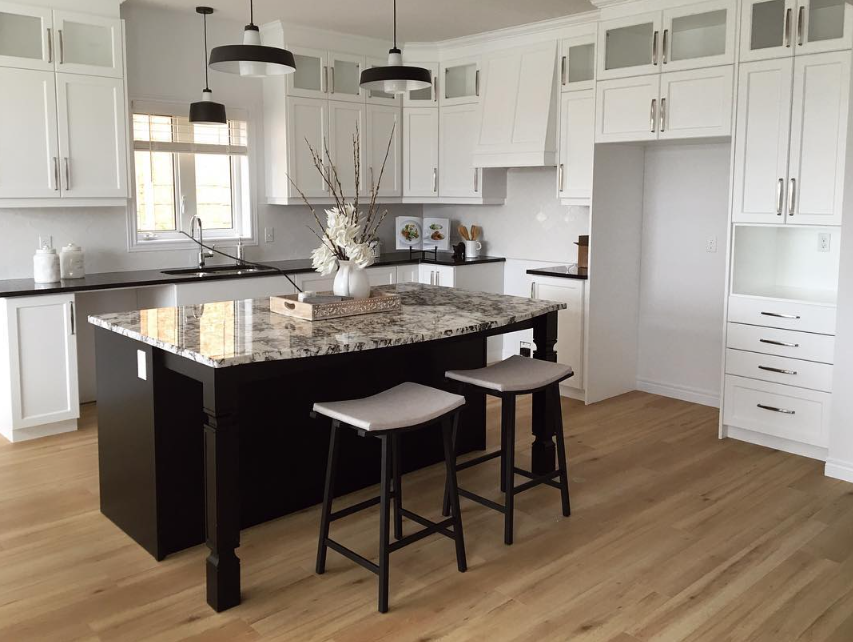
Light cabinets paired with dark countertops create a strong contrast that adds depth and definition to the space.
Dark cabinets combined with lighter countertops can brighten the kitchen and prevent it from feeling too heavy.
This approach helps you intentionally shape the overall mood of your kitchen rather than relying on random combinations.
Bring Samples Together
Seeing materials in isolation can be misleading, which is why it’s important to evaluate cabinets and countertops side by side whenever possible. Colours, textures, and patterns can look very different depending on lighting and surrounding materials.
Visiting a showroom allows you to see full slabs of stone rather than small sample chips.
Comparing cabinet doors and countertop materials together helps ensure colours and finishes work well in real-life conditions.
Viewing full slabs also gives you a better understanding of natural variation in stone, which is impossible to capture in small samples.
Taking the time to see materials together significantly reduces the risk of design regret after installation.
Think Long-Term Durability
A successful kitchen design is not just about appearance, it also needs to stand up to everyday use over time. Understanding the role each component plays helps you make more practical choices.
Cabinets provide the structural foundation of the kitchen and need to withstand years of use and storage demands.
Countertops are the primary working surface and must handle heat, stains, scratches, and daily wear.
By considering durability alongside design, you ensure your kitchen not only looks good on day one but continues to perform well for years to come.
When cabinets and countertops are selected with both style and practicality in mind, the result is a kitchen that feels balanced, functional, and built to last.
6. Common Mistakes to Avoid
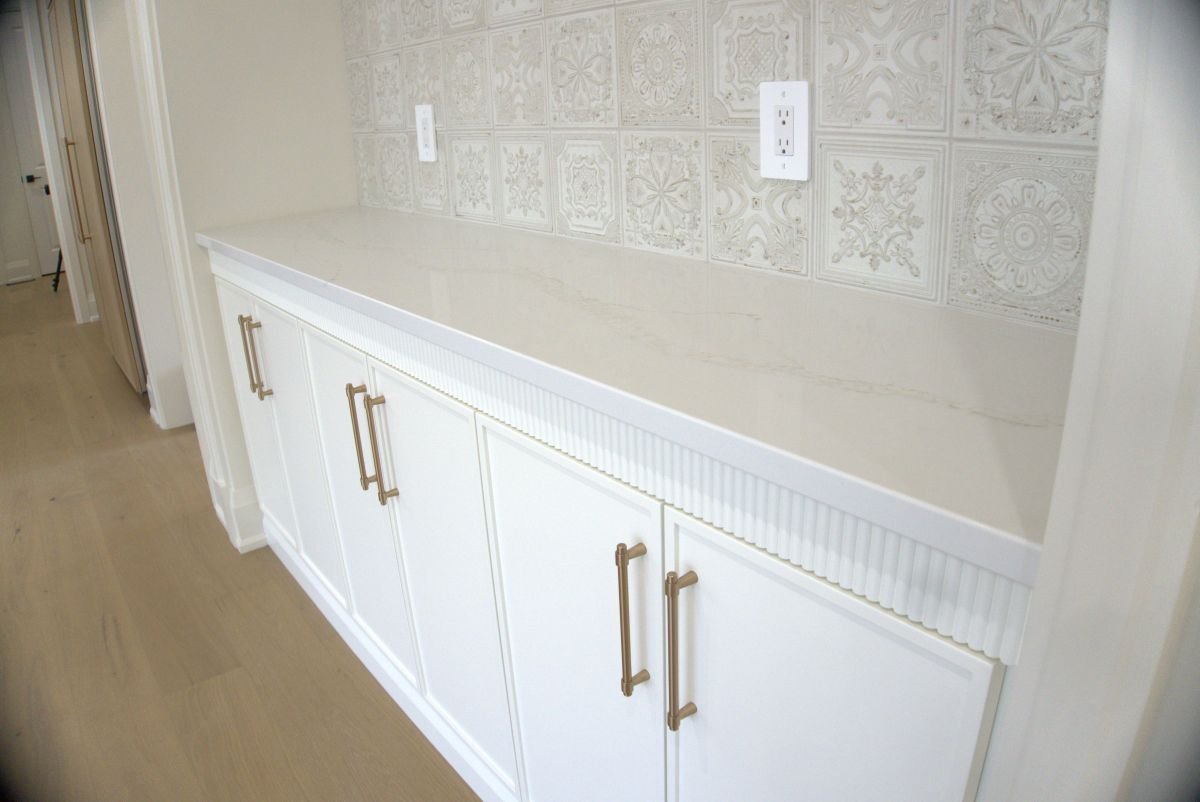
Designing a kitchen involves many moving parts, and small decisions made in the wrong order can lead to costly or frustrating results. Being aware of the most common mistakes can help you avoid design issues and ensure your cabinets and countertops work together seamlessly.
Choosing Countertops Too Early
One of the biggest mistakes homeowners make is selecting countertops before the cabinets are finalized. While it can be tempting to fall in love with a specific slab or colour, this approach often creates limitations later in the process.
Choosing countertops too early can restrict your cabinet options and force compromises in colour, style, or layout.
It can also lead to fit issues if the cabinets selected later do not align well with the pre-chosen countertop dimensions or design.
In most cases, it is far more practical to establish the cabinet design first and then select countertops that enhance and complete the overall look.
Not Considering Cabinet Colour Undertones
Cabinet colours are rarely as simple as “white” or “grey,” and overlooking their undertones can result in a mismatched kitchen design. Subtle warm or cool tones can significantly affect how your countertops appear once installed.
Warm cabinet tones may clash with cool-toned stone, creating an unbalanced or inconsistent look.
Cool cabinet colours may not pair well with warmer countertop materials, leading to visual disconnect.
Paying attention to undertones ensures that your cabinets and countertops feel like they belong together rather than competing for attention.
Ignoring Lighting Impact
Lighting plays a major role in how both cabinets and countertops appear in your kitchen. Materials can look very different under natural light compared to artificial lighting, which is often overlooked during the selection process.
Natural daylight can highlight variations in stone patterns and colour that may not be visible in showroom lighting.
Artificial lighting, especially warm or cool LED lighting, can alter the perceived tone of both cabinets and countertops.
Always evaluate your material choices in different lighting conditions to avoid surprises after installation.
Skipping Professional Templating
Another common mistake is underestimating the importance of professional templating during the countertop installation process. This step ensures that every measurement is accurate before fabrication begins.
Skipping proper templating can result in gaps, uneven edges, or misaligned countertop sections.
It increases the risk of costly adjustments or re-fabrication if measurements are not precise.
Professional templating is essential for achieving a perfect fit and ensuring your countertops are installed correctly the first time.
By avoiding these common mistakes, you can make more confident decisions throughout your kitchen renovation and achieve a smoother, more successful outcome.
7. Final Verdict: Cabinets First Is the Smart Choice for Most Kitchens
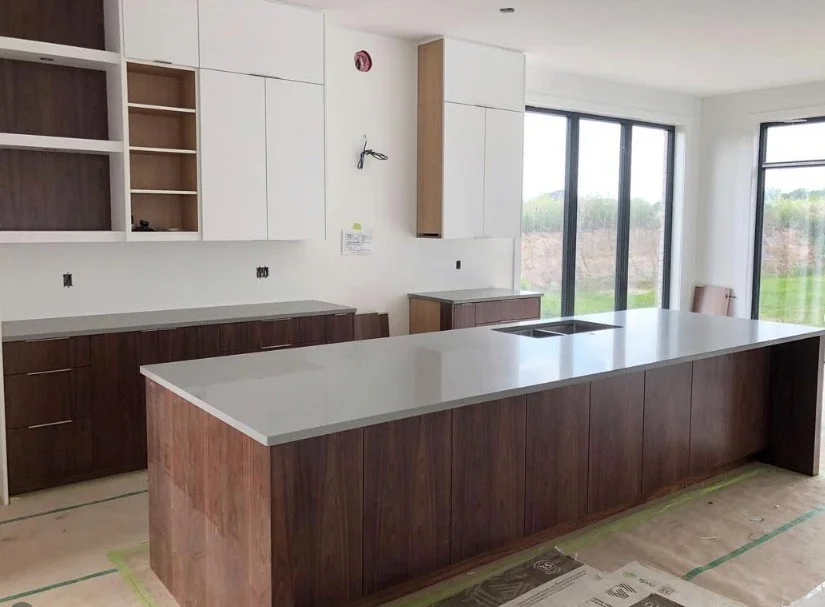
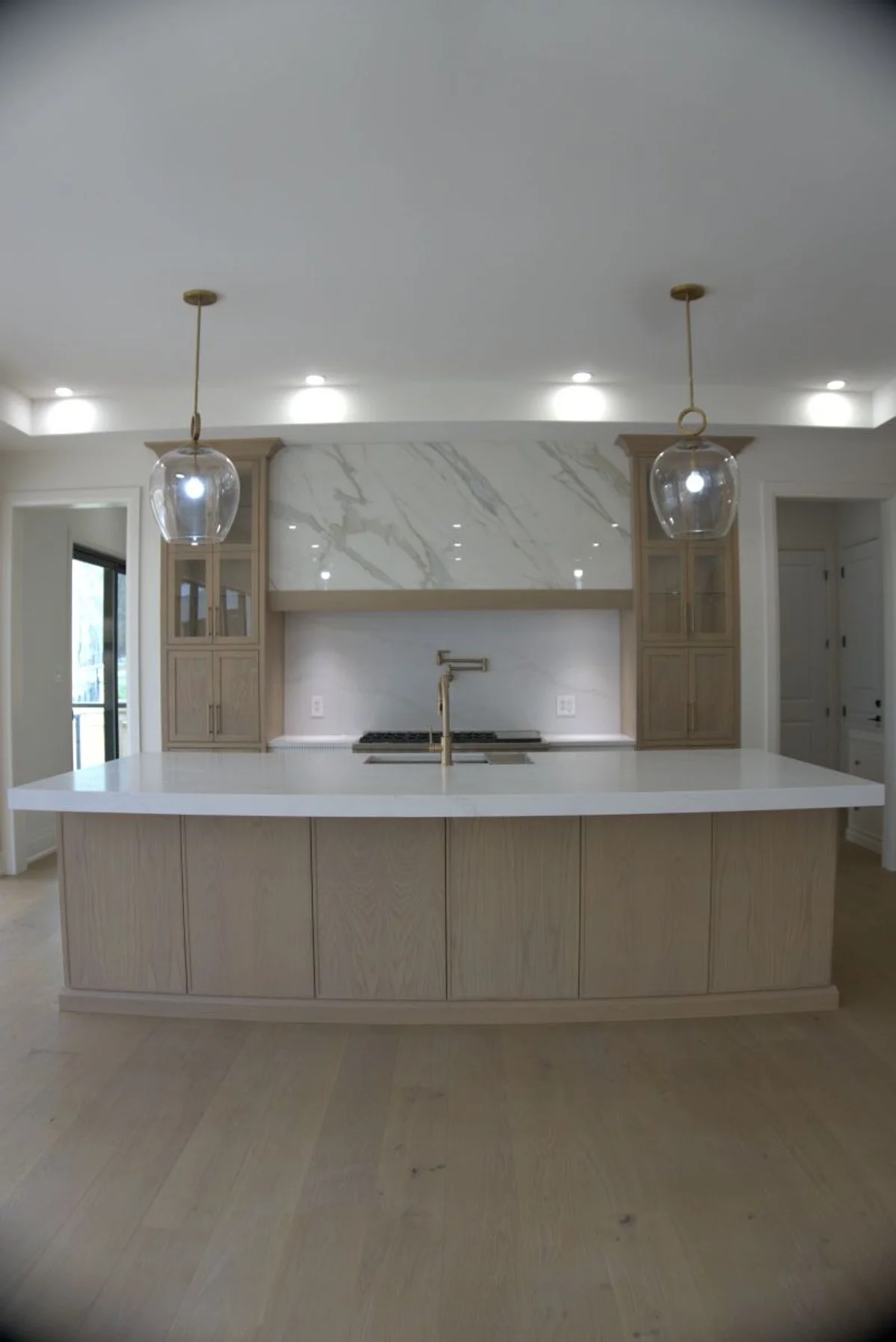
When it comes to planning a kitchen renovation, the order you choose can have a significant impact on the final result. While there are a few exceptions, most homeowners will benefit from starting with cabinets and then selecting countertops to complete the design.
Why Cabinets First Is the Most Practical Approach
Choosing cabinets first creates a more structured and predictable renovation process. It helps ensure that everything else in the kitchen is built around a solid foundation.
This approach is more practical because cabinets define the layout, functionality, and overall structure of the kitchen.
It is more cost-effective because it reduces the likelihood of expensive changes, rework, or material mismatches later in the project.
It carries a lower risk of errors since countertop measurements are taken after cabinets are installed, ensuring a precise fit.
These advantages make cabinets-first the preferred method for the majority of kitchen renovations, especially where efficiency and reliability are priorities.
When Countertops First Can Still Make Sense
Although cabinets-first is the standard recommendation, there are rare situations where starting with countertops may be appropriate. These cases are usually driven by a strong design vision or specific material choice.
You may choose countertops first if you are building the entire kitchen around a unique or high-end natural stone slab.
You may also start with countertops if you are matching existing cabinetry or other fixed design elements in your home.
In some designer-led projects, a standout countertop material is intentionally used as the focal point of the entire kitchen design.
These situations are the exception rather than the rule and typically require more careful planning and coordination.
The Bottom Line
For most homeowners, starting with cabinets is the safest and most effective strategy. It creates a clear design direction, supports accurate installation, and reduces the risk of costly mistakes.
While countertops-first can work in very specific design scenarios, it should only be considered when there is a strong, intentional reason to build the kitchen around a particular material.
In almost every other case, choosing cabinets first sets you up for a smoother renovation and a more successful final result.
Work With the Experts at Natural Stone City to Get It Right
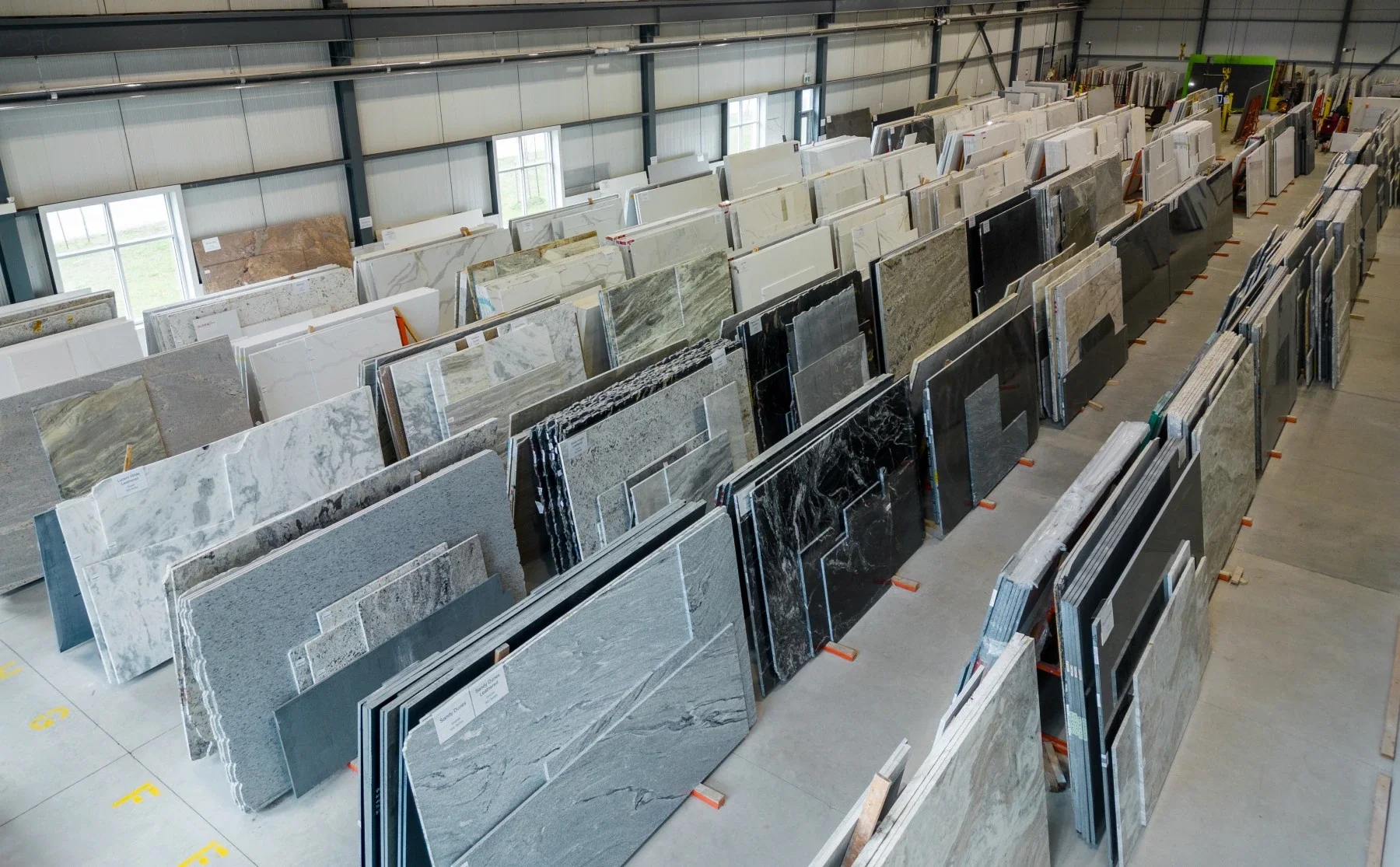
Choosing between cabinets and countertops, and getting the combination just right, can feel overwhelming with so many design, material, and measurement decisions involved. Working with experienced professionals helps take the guesswork out of the process and ensures your kitchen comes together seamlessly from start to finish.
At Natural Stone City, we help homeowners create kitchens that are both beautiful and built to last by guiding them through every step of the selection and installation process.
We help you match cabinets and stone countertops so the colours, textures, and finishes work together as a cohesive design.
We provide access to full natural stone slabs so you can see the exact patterns, movement, and character of your countertop before making a decision.
We offer professional templating and installation services to ensure your countertops are measured, fabricated, and installed with precision and care.
When you combine expert guidance with high-quality materials and proper installation, the result is a kitchen that not only looks incredible but also performs well for years to come.
If you are ready to start your kitchen project, we invite you to take the next step with Natural Stone City.
Visit our showroom to explore countertop materials in person and get inspired.
Request a quote to understand your options and plan your project with confidence.
Book a consultation with our team to get expert advice tailored to your kitchen design.
With the right guidance, choosing between cabinets and countertops becomes much simpler and your dream kitchen becomes much easier to achieve.
What Our Customers Are Saying…
“A fabulous company. I say that as this is the fourth time I have ordered countertops from Natural Stone City in the past 17 years for myself and my family. Each time I return I do so as the product they sell is exemplary. They even replaced the black granite they installed 17 years ago with a more modern one. The prices are also better than anywhere else I have checked with. Very pleased.”
-Shawn Thompson