
Which Countertops Require the Least Maintenance?
Quick Answer: Which Countertop Requires the Least Maintenance?
Quartz countertops require the least maintenance of all major countertop materials.
Maintenance is simple and minimal:
- Daily cleaning with mild soap and water or standard household cleaner
- No sealing required — ever
- No polishing or special treatments needed
- Highly resistant to stains, scratches, and moisture
If you want a countertop that looks great without the upkeep, quartz is the most hassle-free option available.
Choosing the right countertop isn’t just about colour and style, it’s also about how much time and effort you want to spend maintaining it over the years. Some materials are naturally resistant to stains, scratches, and moisture, while others require regular sealing and more careful upkeep to keep them looking their best. Understanding these differences can make a big impact on your long-term satisfaction and day-to-day convenience in the kitchen or bathroom.
If you’re trying to decide which option fits your lifestyle best, the team at Natural Stone City can help you compare materials in person and find a surface that looks great and works even better for your home.
Key Takeaways
Quartz requires the least maintenance of all countertop materials because it is non-porous and never needs sealing.
Porcelain and sintered stone are also extremely low-maintenance options that offer strong durability and stain resistance.
Granite and quartzite provide natural stone beauty but require periodic sealing and more ongoing care than engineered surfaces.
Marble and onyx are high-maintenance materials that need frequent sealing and careful handling to maintain their appearance.
Not all granite and quartzite options are less expensive than engineered materials, as pricing can vary significantly based on quality, rarity, and finish.
The best countertop choice depends on lifestyle, not just appearance, with busy households benefiting most from low-maintenance materials.
Long-term maintenance costs and effort should be considered alongside upfront pricing when selecting a countertop.
Which Countertops Require the Least Maintenance?
1. Maintenance Comparison Table
To help make the differences easier to understand at a glance, the chart below compares the main countertop materials side by side based on their maintenance requirements. It highlights how often each material needs sealing, how easy it is to clean, and the overall level of ongoing care required.
Countertop Maintenance Comparison
Quartz
Sealing: Not required
Cleaning: Daily wipe
Special Care: None
Maintenance Level: Very Low
Granite
Sealing: Every 1–3 years
Cleaning: Daily wipe
Special Care: Resealing required
Maintenance Level: Low–Moderate
Quartzite
Sealing: Every 1–2 years
Cleaning: Daily wipe
Special Care: Resealing required
Maintenance Level: Moderate
Porcelain
Sealing: Not required
Cleaning: Daily wipe
Special Care: Minimal
Maintenance Level: Very Low
Sintered Stone
Sealing: Not required
Cleaning: Daily wipe
Special Care: None
Maintenance Level: Very Low
Marble
Sealing: Frequent
Cleaning: Daily gentle wipe
Special Care: Polishing + sealing
Maintenance Level: High
Onyx
Sealing: Frequent / professional
Cleaning: Very gentle cleaning only
Special Care: High maintenance care
Maintenance Level: Very High
2. Individual Material Breakdown
Below is a breakdown of each countertop material to help you quickly understand how they compare in terms of maintenance, durability, and best use cases.
Granite Countertops
Granite is a natural stone that is widely used in kitchens and bathrooms because of its durability and timeless appeal.
It offers a classic, natural look that works in both modern and traditional spaces.
Granite is a natural stone that provides a durable and widely used countertop surface suitable for many home styles.
It requires sealing every 1–3 years to help protect it from stains and moisture absorption.
It is resistant to heat and scratches, but it can stain if it is not properly sealed and maintained over time.
Granite is best for kitchens that want a natural stone appearance while accepting a moderate level of ongoing maintenance.

*Image by MSI Surfaces
Quartz Countertops
Quartz is an engineered stone made from natural quartz crystals combined with resins and pigments.
It is designed to offer consistency, strength, and very low maintenance.
Quartz is an engineered stone made from quartz and resin, which creates a strong and uniform surface.
It is non-porous and highly stain resistant, making it very easy to clean and maintain.
It does not require sealing, polishing, or special treatments at any point in its lifespan.
Quartz is best for busy kitchens, families, and homeowners who want a low-maintenance surface that consistently performs well.
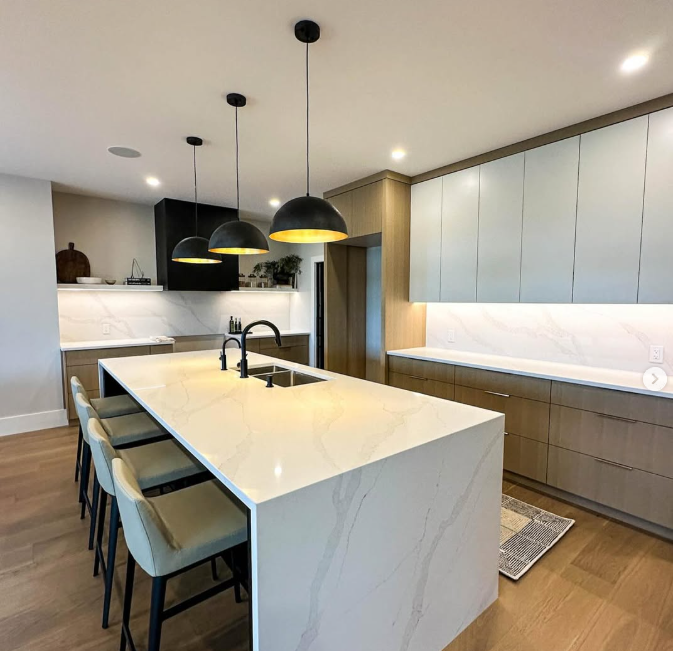
*Image by Natural Stone City
Quartzite Countertops
Quartzite is a natural stone that offers a similar look to marble but with significantly greater hardness and durability.
It is often chosen for its high-end aesthetic.
Quartzite is a natural stone that closely resembles marble but is much harder and more durable.
It requires sealing to help prevent staining and preserve its natural appearance.
It requires more maintenance than quartz but generally less than marble, placing it in the middle range overall.
Quartzite is best for homeowners who want a premium natural stone look and are comfortable with some maintenance.
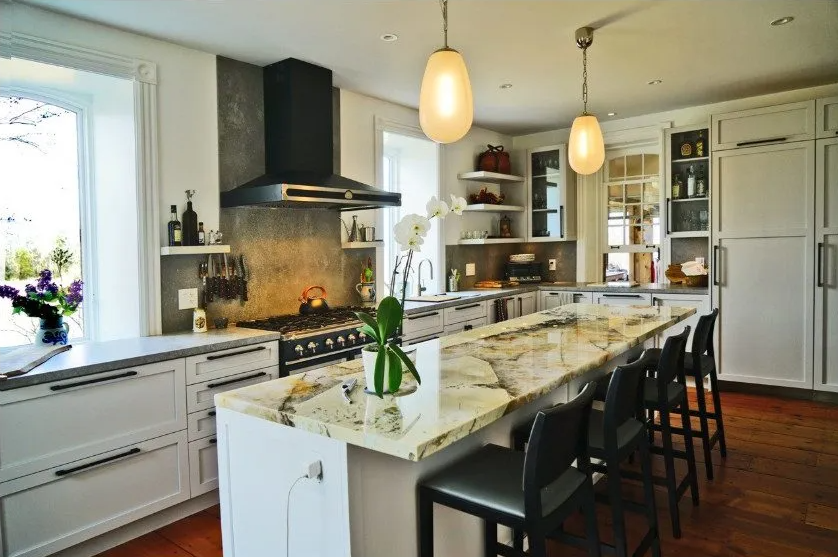
*Image by Marble Trend
Porcelain Countertops
Porcelain countertops are made from refined clay and minerals that are fired at very high temperatures, creating a dense and durable surface.
Porcelain is made from refined clay and minerals that are fired at high temperatures for exceptional strength.
It has extremely low porosity, which makes it highly resistant to stains and moisture absorption.
It is resistant to heat, stains, and UV exposure, making it suitable for both indoor and outdoor applications.
Porcelain is best for modern kitchens, outdoor kitchens, and minimalist designs where durability and easy maintenance are priorities.

*Image by MSI Surfaces
Sintered Stone Countertops
Sintered stone is an advanced engineered material created using extreme heat and pressure to replicate natural stone formation.
It is one of the most durable modern countertop options available.
Sintered stone is engineered using extreme heat and pressure to create a highly durable and stable surface.
It is completely non-porous, which makes it highly resistant to stains and water absorption.
It does not require sealing or special maintenance, making it extremely low maintenance overall.
Sintered stone is best for high-performance kitchens and luxury modern homes that prioritize durability and ease of care.
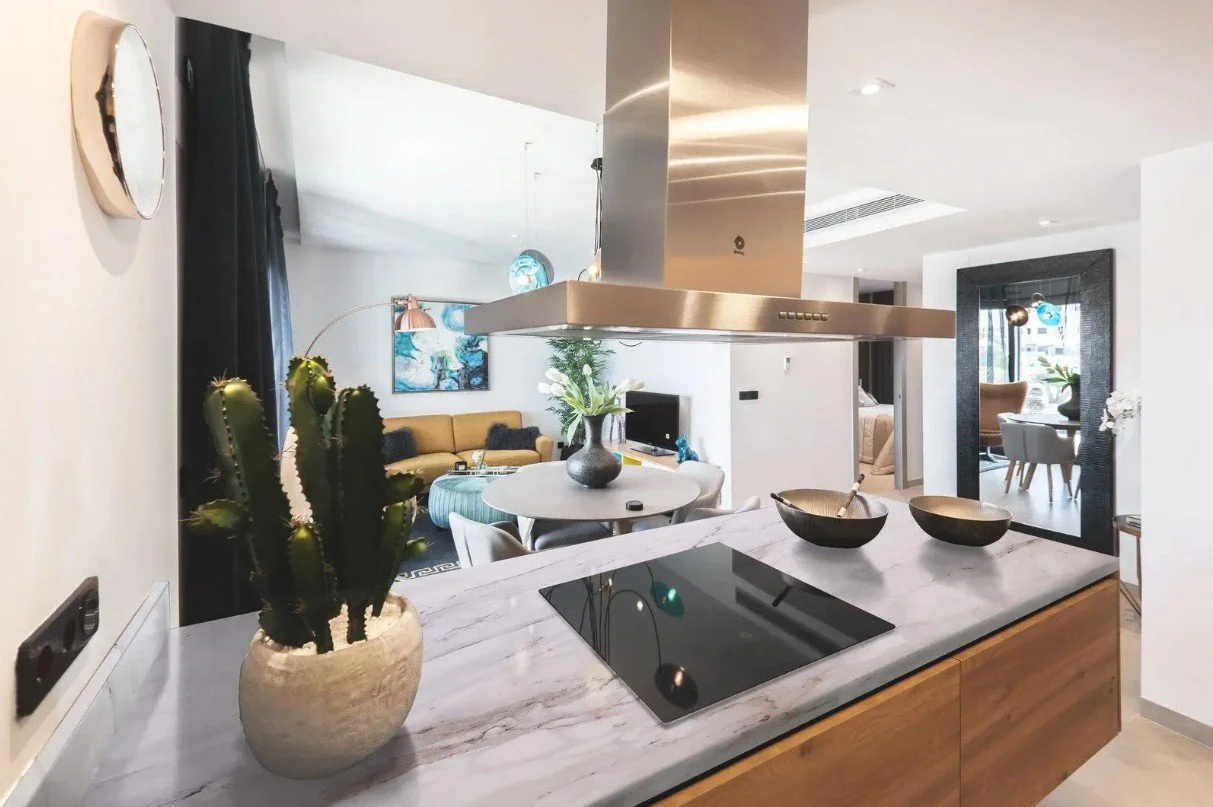
*Image by Marble Trend
Marble Countertops
Marble is a classic natural stone known for its elegant appearance and distinctive veining.
It is often chosen for luxury and decorative applications.
Marble is a classic natural stone that is prized for its elegant look and unique veining patterns.
It is highly porous and can stain or etch easily if not carefully maintained.
It requires frequent sealing and careful cleaning to preserve its appearance over time.
Marble is best for bathrooms, decorative kitchens, and low-traffic luxury spaces where appearance is the top priority.
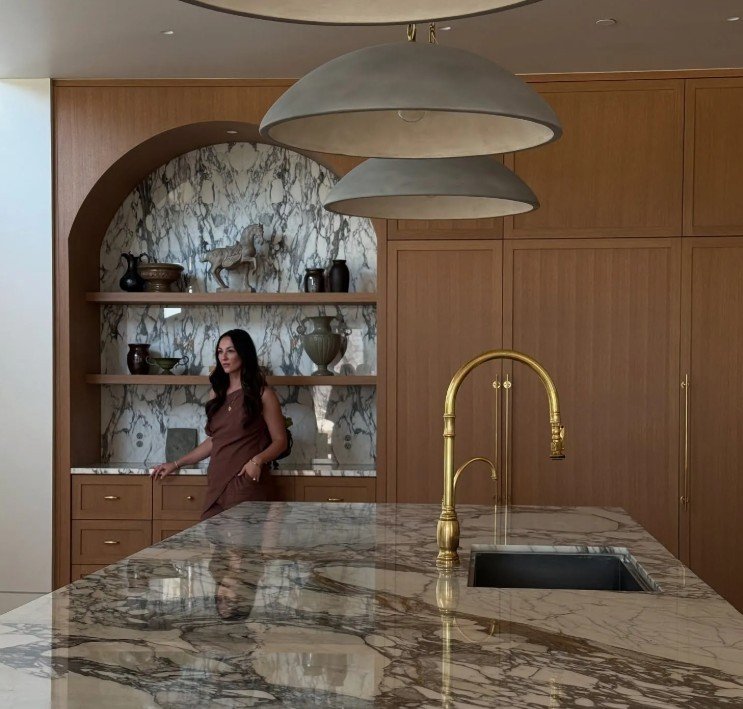
*Image by Marble Trends
Onyx Countertops
Onyx is a rare and visually striking natural stone known for its translucency and dramatic aesthetic appeal. It is typically used as a feature material rather than a work surface.
Onyx is a rare decorative stone valued for its translucent and visually dramatic appearance.
It is very soft and fragile compared to other countertop materials and can be easily damaged.
It often requires professional maintenance and careful handling due to its delicate nature.
Onyx is best for feature pieces, backlit installations, and statement islands where visual impact matters more than durability.
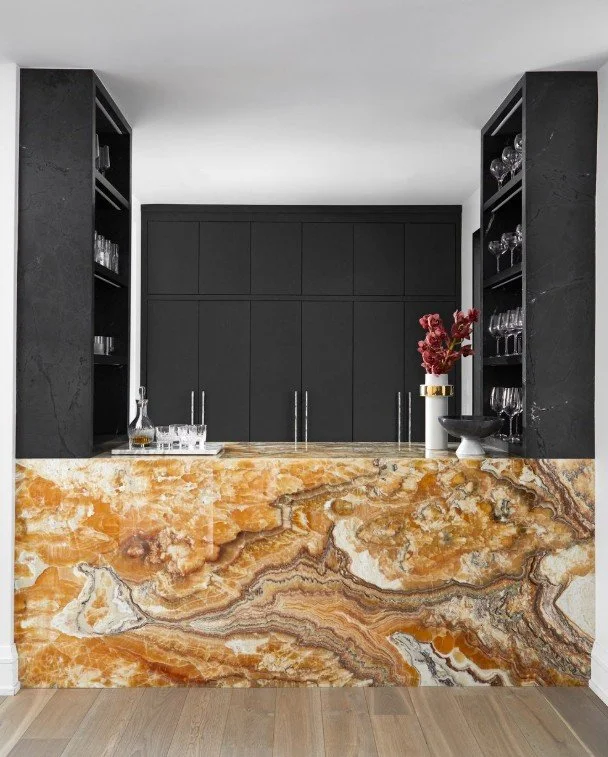
*Image by Cava Surfaces
3. Side-by-Side Maintenance Summary
Here is a quick overview of how each countertop material compares when grouped by maintenance level. This makes it easy to identify which options best suit a low-maintenance lifestyle.
Lowest Maintenance
Quartz, Porcelain & Sintered Stone
These materials require minimal upkeep and are ideal for busy households or anyone looking for a hassle-free countertop solution.
- Quartz requires no sealing and only simple daily cleaning.
- Porcelain is highly resistant to stains, heat, and moisture with very little maintenance required.
- Sintered stone is completely non-porous and does not require sealing or special care.
These options are best for homeowners who want long-term durability with the least amount of ongoing maintenance.
Medium Maintenance
Granite & Quartzite
These materials require some periodic care, but still offer strong durability and long-term performance when properly maintained.
- Granite requires sealing every 1–3 years to maintain stain resistance.
- Quartzite requires sealing and more care than engineered stone options.
These options are ideal for homeowners who want natural stone beauty with a manageable level of upkeep.
High Maintenance
Marble & Onyx
These materials require regular care and attention to maintain their appearance and prevent damage over time.
- Marble is highly porous and requires frequent sealing and careful cleaning.
- Onyx is delicate and often requires professional maintenance and careful handling.
These options are best suited for decorative spaces or low-traffic areas where appearance is the priority over durability.
4. Choosing the Right Countertop for Your Lifestyle
Choosing a countertop is not just about how it looks in a showroom, it’s about how it will perform in your everyday life. The best choice is the one that matches how you actually use your kitchen, how much maintenance you are willing to do, and the level of durability you expect over time.
Busy Households
If your kitchen is used frequently for cooking, family meals, and daily activity, low-maintenance materials are usually the best fit.
In busy households, the following countertop materials are typically the most practical choices:
Quartz is ideal because it is non-porous, stain resistant, and requires no sealing or special maintenance.
Porcelain is a strong option because it resists heat, stains, and scratches while remaining very easy to clean.
Sintered stone is well suited for high-use kitchens because it is extremely durable and completely non-porous.
These materials are best for households that want a worry-free surface that holds up well to everyday wear and tear.
Natural Stone Lovers
If you prefer the look and feel of natural stone, there are several options that balance beauty with varying levels of maintenance.
For homeowners who love natural stone, these materials are often the best match:
Granite offers a classic natural stone look with strong durability and moderate maintenance requirements.
Quartzite provides a high-end appearance similar to marble but with greater hardness and strength.
These materials are ideal for people who value natural variation and character in their countertops while still wanting good long-term performance.
Luxury Aesthetic (Not Worried About Maintenance)
Some homeowners prioritize dramatic, high-end aesthetics even if it means more maintenance and care over time.
For a luxury-focused look where maintenance is less of a concern, the following materials are commonly chosen:
Marble delivers a timeless, elegant appearance but requires frequent sealing and careful maintenance.
Onyx offers a rare, translucent, and highly decorative look but is very delicate and best used in low-traffic or feature areas.
These materials are best suited for spaces where visual impact is more important than day-to-day practicality.
Final Consideration: Lifestyle vs. Appearance
Ultimately, the best countertop choice is not just about what looks best in a showroom, it is about what fits your lifestyle. A surface that aligns with your cooking habits, cleaning preferences, and long-term expectations will provide far more satisfaction than one chosen purely for appearance.
Taking the time to match your countertop to your lifestyle will ensure you enjoy both its beauty and its practicality for many years to come.
5. Cost vs Maintenance: What You’re Really Paying For Over Time
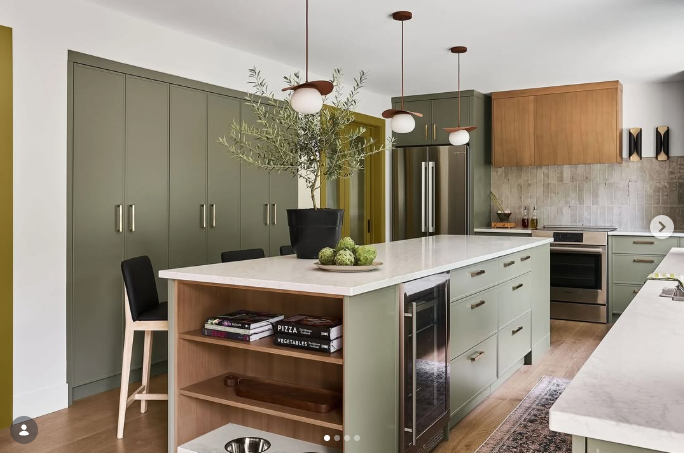
*Image by Natural Stone City
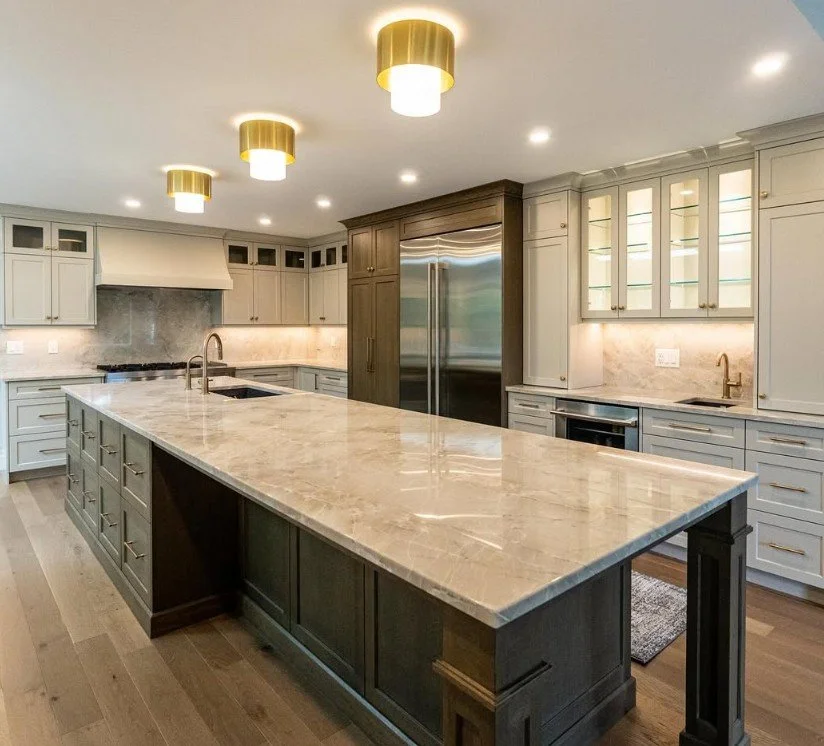
*Image by Natural Stone City
When choosing a countertop, it’s important to look beyond the initial purchase price and consider the long-term cost of ownership. Materials that require less maintenance can often save time and money over the life of your countertop, while higher-maintenance surfaces may require additional care, sealing, or restoration over time.
In general, lower-maintenance materials tend to offer better long-term value because they reduce ongoing upkeep requirements. However, it is important to note that pricing varies widely within natural stone categories, and not all granite or quartzite options are less expensive than engineered materials like quartz or sintered stone.
Low Maintenance Materials: Long-Term Value and Predictability
Low-maintenance countertops are often chosen because they offer predictable performance with minimal ongoing care.
Quartz is typically one of the most cost-effective long-term options because it does not require sealing, polishing, or specialized maintenance.
Porcelain offers strong durability and low upkeep, which can reduce long-term maintenance-related costs.
Sintered stone provides extremely high durability and virtually no maintenance requirements, making it a strong long-term investment for busy households.
These materials are often preferred by homeowners who want to minimize both maintenance effort and unexpected upkeep costs over time.
Natural Stone Materials: Varying Cost and Maintenance Requirements
Natural stone options such as granite and quartzite can vary significantly in price depending on the specific slab, rarity, and finish. In some cases, they may be more affordable than engineered stone, while in other cases they can be equally expensive or even more premium.
Granite can range from very affordable to high-end depending on colour, origin, and pattern, but it does require periodic sealing to maintain performance.
Quartzite is a natural premium stone that is often priced at the higher end of the market, and it also requires sealing and ongoing care to maintain its appearance.
These materials are a strong choice for homeowners who value natural stone aesthetics, but it is important to factor in both purchase price and long-term maintenance when comparing options.
High Maintenance Materials: Higher Upkeep Over Time
Some materials require more ongoing care, which can increase long-term costs through maintenance products or professional servicing.
Marble typically requires frequent sealing and careful maintenance, which can add to long-term upkeep requirements.
Onyx is highly delicate and may require professional maintenance or repair over time due to its softness and fragility.
These materials are best suited for feature areas or spaces where visual impact is more important than long-term practicality.
Key Takeaway
While upfront pricing is important, the true cost of a countertop includes both purchase price and long-term maintenance requirements. Choosing the right countertop means balancing both budget and lifestyle to ensure you are comfortable not just on day one, but for years to come.
6. Frequently Asked Questions
What countertop requires the least maintenance?
Quartz requires the least maintenance of all major countertop materials. It is non-porous, does not require sealing, and only needs simple daily cleaning with mild soap and water or a standard household cleaner.
Do quartz countertops need to be sealed?
No, quartz countertops do not need to be sealed. Because quartz is engineered to be non-porous, it naturally resists stains and moisture without additional treatments.
Is granite high maintenance?
Granite is considered a low to moderate maintenance countertop. It requires sealing every 1–3 years, but daily care is simple and it is highly durable against heat and scratches.
Which countertop is better for busy families?
Quartz, porcelain, and sintered stone are the best choices for busy families. These materials are durable, easy to clean, and require little to no ongoing maintenance.
What is the difference between quartz and quartzite?
Quartz is an engineered material made from natural quartz and resins, while quartzite is a natural stone. Quartz requires no sealing and is lower maintenance, while quartzite must be sealed and cared for more regularly.
Which countertops are the most stain resistant?
Quartz, porcelain, and sintered stone are the most stain-resistant options because they are non-porous. Granite and quartzite are also resistant but require sealing to maintain their protection.
Is marble a good choice for kitchens?
Marble can be used in kitchens, but it is high maintenance. It is prone to staining and etching, so it is best suited for homeowners who prioritize appearance and are comfortable with regular upkeep.
What is the most durable countertop material?
Sintered stone is considered one of the most durable countertop materials available. It is highly resistant to scratches, heat, stains, and moisture, making it ideal for heavy-use environments.
For the Perfect Countertops for Your Needs, Contact Natural Stone City
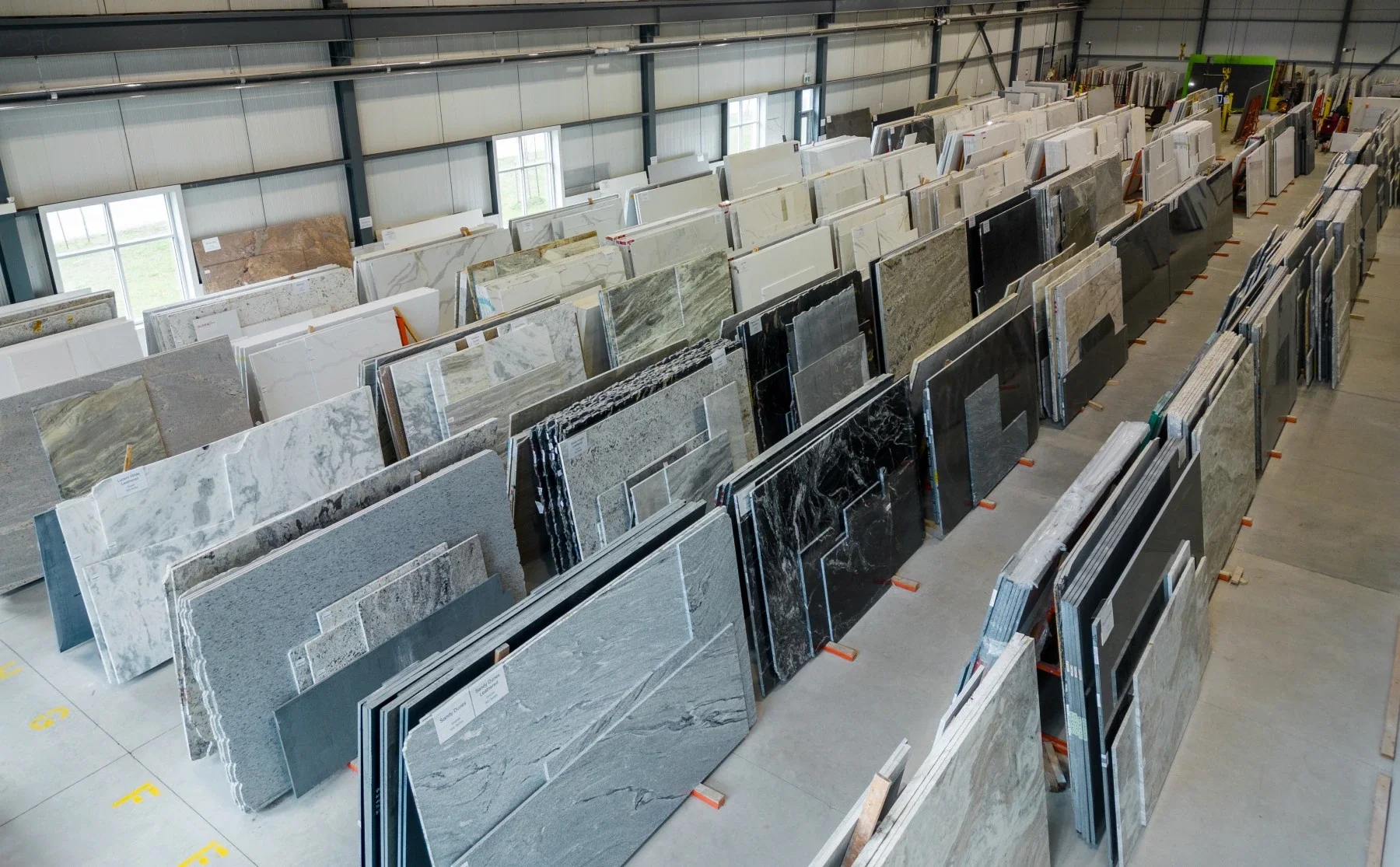
When it comes to choosing a countertop that offers the least maintenance overall, quartz stands out as the clear winner. Its non-porous surface, lack of sealing requirements, and simple day-to-day cleaning make it the most practical option for homeowners who want a beautiful surface without the ongoing upkeep.
That said, the right choice still depends on your lifestyle, design preferences, and how you use your space. Porcelain and sintered stone are also excellent low-maintenance alternatives, while natural stones like granite and quartzite offer a balance of beauty and performance with a bit more care involved.
If you’re trying to decide between materials, the best next step is to see them in person. Visiting the Natural Stone City showroom allows you to compare finishes, feel the textures, and better understand how each surface will look and perform in your own home.
Choosing Natural Stone City also gives you several key advantages when selecting your countertop. These include:
You gain access to knowledgeable staff who can help you compare materials side-by-side and recommend options based on your specific needs and lifestyle.
You benefit from a wide selection of premium materials, including quartz, granite, quartzite, porcelain, sintered stone, marble, and onyx, all in one place.
You can make a more confident decision knowing you are working with quality materials and expert guidance throughout the selection process.
With this combination of expertise and selection, you can move forward knowing your countertop choice is both practical and well-suited to your home.
Stop by Natural Stone City to explore your options and get expert guidance on finding a countertop that fits both your style and your lifestyle.
What Our Customers Are Saying…
“Natural Stone City provided top notch service and quality. From the first time we walked into the showroom through to final installation, they went above and beyond to ensure that their costumer is not just satisfied, but truly happy with their investment. We especially want to publicly recognize and thank Maria for taking the time to walk us through the warehouse explaining the pro’s and con’s of different choices. This being our first time through the process of choosing countertops for the kitchen and bathroom, Maria’s knowledge and honesty was invaluable.
We give this company and all their employees the highest ratings possible and will recommend them to everyone we know. Go visit them, you will not be disappointed!”
-Rob Coutts