
Sintered Stone Cost & Pricing Breakdown: What to Expect
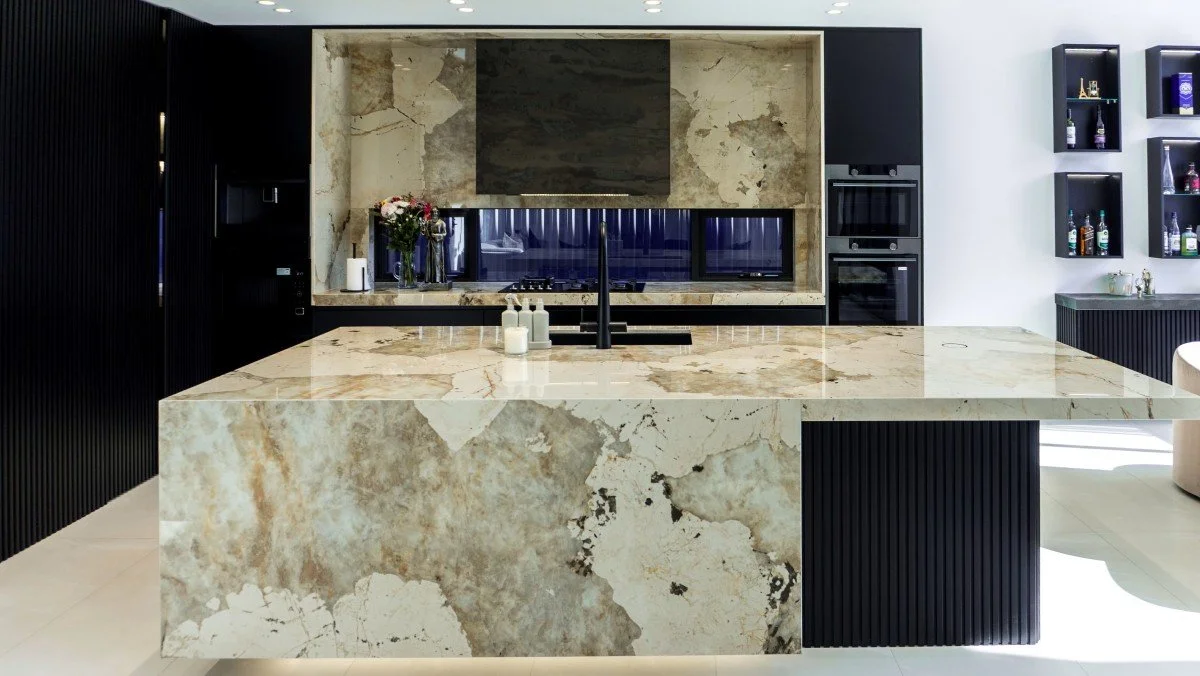
*Image by Cosentino: Dekton
Investing in sintered stone is one of the most impactful choices you can make for a modern kitchen or bathroom, but evaluating its true price tag requires looking far beyond the raw slab. While sintered stone sits comfortably in the premium category, its total cost is shaped by specialized fabrication requirements, precision installation, and long-term performance. Understanding how these factors come together allows you to budget accurately and realize the true, lasting value of your investment.
Core Focus
This guide serves as a practical financial breakdown for budgeting your sintered stone project. Inside, we examine total cost factors including average square-foot pricing ranges, raw material cost drivers, specialized fabrication and installation labour fees, and potential hidden project expenses.
In This Guide:
This guide is part of our complete series. For an all-in-one guide to materials, costs, and comparisons, explore our main pillar guide: What Is Sintered Stone: A Comprehensive Overview →
What Goes Into the Cost of Sintered Stone?
In Canada, sintered stone countertops typically range from $75–$150+ CAD per sq. ft. installed. The final price depends on the material selected, fabrication, installation, and project requirements.
Raw Slab
- Brand & manufacturer can affect the price of the slab.
- Thickness can vary between 6 mm, 12 mm, and 20 mm options.
- Design complexity can increase the price, particularly for premium marble-look veining, book-matched patterns, and exclusive collections.
Fabrication & Installation
- Specialized tooling is required to accurately cut and finish dense sintered stone.
- Complex cutouts for sinks, cooktops, and outlets can add fabrication time.
- Detailed edge profiles, especially mitered edges and apron edges, require additional precision and labour.
Additional Project Costs
- Cabinet preparation or additional substrate may be required for certain applications.
- Old countertop removal and disposal may be charged separately.
- Difficult site access, such as multiple stairs or tight spaces, can increase delivery and installation labour.
Premium & Complex Designs
- High-end marble-look slabs can cost more than basic patterns or solid colours.
- Waterfall islands and mitered edges require additional material and skilled fabrication.
- Complex layouts can require more cutting, handling, and installation time.
General Canadian Installed Price Range
CAD per sq. ft.These are general Canadian budgeting estimates. Actual pricing can vary depending on the slab, availability, project size, fabrication, installation requirements, and market conditions.
When comparing quotes, look at the complete project cost—not just the price of the slab. The quality of the material, fabrication equipment, fabricator experience, and installation all contribute to the finished countertop.
Sintered Stone Cost & Pricing Breakdown
1. Average Cost of Sintered Stone per Square Foot
One of the first questions you have when considering sintered stone is, “How much will it cost?”
In Canada, sintered stone countertops typically cost approximately $75–$150+ per square foot installed. This is a broad range because the final price depends on the slab you choose, thickness, finish, project size, edge details, number of seams, cutouts, and how complicated the fabrication and installation are.
For a straightforward countertop using a more basic 12 mm slab, pricing may start around $75–$90 per square foot. Premium marble-look slabs, specialty finishes, thicker material, waterfall edges, mitered edges, and other complex fabrication can push the installed price to $150 per square foot or more.
These figures are Canadian dollars (CAD) and are intended as general budgeting guidelines rather than a quote for a specific project.
What Is Included in the Price?
The installed price of sintered stone is not simply the cost of the slab. Your total project cost typically includes the material itself, as well as the specialized labour and equipment required to measure, cut, finish, transport, and install it.
As a general guideline, the total installed cost may break down approximately as follows:
Material: 40–50%
This includes the sintered stone slab itself. Prices can vary significantly between products depending on the brand, colour, pattern, finish, thickness, and availability. A simple solid-colour slab will typically have a different price than a premium marble-look design with detailed veining.
Fabrication & Installation: 50–60%
The remaining cost covers the work required to turn the slab into a finished countertop. This can include digital templating, precision cutting, sink and cooktop cutouts, edge finishing, seam preparation, transportation, handling, and installation.
The fabrication portion is particularly important with sintered stone because it requires specialized equipment and experienced fabricators. The material is extremely dense and hard, so cutting and finishing it properly requires the right tools, techniques, and expertise.
What Could Your Sintered Stone Project Cost?
The following examples provide a general idea of what different sintered stone projects could cost in Canada. Actual pricing will depend on the size of the project, slab selected, fabrication requirements, and installation details.
Standard Galley Kitchen
Approximately 45–55 sq. ft.A straightforward galley kitchen with a basic 12 mm slab and relatively simple edge details would generally fall toward the lower end of this range.
A premium slab, additional cutouts, more seams, or upgraded edge fabrication can increase the final price.
Large Waterfall Island
Approximately 60–80 sq. ft.A large island that includes waterfall sides can cost more than a standard countertop because the additional vertical pieces require precise measurements, specialized cutting, and careful fabrication.
Matching the material across the sides and creating mitered edges can require additional material, precision, and fabrication time.
Powder Room Vanity
Approximately 10–15 sq. ft.A smaller powder room vanity can have a lower overall cost, but the price does not simply scale with square footage.
Smaller projects can still require templating, transportation, fabrication, cutouts, edge finishing, and installation, so there may be a minimum project cost.
Actual pricing can vary based on the specific slab, availability, measurements, design complexity, fabrication requirements, site conditions, and installation details.
What Should You Budget For?
As a starting point, Canadian homeowners can use $75–$150+ per square foot installed as a reasonable budgeting range for sintered stone. More straightforward projects using entry-level or standard materials may be closer to the lower end, while premium slabs and complex designs can reach or exceed the upper end.
The best way to get an accurate price is to select your slab and discuss your design with an experienced fabricator. They can account for the actual material required, cutting and fabrication, edge details, seams, installation requirements, and any other project-specific factors.
Remember: the lowest price is not necessarily the best value. With a material as specialized as sintered stone, the quality of the slab is only one part of the finished countertop. The experience of the fabricator, the equipment they use, and the quality of the installation all matter too.
2. Key Factors That Affect Raw Slab Pricing
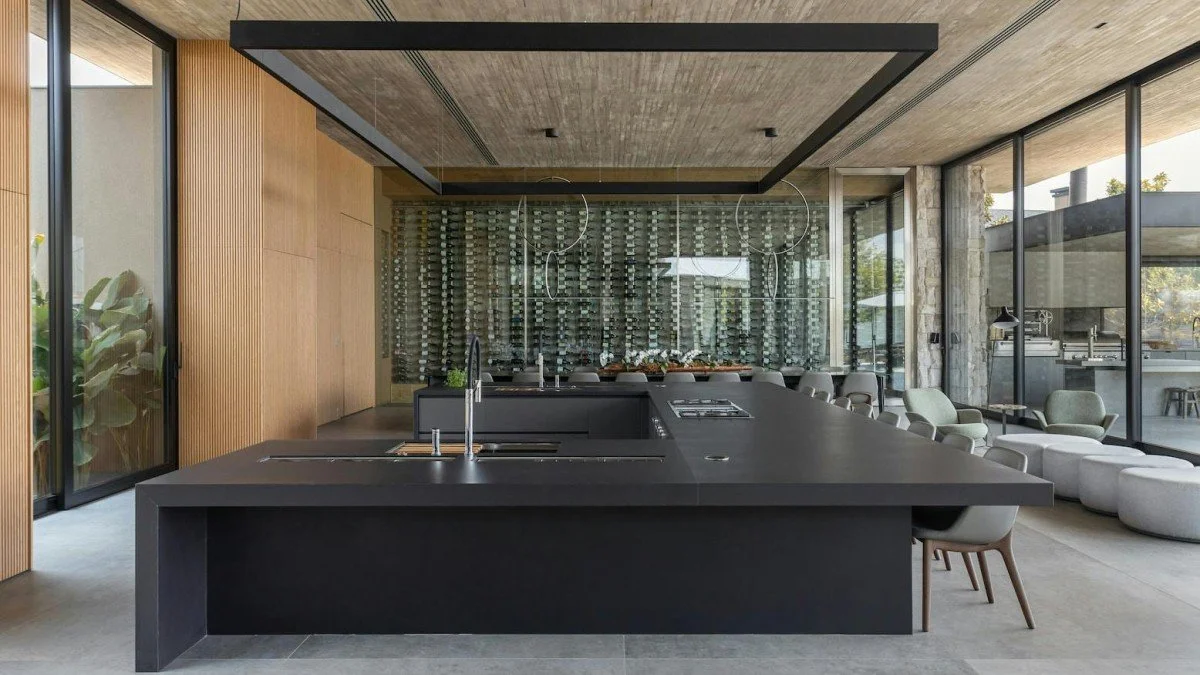
*Image by Cosentino: Dekton
The cost of sintered stone can vary considerably before fabrication and installation are even factored in. The slab itself is one of the biggest components of the overall project price, and several factors can influence what you pay.
Brand & Manufacturer
Sintered stone is produced by a number of leading manufacturers, and pricing can vary between brands. Products from manufacturers such as Marble Trend, Lapitec, Neolith, Dekton, and Inalco may have different price points depending on the collection, finish, design, and manufacturing process.
Even within the same brand, one collection or colour can cost significantly more than another. When comparing slabs, it is important to look at the specific product and collection, rather than assuming all sintered stone is priced the same.
Slab Thickness
Thickness is another factor that can affect the cost of the raw slab. Sintered stone is commonly available in different thicknesses, with 6 mm, 12 mm, and 20 mm being common options for different applications.
6 mm (¼") is a lightweight option often used for vertical applications such as wall cladding, backsplashes, and furniture surfaces.
12 mm (½") is a popular choice for sleek, contemporary countertop designs and offers a streamlined appearance.
20 mm (¾") provides a more substantial appearance and can be used when a thicker countertop or edge profile is desired.
The price difference between thicknesses varies by manufacturer and product, so it is worth comparing the specific slab options available for your project.
Design Complexity & Rarity
The appearance of the slab can also have a significant impact on its price. Simple solid colours and basic patterns are generally less expensive than highly detailed or exclusive designs.
Premium marble-look slabs, for example, may feature intricate veining designed to replicate the appearance of natural marble. More complex patterns, book-matched designs, and colours from exclusive or limited collections can command a higher price.
If you have your heart set on a particular look, ask your fabricator about the price of that specific slab. Two slabs with the same dimensions and thickness can have very different prices simply because of their design, collection, or availability.
3. Fabrication & Installation Cost Variables
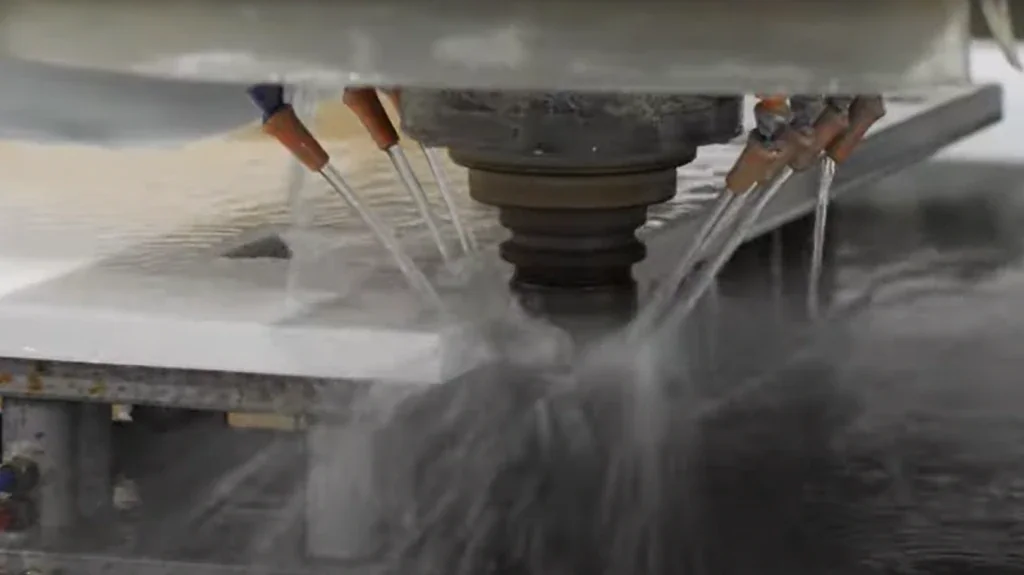
*Image by Natural Stone City

*Image by Natural Stone City
The cost of sintered stone does not stop at the price of the slab. Fabrication and installation can make up a significant portion of the total project cost, particularly when the design requires specialized cutting, handling, or detailed edge work.
Because sintered stone is extremely dense and hard, fabricators need specialized equipment and must take additional care when cutting, moving, and installing the material.
Specialized Tooling & Handling
Sintered stone requires specialized tools, equipment, and handling techniques. This can make fabrication more labour-intensive than working with some other countertop materials.
Your fabrication and installation costs may reflect:
Specialized cutting equipment, such as high-speed waterjet systems and diamond-tipped blades, that are designed to cut dense materials accurately.
Additional fabrication time required to make precise cuts while minimizing the risk of chipping or damaging the slab.
Careful handling and transportation, as large sintered stone pieces need to be properly supported and handled during movement.
Experienced installers who understand how to transport, position, join, and secure the finished pieces correctly.
The specialized nature of this work is one reason that sintered stone should not be compared solely on the cost of the raw slab. The skill and equipment required to turn that slab into a finished countertop are also part of what you are paying for.
Complex Cutouts & Sink Drops
Every opening or cutout requires additional fabrication work. A straightforward countertop with few openings will generally require less fabrication than one with multiple detailed cutouts.
Common examples include:
Undermount sink cutouts require a precisely shaped opening and carefully finished edges around the sink.
Cooktop cutouts need to be accurately measured and positioned to match the appliance specifications.
Pop-up outlet holes and other small openings require additional cutting and finishing.
Multiple cutouts can increase fabrication time and complexity, particularly when they are close together or near edges and seams.
Your fabricator should review the location and specifications of each cutout during the templating process so the slab can be cut accurately.
Edge Profile Fabrication
The edge of your countertop can also affect fabrication costs. Simple edge profiles generally require less fabrication time, while more detailed profiles can involve additional cutting, joining, finishing, and polishing.
Common options include:
Square or eased edges are relatively straightforward and provide a clean, contemporary appearance.
Mitered edges require considerably more precision because separate pieces are cut and joined to create the appearance of a thicker countertop.
Mitered apron or waterfall edges can require additional material, cutting, joining, and finishing, making them more labour-intensive than a standard edge.
For this reason, two countertops with the same amount of surface area can have noticeably different fabrication costs. The more detailed the edge design, the more time and precision may be required to produce it.
The Bottom Line
When comparing sintered stone quotes, look beyond the price per square foot. The amount of fabrication and installation work required can have a significant impact on the final price.
A detailed quote should take into account the slab, cutouts, edge profiles, fabrication, handling, and installation so you can understand what you are actually paying for.
4. Hidden Costs to Watch Out For
The price of the slab and fabrication is not always the full cost of a countertop project. Additional work may be required before or during installation, depending on your existing kitchen, the slab thickness you choose, and how easily the finished pieces can be delivered to your home.
These costs are not necessarily hidden or unexpected when a project is properly planned, but they are worth asking about when comparing quotes.
Cabinet Substrate & Reinforcement
Your cabinets need to provide a properly levelled, stable, and adequately supported surface for the countertop. Depending on the slab thickness and installation method, additional substrate or reinforcement may be required.
Potential costs can include:
Plywood underlayment or another suitable substrate may be required for certain thinner slab applications.
Additional structural support may be needed in areas with large overhangs or unusual cabinet configurations.
Cabinet preparation or levelling may be necessary if the existing cabinets are not properly aligned.
Additional reinforcement can add labour and material costs to the project.
The requirements can vary depending on the specific sintered stone product, thickness, cabinet construction, and installation design. Your fabricator should identify any support requirements before fabrication begins.
Old Countertop Tear-Out & Disposal
If you are replacing an existing countertop, removing the old material may be a separate service from fabricating and installing your new sintered stone.
Depending on the project, removal may involve:
Disconnecting and carefully removing the existing countertop without damaging the cabinets underneath.
Breaking down and handling heavy materials, such as granite or quartz, for removal from the home.
Loading and hauling away the old countertop material.
Disposing of the material at an appropriate facility.
Ask whether countertop removal and disposal are included in your quote or priced separately. This is particularly important when comparing quotes from different fabricators.
Site Access & Complex Delivery
Getting the finished countertop from the fabrication facility into your home can require careful planning. Large sintered stone pieces can be heavy and difficult to manoeuvre, particularly when they are long, narrow, or designed as a large seamless island.
Additional labour or delivery costs may apply when:
The countertop needs to be carried up multiple flights of stairs.
The property has tight stairwells, narrow hallways, or restricted access.
Large pieces cannot be easily moved through standard doorways.
A large island requires special handling or additional installers.
The installation location is difficult to access with standard delivery equipment.
These considerations are especially important for large kitchen islands and other designs where a single, substantial piece of material is being installed.
Ask About These Costs Before Ordering
A detailed quote should make it clear which services are included and which may cost extra. Before committing to your project, ask your fabricator about cabinet preparation, substrate requirements, old countertop removal, disposal, delivery, and site access.
Understanding these potential costs ahead of time can help you compare quotes accurately and avoid unexpected additions to your final bill.
5. Long-Term Value & ROI Comparison
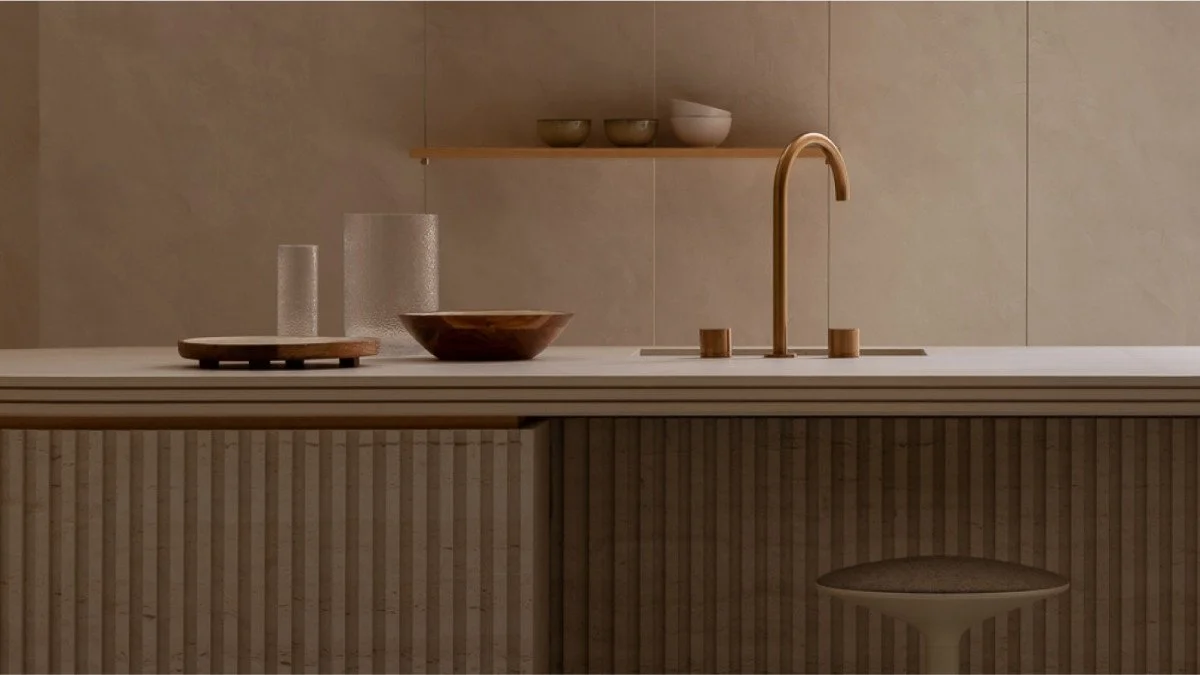
*Image by Cosentino: Dekton
When comparing countertop materials, the initial purchase price is only part of the equation. It is also worth considering what the countertop will cost to maintain, how it will perform over time, and whether it may need repairs or replacement.
Sintered stone can offer strong long-term value because it is designed to be durable and requires relatively little ongoing maintenance.
Zero Sealing & Low Maintenance
One potential long-term advantage of sintered stone is that it generally does not require routine sealing. Unlike some natural stone surfaces that may require periodic resealing, sintered stone is a low-maintenance material that can typically be cleaned with everyday household products.
Over a 10- to 20-year period, avoiding regular sealing can mean savings on:
Professional sealing services, where applicable.
Stone sealers and other maintenance products.
Specialized polishing or maintenance treatments that some countertop materials may require.
It also saves time because there is less routine maintenance to remember.
Always follow the care and cleaning recommendations provided for your specific sintered stone product, as finishes and manufacturer requirements can vary.
Durability & Replacement Risk
A countertop that continues to look and perform well for many years can provide better value than one that requires frequent repairs or replacement.
Sintered stone is highly resistant to scratching, staining, heat, and everyday wear, although it is not completely immune to damage. Improper handling, severe impact, or installation issues can still cause problems.
When evaluating lifetime cost, consider:
How well the material stands up to everyday use.
Whether routine maintenance is required.
The likelihood of needing repairs or replacement.
The cost and disruption associated with replacing a countertop.
The goal is not simply to choose the cheapest countertop today, but to consider how the material is likely to perform throughout its useful life.
Potential Resale Value
A well-designed kitchen can be an important selling feature, and premium countertop materials can contribute to the overall appearance and perceived quality of a renovated space.
Sintered stone offers the look of high-end natural stone while providing the performance characteristics many modern homeowners are looking for. A contemporary kitchen featuring a quality countertop, well-executed fabrication, and an attractive design may be more appealing to prospective buyers.
However, there is no guaranteed dollar-for-dollar return on a countertop investment. Resale value depends on the overall home, local market, quality of the renovation, and buyer preferences.
Looking Beyond the Initial Price
When comparing countertop quotes, it can be tempting to focus entirely on the initial cost per square foot. A better comparison considers the total value over the life of the countertop.
Sintered stone may offer long-term value through its low maintenance requirements, durability, and premium appearance. For homeowners planning to stay in their home for many years, these benefits can make the higher initial investment worthwhile.
6. Cross-Links to Related Sintered Stone Guides
Conclusion & Final Verdict
While understanding average square-foot estimates gives you a clear baseline, every kitchen or bathroom project comes with its own structural nuances, edge preferences, and slab layout needs. Because sintered stone requires specialized high-speed waterjets and diamond tooling, working with a certified, experienced fabricator is critical to getting an accurate assessment of material yield and cutting labour. Requesting a detailed, itemized quote upfront ensures there are no surprises—allowing you to move forward confidently with your home transformation.
Bring Your Kitchen Layout to Our Showrooms
Ready to turn your plans into an exact quote? Bring your rough kitchen measurements or design blueprints to our local showrooms. Our stone specialists will help you review full-size sintered stone slabs, discuss edge options, and provide a comprehensive, itemized project estimate.
What Homeowners & Pros Say About Working With Us
"A fabulous company. I say that as this is the fourth time I have ordered countertops from Natural Stone City in the past 17 years for myself and my family. Each time I return I do so as the product they sell is exemplary..."
"Super happy with the result and also with the experience we had with Natural Stone City team. Easy to order, very helpful and experienced team members, 3 hours installation. Pictures speak for themselves.Thank you!"
"As a local contractor Never an issue with this company been with them for 10+ years. Always been well taken care of with all of their staff with the right prices for a quality job. Highly recommend."