
Sintered Stone vs Granite vs Quartz vs Quartzite vs Porcelain vs Marble vs Onyx
Navigating the wide array of countertop materials can be overwhelming when planning a kitchen update. Homeowners often find themselves weighing natural beauty against practical durability, trying to balance porosity, scratch resistance, and maintenance demands across options like granite, quartz, quartzite, porcelain, and marble. Understanding how these popular surfacing options differ is essential to choosing the right material for your lifestyle and budget.
Core Focus
This comprehensive guide provides an objective, head-to-head comparison of today’s top countertop materials: Granite, Quartz, Quartzite, Porcelain, Sintered Stone, Marble, and Onyx. We break down key performance metrics including heat tolerance, stain resistance, sealing requirements, and overall durability to help you determine which surface best aligns with your design vision and everyday functional needs.
Which Countertop Material Is Best for Different Needs? | Sintered Stone vs Quartz | Sintered Stone vs Granite | Sintered Stone vs Quartzite | Sintered Stone vs Porcelain | Sintered Stone vs Marble | Sintered Stone vs Onyx
If you are unsure which countertop material is right for your home, contact Natural Stone City for expert guidance and help choosing the perfect countertop for your kitchen.
This guide is part of our complete series. For an all-in-one guide to materials, costs, and comparisons, explore our main pillar guide: What Is Sintered Stone: A Comprehensive Overview →
Key Takeaways
This guide breaks down the most popular countertop materials to help you choose the right surface for your kitchen based on performance, style, and maintenance needs.
Sintered Stone is the benchmark leader for ultra-durability, offering extreme heat resistance, 100% UV/weather stability for indoor-outdoor flow, and zero sealing requirements.
Quartz is the best overall choice for most indoor kitchens, combining low maintenance, non-porous hygiene, and consistent modern design options.
Quartzite is the top choice for luxury natural stone, pairing authentic marble-like veining with extreme hardness and high heat tolerance.
Granite remains the best value natural stone, providing organic pattern variation, proven durability, and excellent heat resistance.
Porcelain offers a lightweight, modern architectural surface, sharing high-heat and UV resistance benefits in sleek, minimalist profiles.
Marble and Onyx are premium statement materials, best reserved for low-impact luxury areas, baking stations, or backlit feature elements rather than heavy-use workspaces.
The right countertop depends on your lifestyle, balancing daily heat/maintenance demands against your aesthetic vision and budget.
Granite vs Quartz vs Quartzite vs Porcelain vs Sintered Stone vs Marble vs Onyx
1. Top 5 Best Countertop Materials Ranked
Before diving into a detailed comparison of granite, quartz, quartzite, porcelain, sintered stone, marble, and onyx, it helps to first understand which materials consistently perform best for most kitchens. While each option has its own strengths depending on style, budget, and use, some materials clearly stand out for their balance of durability, maintenance, and overall value. The ranking below highlights the top 5 countertop materials based on real-world performance and popularity among homeowners.
1. Quartz — Best Overall for Most Kitchens
- Best balance of beauty, durability, and maintenance
- Ideal for busy family kitchens
2. Quartzite — Best Natural Stone Luxury Option
- Natural marble-like beauty with excellent durability
- Premium appearance
3. Granite — Best Value Natural Stone
- Durable and heat resistant
- Wide variety of colours and patterns
4. Porcelain / Sintered Stone — Modern Minimalist
- Ultra heat and UV resistant
- Excellent for indoor/outdoor use
5. Marble — Best for Luxury Design
- Timeless elegance
- Better suited for lower-use kitchens or baking areas
*Onyx is excluded from the top 5 because it is generally considered a specialty luxury material rather than a practical everyday kitchen countertop.
2. Countertop Material Comparison Chart
With so many countertop options available, it can be difficult to understand how materials truly compare in everyday use. Beyond appearance, factors like durability, maintenance, heat resistance, and long-term value all play a major role in choosing the right surface for your kitchen.
The chart below provides a quick, easy-to-scan comparison of the most popular countertop materials helping you see at a glance where each one performs best and what type of kitchen it’s most suited for.
Sintered Stone
Benchmark Leader- Heat Resistance: Extreme (Direct hot pans safe)
- UV Stability: 100% Weather & UV Proof
- Scratch & Impact: Exceptional / Reinforced Density
- Porosity & Sealing: 0% Porous (Never needs sealing)
- Best For: Indoor/outdoor, high-heat cooking
- Premium – Investment Tier
Quartz
- Heat Resistance: Moderate (Requires trivets)
- UV Stability: Low (Indoor use only)
- Scratch & Impact: Very High / High Flexibility
- Porosity & Sealing: Non-Porous (No sealing)
Quartzite
- Heat Resistance: Excellent (Natural heat tolerance)
- UV Stability: High (Outdoor friendly)
- Scratch & Impact: Extreme Hardness / Moderate
- Porosity & Sealing: Porous (Requires sealing)
Granite
- Heat Resistance: Very High (Handles hot pots)
- UV Stability: High (Sunlight stable)
- Scratch & Impact: High Scratch / Good Impact
- Porosity & Sealing: Low-Med (Periodic sealing)
Porcelain
- Heat Resistance: Excellent (High-heat proof)
- UV Stability: 100% UV Resistant
- Scratch & Impact: High Scratch / Edge Chip Risk
- Porosity & Sealing: Non-Porous (No sealing)
Marble
- Heat Resistance: Good (Heat tolerant)
- UV Stability: High (Can fade/weather outdoors)
- Scratch & Impact: Softer Surface (Acid etching risk)
- Porosity & Sealing: High (Frequent sealing required)
Onyx
- Heat Resistance: Moderate (Decorative use)
- UV Stability: Low (Indoor feature use)
- Scratch & Impact: Soft & Fragile Surface
- Porosity & Sealing: Very High (Strict care required)
3. Individual Material Sections
Below is a closer look at each countertop material, including what it is, its key advantages and disadvantages, and the types of kitchens it is best suited for. Each section is designed to help you quickly compare performance, appearance, and practicality.
Sintered Stone Countertops
Sintered stone represents the next evolution of engineered surfacing, designed specifically to overcome the heat and UV limitations found in traditional quartz and natural stone. While it shares low-porosity benefits with quartz, its mineral-only composition allows it to perform at a higher technical level across demanding environments.
Pros of Sintered Stone (Compared to Alternatives)
Sintered stone offers several performance advantages over traditional countertop materials, particularly when heat resistance, outdoor durability, and low maintenance are priorities.
Superior Heat Tolerance: Unlike resin-bound quartz, sintered stone withstands direct contact with scorching pots without melting, discolouring, or cracking.
Full UV & Weather Immunity: Performs identically indoors and outdoors, eliminating the yellowing risks associated with quartz when exposed to direct sunlight.
Zero Sealing Required: Matches quartz's non-porous hygiene without requiring the periodic sealing routines of granite, quartzite, or marble.
Scratch & Chemical Resistance: Outperforms softer natural stones like marble and onyx under heavy daily cutting and exposure to household acids.
Together, these advantages make sintered stone particularly appealing for kitchens, outdoor spaces, and other applications where long-term durability and minimal maintenance are important.
Cons of Sintered Stone (Compared to Alternatives)
Despite its impressive performance, sintered stone is not without trade-offs. Understanding these considerations can help you determine whether its benefits justify the additional fabrication requirements and investment.
Specialized Fabrication Needs: Harder and more brittle during cutting than granite or quartz, requiring experienced fabricators with specialized diamond tooling.
Higher Initial Investment: Commands a higher price point than standard granite or mid-range quartz due to slab costs and complex fabrication labour.
Edge Profile Limitations: Print patterns do not extend through the full depth of every slab style, making simple square or mitered edges preferable over complex bullnose edges.
These limitations do not necessarily make sintered stone a poor choice, but they do make proper material selection, fabrication, and installation especially important.
Best For
Sintered Stone is best for:
Homeowners wanting a zero-compromise surface that handles high-heat cooking and harsh outdoor elements.
Projects requiring a seamless indoor-to-outdoor kitchen design transition.
For homeowners prioritizing maximum durability and versatility, especially where indoor and outdoor applications need to work together, sintered stone can be a compelling alternative to traditional quartz and natural stone.
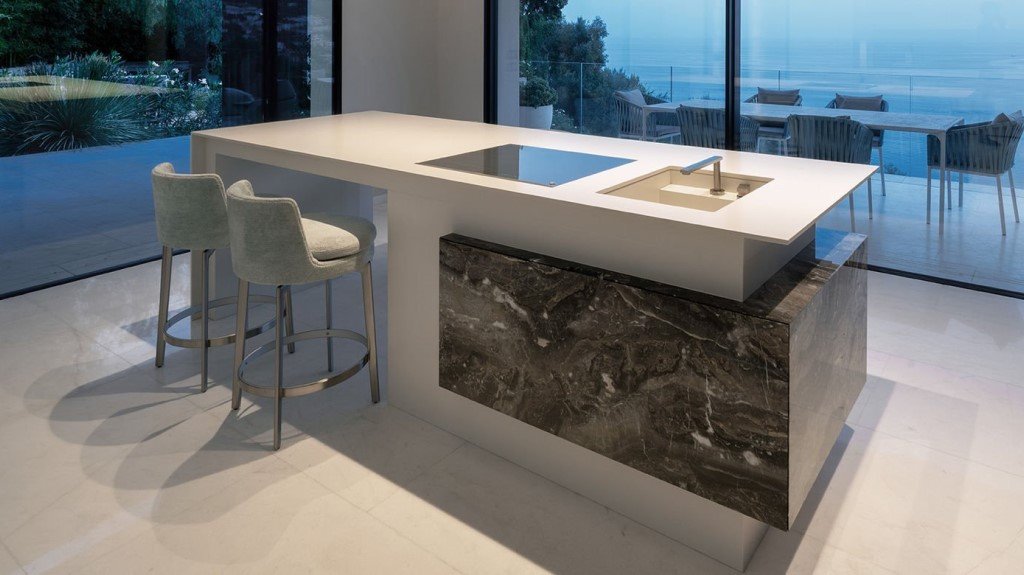
*Image by Lapitec

*Image by Lapitec
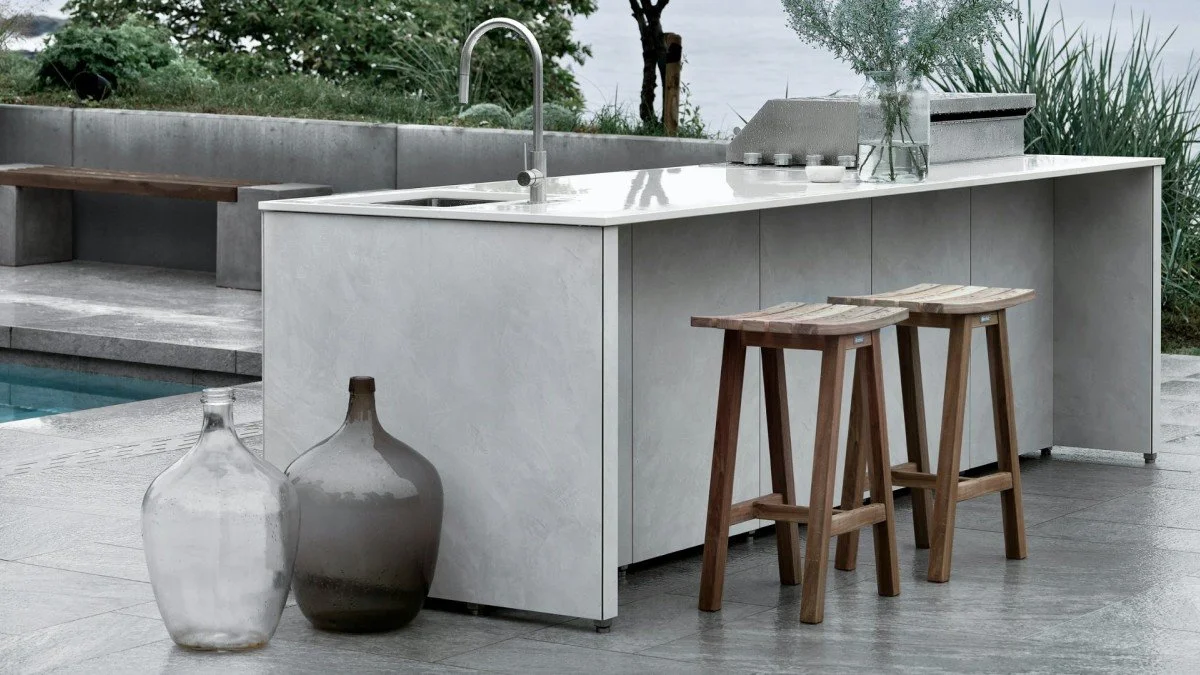
*Image by Cosentino - Dekton
Quartz Countertops
Quartz is an engineered countertop material made from natural quartz crystals combined with resins and pigments. It is designed to deliver a consistent, durable, and low-maintenance surface ideal for modern kitchens. Unlike sintered stone, quartz contains synthetic resins that make it susceptible to heat damage from hot pans.
Pros of Quartz
Quartz offers several important benefits that make it one of the most popular countertop choices.
Quartz is non-porous, which means it does not absorb liquids or bacteria and is highly hygienic for kitchen use.
Quartz is low maintenance and does not require sealing over time.
Quartz provides a huge selection of colours and styles, including marble-look and solid modern finishes.
Quartz has consistent patterns, making it ideal for large islands and seamless kitchen designs.
Quartz delivers excellent stain resistance for everyday cooking and spills.
These advantages make quartz a reliable and versatile choice for many homeowners.
Cons of Quartz
While quartz performs well in most areas, there are a few limitations to consider.
Quartz is less heat resistant than natural stone and can be damaged by direct high heat.
Quartz offers less natural variation compared to real stone materials.
Quartz can discolour if exposed to prolonged direct UV light, making it less ideal for outdoor use.
These factors are important when deciding if quartz fits your lifestyle and kitchen layout.
Best For
Quartz is best suited for:
Busy kitchens where durability and easy cleaning are priorities.
Modern homes that value clean, consistent design aesthetics.
Families who want a low-maintenance countertop solution that performs well every day.
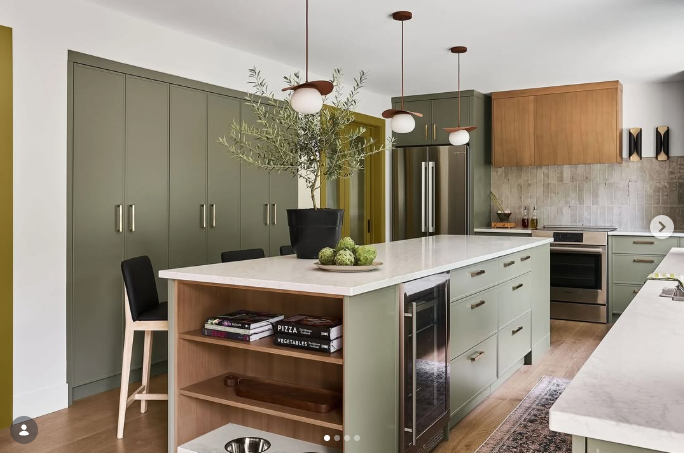
*Image by NSC
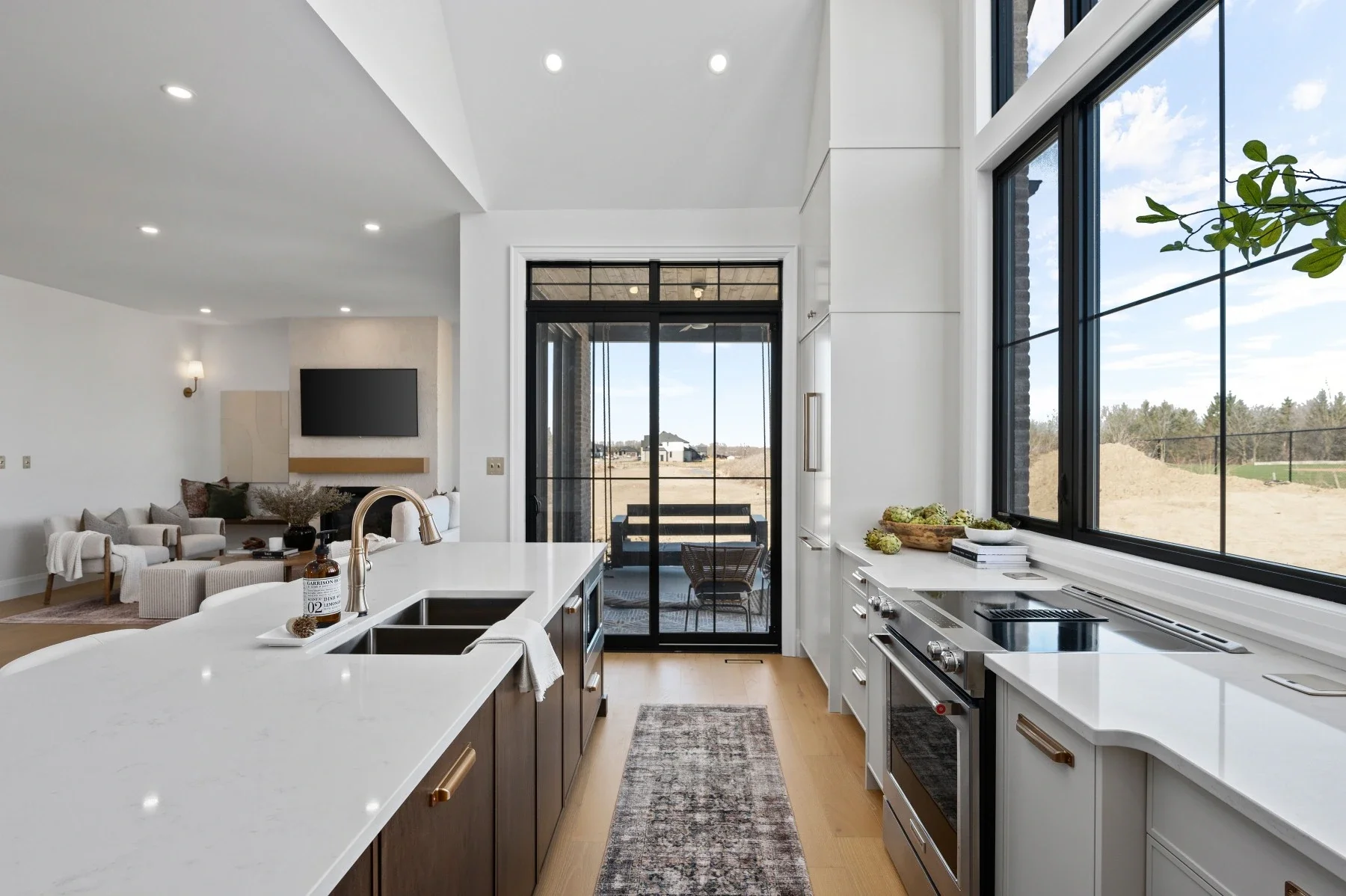
*Image by NSC
Granite Countertops
Granite is a 100% natural stone formed deep within the earth under extreme heat and pressure, offering unique, one-of-a-kind variation in colour and pattern that manufactured stone cannot replicate. Unlike sintered stone, which relies on high-resolution printed surface designs, granite features full-bodied, organic mineral depth throughout the entire slab, though it requires routine sealing to match sintered stone’s non-porous stain resistance.
Pros of Granite
Granite remains a popular choice due to its strength and natural beauty.
Granite offers natural beauty with unique patterns in every slab.
Granite provides excellent heat resistance, making it ideal for cooking-heavy kitchens.
Granite delivers a durable surface that performs well under daily use.
Granite offers one-of-a-kind slab variation that cannot be replicated.
These characteristics make granite a strong and timeless countertop option.
Cons of Granite
There are a few maintenance considerations with granite.
Granite requires periodic sealing to maintain stain resistance.
Granite has more natural pattern variation, which may not suit highly uniform designs.
Granite can stain if spills are left untreated for long periods.
These factors should be considered when evaluating long-term upkeep.
Best For
Granite is best suited for:
Homeowners who want a completely natural stone countertop.
Kitchens where heavy cooking and heat exposure are common.
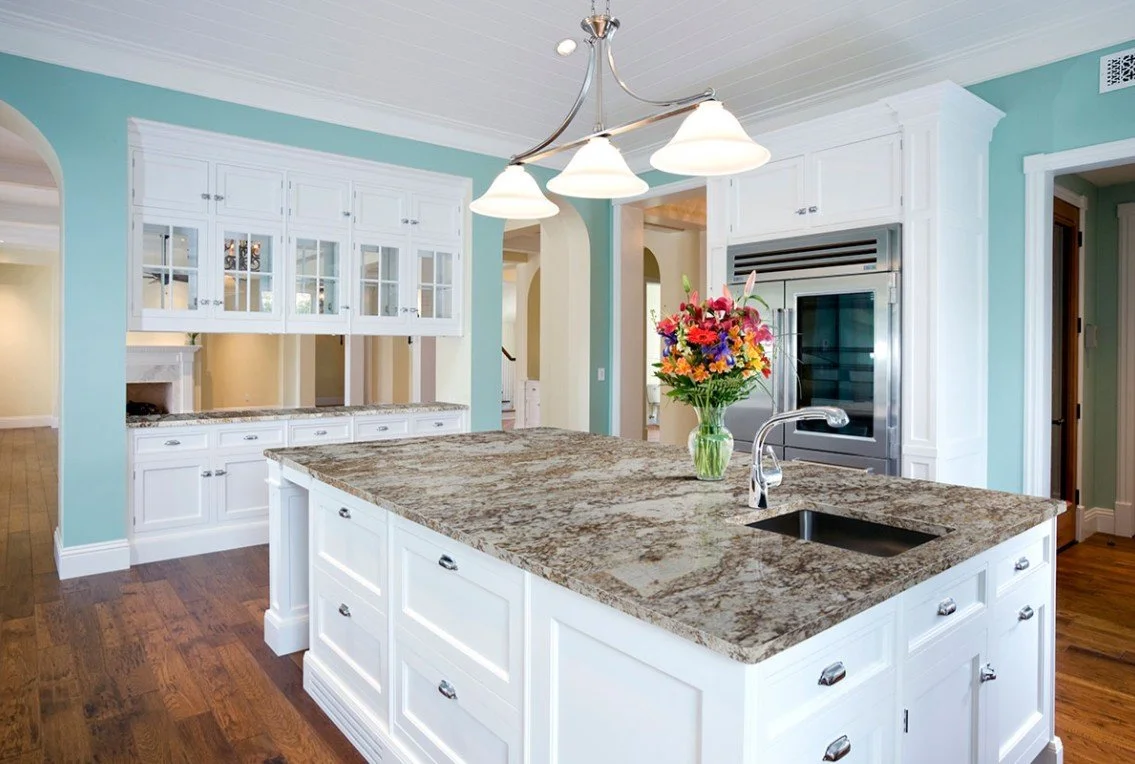
*Image by MSI Surfaces

*Image by MSI Surfaces
Quartzite Countertops
Quartzite is a natural stone formed when sandstone is subjected to extreme heat and pressure, transforming it into an exceptionally hard surface that combines the visual elegance of marble with performance that matches or exceeds granite. Unlike sintered stone, which achieves its strength through high-tech factory mineral firing, quartzite delivers this level of durability organically, offering authentic marble-like veining with complete heat resistance, though it still requires routine sealing to maintain stain protection.
Pros of Quartzite
Quartzite is considered one of the most premium natural stones available.
Quartzite offers a marble-like appearance with natural elegance.
Quartzite is extremely durable and highly resistant to wear.
Quartzite provides a luxurious natural aesthetic for high-end kitchens.
Quartzite delivers excellent heat resistance for everyday cooking use.
These strengths make quartzite a top-tier natural stone option.
Cons of Quartzite
Quartzite does have some practical considerations.
Quartzite typically comes at a higher price point than granite or quartz.
Quartzite requires sealing to maintain long-term stain resistance.
Quartzite is more difficult to fabricate due to its hardness.
These factors contribute to its premium positioning in the market.
Best For
Quartzite is best suited for:
Luxury kitchens that prioritize natural stone beauty.
Homeowners who want dramatic veining and high-end aesthetics.
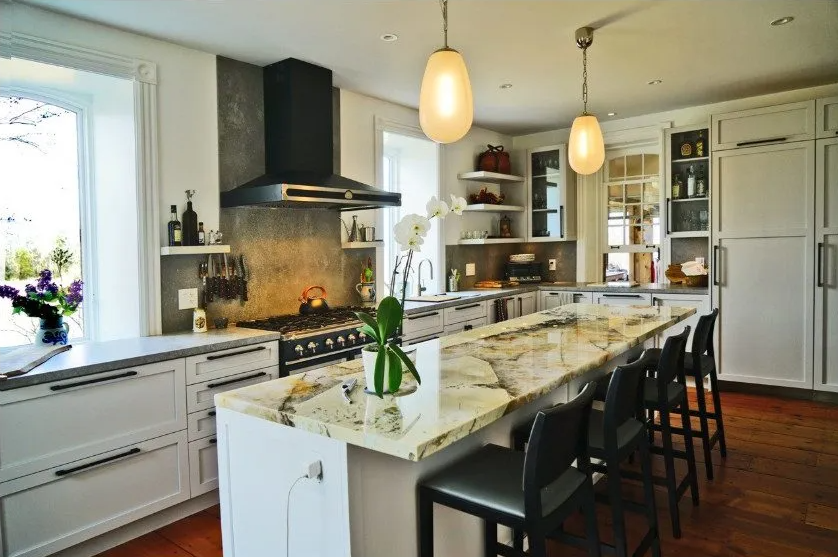
*Image by Marble Trend
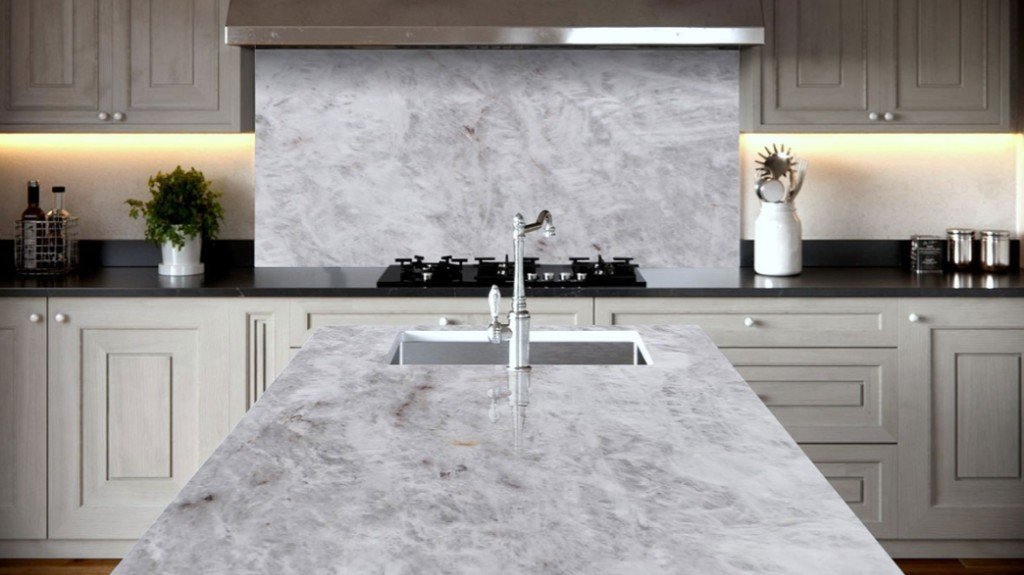
*Image by MSI Surfaces
Porcelain Countertops
Porcelain countertops are made by firing refined clay and minerals at extremely high temperatures, creating a dense, lightweight surface often used in modern architectural designs. While porcelain shares a similar high-heat firing process and low-porosity benefits with sintered stone, sintered stone undergoes much higher mechanical compaction pressure prior to firing. The result is a denser, thicker slab that offers greater impact resistance along exposed edges than standard porcelain.
Pros of Porcelain
Porcelain offers a strong combination of performance and modern styling.
Porcelain is highly UV resistant, making it suitable for indoor and outdoor applications.
Porcelain is heat resistant and performs well in high-temperature environments.
Porcelain offers a thin, modern appearance that suits minimalist designs.
Porcelain is low maintenance and easy to clean.
These qualities make porcelain a popular choice in contemporary design.
Cons of Porcelain
There are a few limitations to consider with porcelain.
Porcelain edges can be more prone to chipping if impacted.
Porcelain may have fewer fabricators experienced in installation.
Porcelain can feel thinner or less substantial compared to natural stone slabs.
These factors may influence design preferences.
Best For
Porcelain is best suited for:
Contemporary kitchens with a modern aesthetic.
Outdoor kitchens due to UV resistance.
Minimalist designs that prioritize clean lines and simplicity.

*Image by MSI Surfaces

*Image by MSI Surfaces
Marble Countertops
Marble is a natural stone formed from limestone that has been transformed under heat and pressure, widely renowned for its luxurious appearance and distinctive veining patterns. Unlike sintered stone, which is engineered to resist scratches, stains, and household acids completely, marble is a softer, porous natural stone that requires careful maintenance and regular sealing to prevent etching from everyday acidic foods and liquids.
Pros of Marble
Marble is valued for its timeless aesthetic appeal.
Marble provides a timeless luxury appearance that never goes out of style.
Marble features unique veining that ensures every slab is one of a kind.
Marble stays naturally cool, making it ideal for baking and pastry work.
These qualities make marble a favourite in high-end kitchen design.
Cons of Marble
Marble requires more care than most countertop materials.
Marble etches easily when exposed to acidic substances.
Marble is more prone to staining compared to engineered surfaces.
Marble requires regular maintenance to preserve its appearance.
These considerations are important for everyday kitchen use.
Best For
Marble is best suited for:
Luxury kitchens focused on aesthetics and design impact.
Dedicated baking stations where its cool surface is beneficial.
Statement islands designed to be focal points in the kitchen.
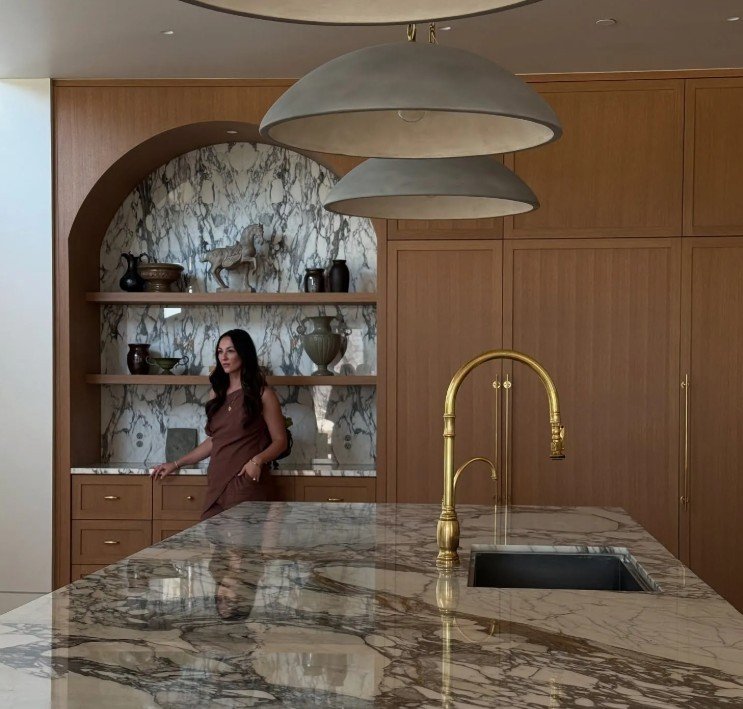
*Image by Marble Trends
Onyx Countertops
Onyx is a rare and visually striking natural stone known for its translucent properties, often used in luxury feature installations rather than high-use kitchen surfaces. Unlike sintered stone, which is engineered for extreme durability, scratch resistance, and heavy daily cooking, onyx is a delicate, highly porous surface primarily chosen for its dramatic aesthetics, light transmissivity, and statement design potential.
Pros of Onyx
Onyx is primarily chosen for its visual impact.
Onyx offers dramatic translucent beauty that can be enhanced with backlighting.
Onyx provides a one-of-a-kind luxury appearance with bold visual character.
Onyx creates stunning feature installations in high-end design projects.
These qualities make onyx a true statement material.
Cons of Onyx
Onyx is not typically used for heavy-duty kitchen workspaces.
Onyx is a very soft material and can scratch or damage easily.
Onyx requires high maintenance to preserve its appearance.
Onyx is expensive compared to most other countertop materials.
Onyx is less practical for everyday high-use kitchen surfaces.
These limitations make it best suited for decorative applications.
Best For
Onyx is best suited for:
Feature islands designed as focal design pieces.
Luxury accent areas where visual impact is the priority.
Showpiece kitchens that prioritize design over heavy functionality.
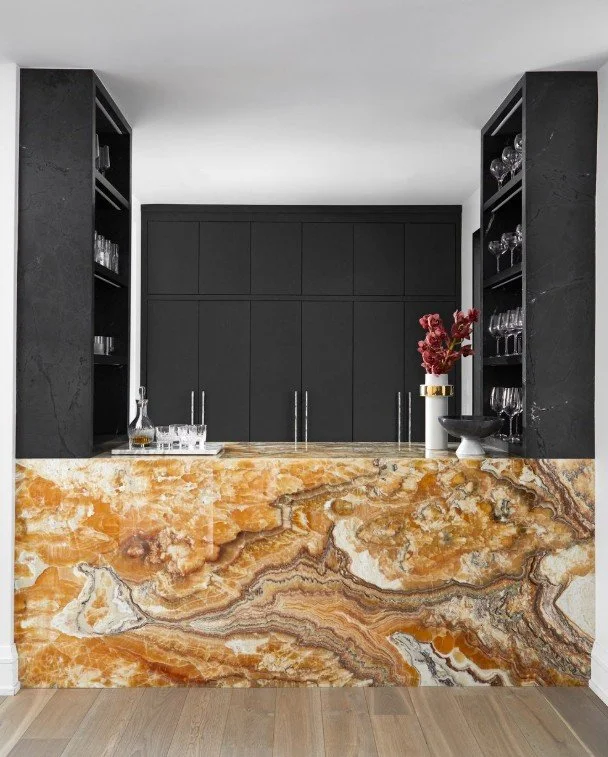
*Image by Cava Surfaces
4. Which Countertop Material Is Best for Different Needs?
Different countertop materials excel in different situations, and the “best” choice often depends on how you use your kitchen, your design preferences, and your budget. The sections below break down the most suitable materials based on common homeowner priorities.
Best Countertop for Busy Families: Quartz
For busy households where durability, easy cleaning, and low maintenance are the top priorities, quartz is the clear leader.
Quartz is ideal for family kitchens because it performs well under daily use without requiring ongoing maintenance.
Quartz is highly durable and resists everyday wear from cooking, spills, and frequent use.
Quartz is non-porous, which makes it easy to clean and hygienic for food preparation.
Quartz does not require sealing, which reduces long-term maintenance requirements.
Quartz remains the most practical option for families who want a worry-free countertop that still looks high-end.
Best Natural Stone Countertop: Quartzite
For homeowners who want a true natural stone surface with a premium feel and long-term durability, quartzite is one of the best available options.
Quartzite combines natural beauty with exceptional strength, making it a standout choice among natural stones.
Quartzite offers a luxurious marble-like appearance with natural veining.
Quartzite is extremely durable and performs well in high-use kitchens.
Quartzite provides strong resistance to heat and everyday wear.
Quartzite is ideal for homeowners who want the beauty of natural stone without compromising on performance.
Best Countertop for Heat Resistance: Granite, Quartzite & Sintered Stone
Some kitchens require surfaces that can handle high heat exposure, especially for frequent cooking or baking.
The best materials for heat resistance are granite, quartzite, and sintered stone.
Granite offers excellent natural heat resistance and performs well under hot cookware.
Quartzite provides very high heat tolerance while maintaining a luxury natural appearance.
Sintered stone delivers extreme heat resistance due to its high-temperature manufacturing process.
These materials are best suited for homeowners who regularly cook with hot pans or need maximum surface durability.
Best Luxury Countertop: Marble & Onxy
For high-end kitchens where design impact and visual appeal are the top priority, marble and onyx are the most luxurious options.
These materials are chosen primarily for their beauty and statement-making presence.
Marble offers timeless elegance with unique veining that enhances any luxury kitchen design.
Onyx provides a dramatic, translucent appearance that can be backlit for a striking visual effect.
Both materials create a premium focal point that elevates the overall kitchen aesthetic.
These options are best suited for feature areas rather than heavy-use work surfaces.
Best Modern Countertop: Porcelain & Sintered Stone
For contemporary kitchens with clean lines and minimalist design, porcelain and sintered stone are the most modern options available.
These materials are engineered for performance while maintaining a sleek, architectural look.
Porcelain offers a thin, refined appearance that works well in minimalist kitchens.
Sintered stone provides a modern, high-performance surface with exceptional durability.
Both materials are UV resistant, making them suitable for indoor and outdoor design continuity.
These options are ideal for homeowners who want a modern, design-forward kitchen.
Best Budget-Friendly Premium Look: Granite & Quartz
For homeowners who want a high-end appearance without moving into luxury pricing, granite and mid-range quartz offer the best value.
These materials balance cost, durability, and aesthetics effectively.
Granite provides a natural stone look at a more accessible price point than luxury materials.
Mid-range quartz delivers a premium aesthetic with low maintenance and strong performance.
Both options offer long-lasting value while keeping overall project costs more controlled.
These materials are ideal for achieving a premium kitchen look within a practical budget.
Choosing the right countertop ultimately comes down to how you use your kitchen, the level of maintenance you are comfortable with, and the overall design style you want to achieve. Whether you prioritize durability, luxury, heat resistance, or budget, there is a material that fits every need and lifestyle.
5. Frequently Asked Questions
This section answers some of the most common questions homeowners have when comparing granite, quartz, quartzite, porcelain, sintered stone, marble, and onyx countertops. These quick answers are designed to help you make a more confident decision.
6. Final Verdict: Which Countertop Material Should You Choose?
Choosing the right countertop ultimately comes down to how you use your kitchen, the look you want to achieve, and how much maintenance you are comfortable with. Each material offers clear strengths, but some are better suited to specific lifestyles and design goals.
Here is a simple breakdown to help guide your decision:
Best overall practicality → Quartz
Quartz is the most balanced option for most homeowners because it combines durability, low maintenance, and a wide range of modern design options.
Best luxury natural stone → Quartzite
Quartzite is ideal for homeowners who want the beauty of marble with significantly better durability and heat resistance.
Best value natural stone → Granite
Granite offers a strong combination of natural beauty, durability, and affordability, making it one of the best all-around natural stone choices.
Best ultra-modern option → Porcelain / Sintered Stone
Porcelain and sintered stone are perfect for contemporary kitchens that prioritize sleek design, heat resistance, and indoor-outdoor versatility.
Best statement luxury material → Marble / Onyx
Marble and onyx are best suited for high-impact design spaces where visual luxury and unique character are the top priority.
No matter which direction you are leaning, seeing the materials in person can make a big difference in your decision. The look, feel, and variation of each slab is something that photos cannot fully capture.
Visit the showroom, view slabs in person, and request a quote from Get a Countertop Quote from Natural Stone City to get expert help choosing the perfect countertop for your home.
7. Related Sintered Stone Guides
Why Choose Natural Stone City
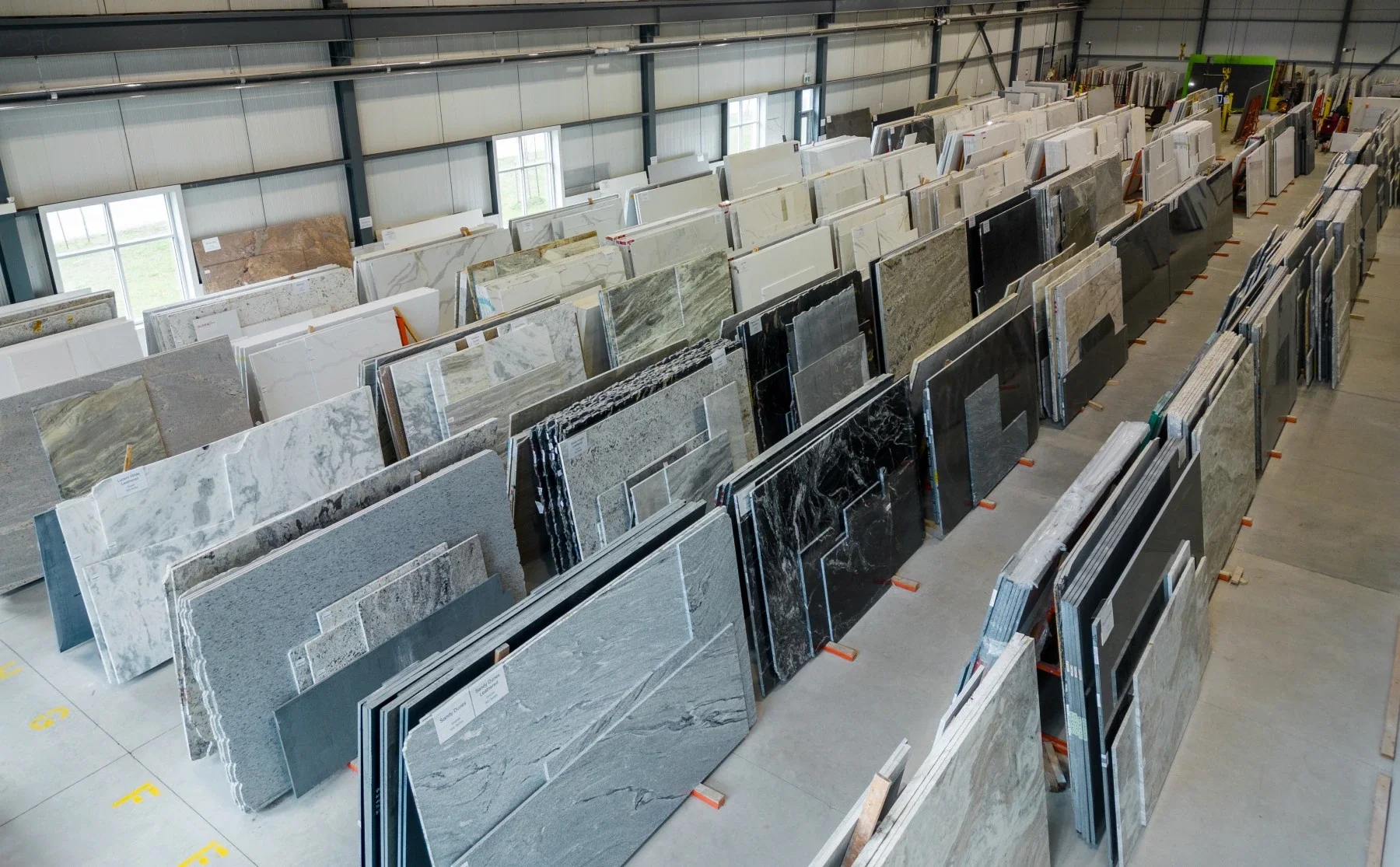
Choosing the right countertop is only part of the process. Working with the right supplier is what ensures you get a result that looks great and performs well for years to come. At Natural Stone City, homeowners can explore a wide range of quartz, granite, quartzite, porcelain, sintered stone, marble, and onyx slabs all in one place.
Customers choose Natural Stone City because the experience is focused on quality, transparency, and expert guidance from selection through to installation.
Natural Stone City offers a wide selection of premium countertop materials in one showroom, making it easier to compare options side by side.
Natural Stone City provides expert guidance to help homeowners choose the right material based on lifestyle, design preferences, and budget.
Natural Stone City works with high-quality slabs, ensuring consistency, durability, and a strong finished result.
Natural Stone City supports projects from selection through installation, creating a smoother and more reliable customer experience.
Whether you are renovating a kitchen or building a new home, Natural Stone City helps simplify the process and ensures you get a countertop that fits both your style and your needs.
What Our Customers Are Saying…
“A fabulous company. I say that as this is the fourth time I have ordered countertops from Natural Stone City in the past 17 years for myself and my family. Each time I return I do so as the product they sell is exemplary. They even replaced the black granite they installed 17 years ago with a more modern one. The prices are also better than anywhere else I have checked with. Very pleased.”
-Shawn Thompson