
Sintered Stone for Outdoor Kitchens: Weathering, Durability & Design Guide
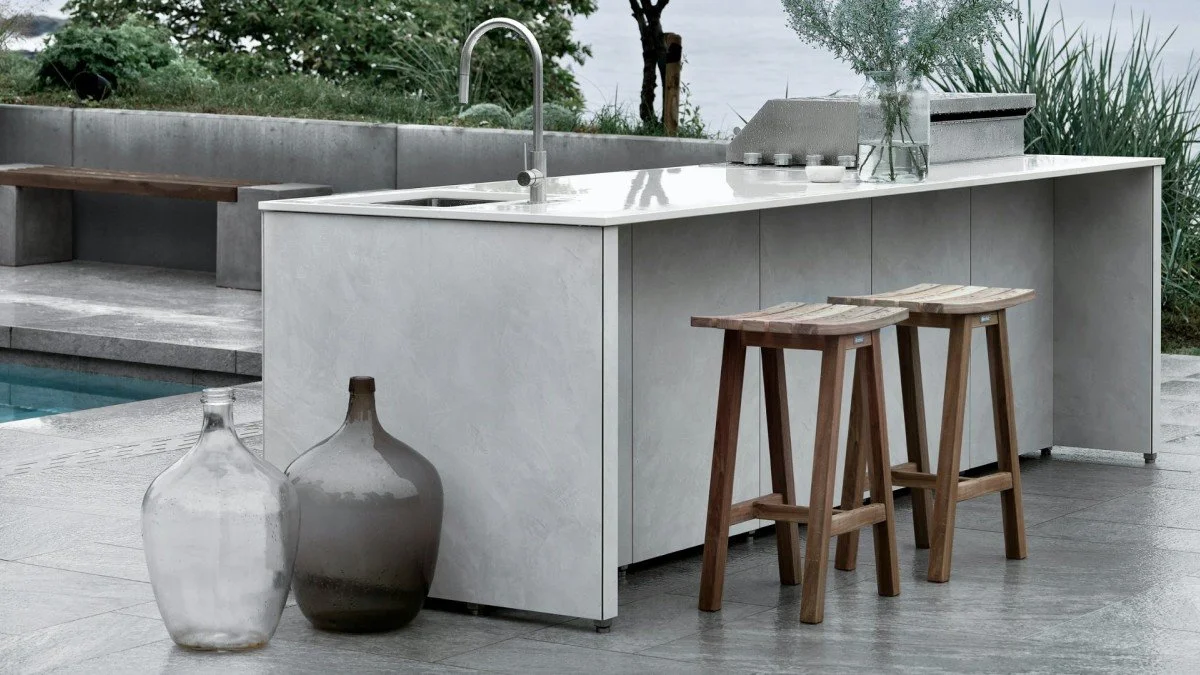
*Image by Cosentino - Dekton
Outdoor countertops face extreme elements that quickly degrade traditional materials from sunlight yellowing quartz resins to harsh freeze-thaw cycles cracking porous natural stone. Sintered stone eliminates these vulnerabilities entirely, offering a weather-proof, ultra-dense surface engineered to withstand direct flames, intense UV rays, and sub-zero temperatures without sacrificing luxury design.
Core Focus
This guide covers everything you need to know about using sintered stone for outdoor kitchens, patio bars, and dining features. Learn how its non-porous composition prevents freeze-thaw cracking, explore high-heat performance around built-in BBQs and pizza ovens, compare sintered stone against traditional outdoor materials, and discover key tips for selecting low-glare finishes and installing proper outdoor sub-framing.
In This Guide:
This guide is part of our complete series. For an all-in-one guide to materials, costs, and comparisons, explore our main pillar guide: What Is Sintered Stone: A Comprehensive Overview →
Sintered Stone for Outdoor Kitchens
1. The Ultimate Outdoor Surface: UV, Heat, and Freeze-Thaw Resistance
Outdoor kitchens face conditions that can quickly expose the limitations of traditional countertop materials. Sintered stone is engineered from inorganic minerals rather than resin-based binders, giving it the stability needed for continuous exposure to sunlight, moisture, temperature swings, and intense heat.
100% UV Stability for Continuous Sunlight
Sintered stone uses inorganic mineral pigments that remain stable under prolonged exposure to direct sunlight. Unlike resin-based surfaces, the material will not yellow, fade, or experience resin burn when exposed to intense UV radiation.
For an outdoor kitchen, this means the countertop can remain exposed to direct Canadian sunlight throughout the seasons without the colour instability associated with materials that rely on resins or organic pigments.
Zero-Water Absorption for Canadian Freeze-Thaw Cycles
With water absorption of less than 0.02%, sintered stone is extremely non-porous. Water has virtually no opportunity to penetrate the surface and become trapped within the material.
This is particularly important for outdoor kitchens in Canada, where repeated freeze-thaw cycles can cause absorbed water to expand as it freezes. Because sintered stone prevents this water penetration, it eliminates cracking caused by freeze-thaw expansion within the stone itself.
How Absorption Prevents Cracking
Micro-pores absorb standing water. Sub-zero temperatures freeze the trapped moisture, causing ice expansion that creates internal stress and hairline fractures.
Dense mineral structure prevents moisture penetration entirely. Without internal water retention, freezing temperatures cannot create ice pressure within the slab.
Extreme Thermal Tolerance Around Grills and Pizza Ovens
Outdoor kitchens routinely expose countertops to concentrated sources of heat, including open flames, hot BBQ lids, and pizza ovens. Sintered stone's extreme thermal tolerance allows it to withstand this direct heat exposure without scorching, thermal shock, or discolouration.
This makes it particularly well suited to areas immediately surrounding high-temperature outdoor cooking equipment, where countertop surfaces can experience sudden and intense temperature changes.
2. Sintered Stone vs. Other Outdoor Countertop Materials
Choosing a countertop for an outdoor kitchen means considering how the material will perform in prolonged sunlight, moisture, and changing weather conditions. Sintered stone offers several practical differences compared with quartz, granite, and concrete when used in an outdoor cooking environment.
Sintered Stone vs. Quartz
Quartz is not ideal for outdoor kitchens because of its resin content. Prolonged exposure to UV rays can degrade the resin used to bind quartz, potentially causing the surface to discolour or fade over time.
Sintered stone does not rely on resin binders. Its inorganic mineral composition remains unaffected by continuous outdoor UV exposure, making it better suited to countertops that will spend their lives in direct sunlight.
Sintered Stone vs. Granite
Granite can be used outdoors, but regular sealing is an important part of maintaining its performance. Outdoor granite typically requires annual sealing to help prevent moisture from penetrating the stone, which can contribute to moisture-related problems such as mould.
Sintered stone eliminates this sealing requirement for an outdoor kitchen. Its extremely low porosity means there is no need for the recurring sealing maintenance associated with regular outdoor granite.
Sintered Stone vs. Concrete
Poured concrete countertops can provide a distinctive look for an outdoor kitchen, but their substantial weight can create additional structural considerations. Concrete can also develop hairline cracks, while maintaining its surface typically involves intensive sealing to protect it from outdoor exposure.
Sintered stone provides an alternative without the heavy structural weight, hairline cracking commonly associated with poured concrete, or the same level of ongoing sealing maintenance.
Outdoor Material Performance Matrix
| Feature / Material | Sintered Stone | Quartz | Granite | Concrete |
|---|---|---|---|---|
| UV Ray Resistance | 100% Stable (No yellowing) | Degrades / Fades | Stable | Stable |
| Freeze-Thaw Defense | < 0.02% Absorption | Non-porous | Porous (Requires sealing) | High porosity (Prone to cracking) |
| Heat / Flame Tolerance | Direct Flame Safe | Low (Resin scorching) | Moderate-High | High |
| Annual Sealing | Never Required | Never | Every 12 Months | Regular sealing required |
3. Design Applications: BBQ Surrounds, Fire Features & Outdoor Bars
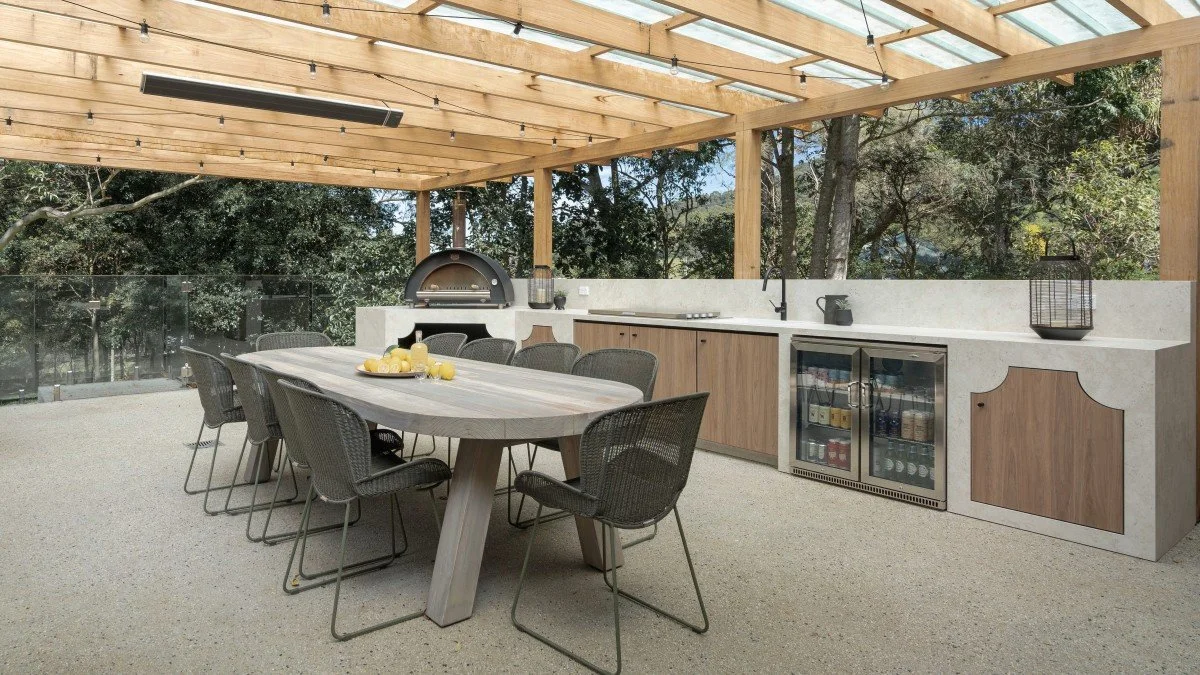
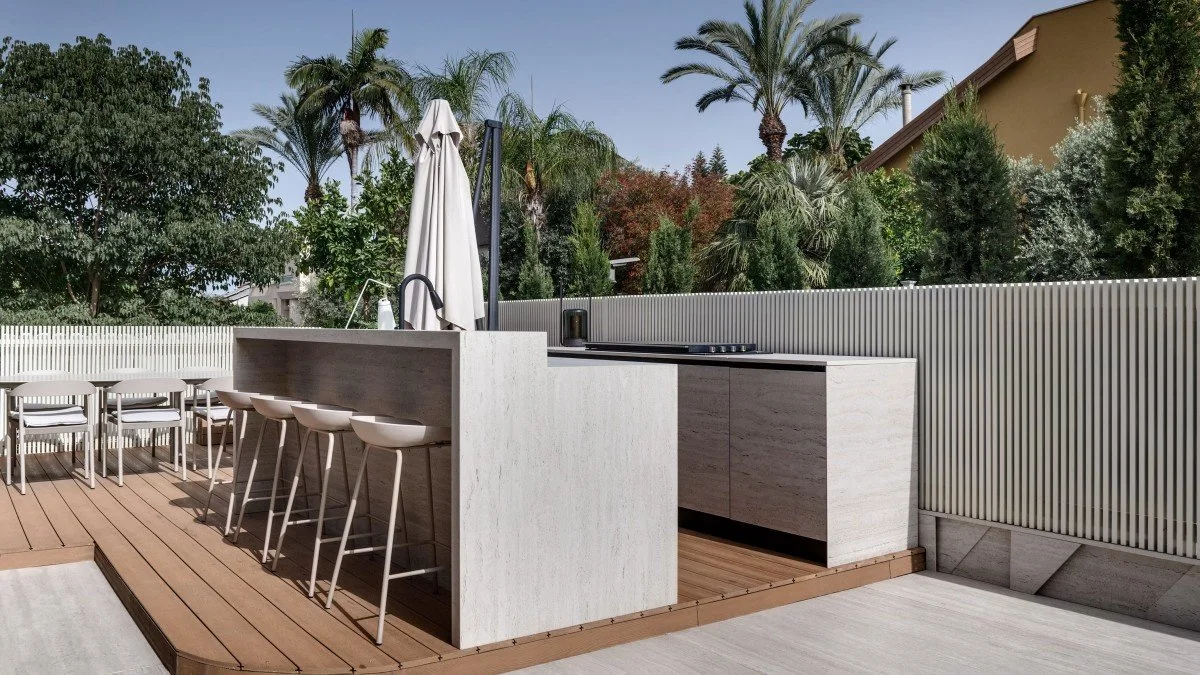
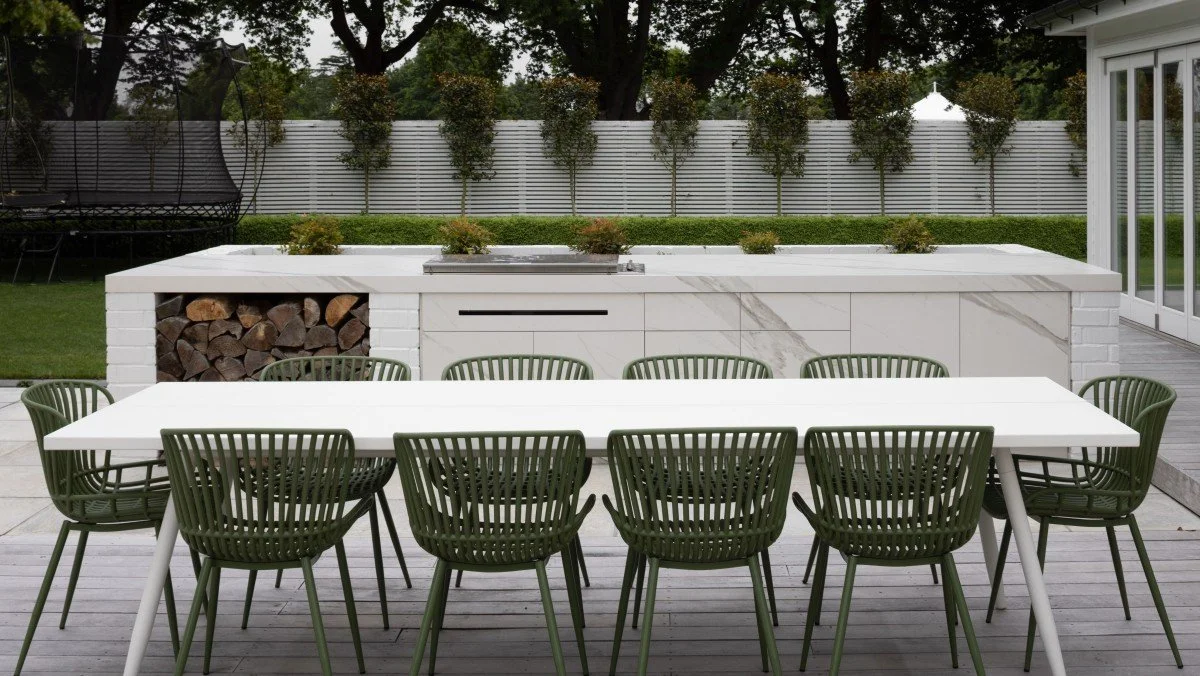
Sintered stone can be used across multiple surfaces in an outdoor kitchen, allowing the same slab finish to carry through cooking, dining, and entertaining areas.
Built-In Grill Cladding & Countertops
Sintered stone can be integrated around gas, charcoal, and kamado-style outdoor grills, creating a seamless finished appearance between the grill surround and adjacent countertop surfaces. This allows the cooking area to maintain a cohesive material aesthetic rather than looking like a collection of separate components.
Fire Pit Tops & Outdoor Dining Tables
Sintered stone can provide a weatherproof surface for outdoor dining tables and fire pit tops, allowing the same material to serve as both a functional dining surface and a finished surround for a fire feature. This creates continuity between areas designed for cooking, gathering, and entertaining.
Outdoor Kitchen Islands & Bar Tops
Using matching sintered stone slab finishes across outdoor kitchen islands and bar tops can create a visual connection between different areas of a patio. Carrying the same finish from indoor countertops to outdoor surfaces can also help create a more cohesive indoor-to-outdoor flow, particularly in kitchens designed around open entertaining spaces.
4. Choosing Outdoor Finishes & Managing Sunlight Glare
The finish and colour of a sintered stone slab can affect how comfortable an outdoor kitchen is to use, particularly when countertops are exposed to strong midday sunlight.
Matte & Textured Advantages
Matte, silk, and textured slate finishes are well suited to outdoor kitchens because their lower-reflectivity surfaces help reduce harsh sunlight glare. Compared with highly polished surfaces, these finishes can minimize the blinding reflections that occur when direct midday sunlight hits the countertop.
For exposed outdoor kitchens, choosing a lower-sheen finish can therefore make food preparation, dining, and entertaining more comfortable during bright periods of the day.
Colour Selection for Outdoor Heat
Slab colour can also influence how much heat a countertop absorbs when it sits in direct sunlight. Dark-toned slabs generally absorb more solar heat, while lighter-toned slabs reflect more sunlight and tend to remain cooler to the touch under the same conditions.
For an outdoor kitchen that is fully exposed to the sun, lighter tones can therefore be a practical choice where surface temperature is a consideration. In a covered patio layout, there is greater flexibility in colour selection because the countertop receives less direct solar exposure.
Selecting the Right Finish for Patio Exposure
Fully Exposed Patios
Choose Matte, Silk, or Textured finishes to eliminate blinding midday sun glare. Stick with lighter colour tones (creams, sand, light greys) to keep surfaces cool to the touch under direct sunlight.
Covered Patios & Pergolas
Allows full flexibility for Polished or Dark-Toned slabs (obsidians, charcoal, deep marbles) since direct overhead sunlight and thermal heat absorption are minimized.
5. Structural Support & Installation Best Practices for Outdoors
A successful outdoor kitchen installation depends on providing the sintered stone with a stable, properly prepared structure. You need to select the supporting frame and installation materials with seasonal outdoor conditions in mind.
Outdoor Sub-Framing Requirements
Outdoor kitchen countertops should be installed over a properly constructed and level sub-frame capable of supporting the weight of the slab. Suitable framing options include aluminum, stainless steel, or concrete masonry, provided the structure is properly designed and level before installation.
Joints, Seam Care & Exterior Epoxies
Joints and seams in an outdoor kitchen should use UV-stable exterior adhesives and silicones designed to withstand seasonal temperature fluctuations. Using exterior-rated installation materials helps the joints accommodate the changing conditions that outdoor countertops experience throughout the year.
Installation Checklist for Exterior Installations
- Sub-Frame Materials: Construct using level aluminum tubing, stainless steel, or concrete masonry (avoid untreated wood framing subject to moisture swelling).
- Exterior Adhesives: Use 100% UV-stable, temperature-flexible exterior silicones and epoxies that accommodate natural thermal expansion.
- Grill Cutout Margins: Maintain recommended expansion gaps around built-in gas grills and kamado cookers for adequate airflow.
Winterizing & Maintenance Tips
End-of-season preparation is straightforward because sintered stone does not require sealers. Before winter, you can simply give your counterop a quick wash to clean it. You could also put on a protective cover to help shield the surface from heavy debris, but this is optional.
6. Related Sintered Stone Guides
Conclusion & Final Verdict:
Sintered stone brings together durability, performance, and refined design to create a countertop surface built for outdoor entertaining. From BBQ surrounds and outdoor bars to kitchen islands and fire features, it provides the combination of weather resistance and design flexibility needed for a truly low-maintenance outdoor space.
If you want your outdoor kitchen to look luxurious without adding unnecessary maintenance concerns, sintered stone offers a worry-free luxury surface designed to perform season after season.
See Sintered Stone in Person
The best way to appreciate the colour, finish, and texture of sintered stone is to see full-size slabs in person. Visit Natural Stone City at our Kitchener or London showroom to explore your options and see how different finishes can work within your outdoor kitchen design.
Explore Outdoor Sintered Stone in Our Showrooms
Seeing sintered stone under direct sunlight is the best way to evaluate low-glare finishes and rich textures for your patio or BBQ surround. Visit our Kitchener warehouse to inspect full-size weather-proof slabs, discuss outdoor sub-framing with our specialists, and request a free estimate.
What Homeowners & Pros Say About Working With Us
"A fabulous company. I say that as this is the fourth time I have ordered countertops from Natural Stone City in the past 17 years for myself and my family. Each time I return I do so as the product they sell is exemplary..."
"Super happy with the result and also with the experience we had with Natural Stone City team. Easy to order, very helpful and experienced team members, 3 hours installation. Pictures speak for themselves.Thank you!"
"As a local contractor Never an issue with this company been with them for 10+ years. Always been well taken care of with all of their staff with the right prices for a quality job. Highly recommend."